
The Springwell WS System provides US homes with clean, safe, healthy water and solves the most significant well-water problems without harsh chemicals. It targets iron, sulfur, and manganese, three contaminants responsible for rust stains, rotten egg odors, and black slime. Iron up to 7 PPM stain, sulfur up to 8 PPM, strong odor, and manganese dark residues. The WS system injects oxygen into the water via Air Injection Oxidation (AIO). This oxygen changes the dissolved contaminants to solid particles that Greensand Fusion Media traps inside the tank.
The system requires minimal maintenance because it cleans itself every night through an automatic backwash cycle. As a result, the primary filter does not need to be replaced for 10 to 20 years. It also maintains intense water pressure throughout the home, and its Bluetooth intelligent control lets you check system status right from your phone. With a lifetime warranty on the tank and valve, Springwell provides long-term, reliable protection against well-water damage, giving homeowners consistent, odor-free, and high-quality water.
Here is a look at the six significant steps of Springwell WS whole-house system:
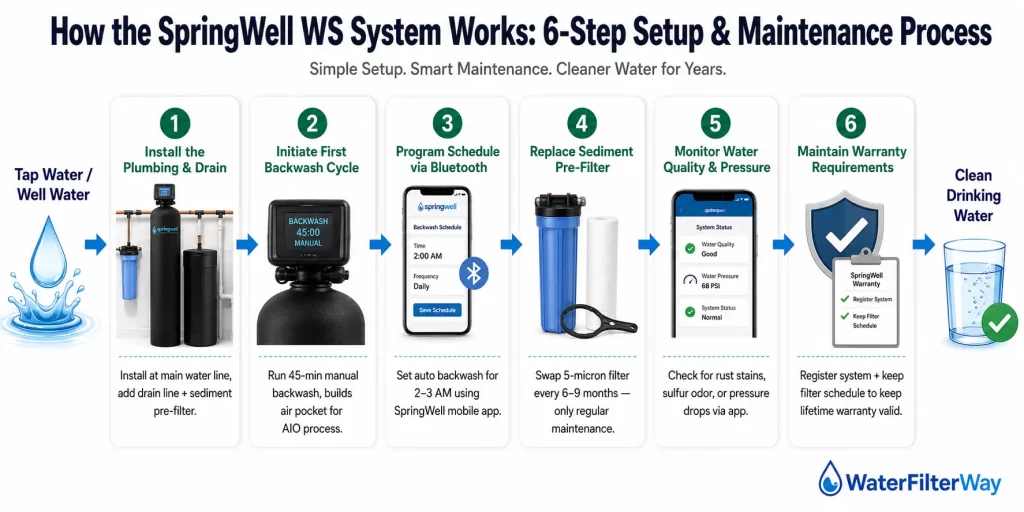
- Step 1: Install the Plumbing and Drain
Hire a plumber to install the unit at the main water line entering your house, because the system requires a drain line for backwashing and an electrical outlet to operate. The sediment pre-filter must be installed first to protect the main tank from debris and extend the media’s lifespan.
- Step 2: Initiate the First Backwash Cycle
Once the plumbing is complete, connect the system to power. The control head will turn on automatically, allowing you to run the first manual backwash cycle. This rinses the fresh media inside the tank and builds the air pocket needed for the AIO oxidation process to work correctly.
- Step 3: Program the Schedule Using Bluetooth
Use the Bluetooth app on your phone to connect to the control head and set the automatic backwash schedule. It is best to schedule the cycle late at night so you have full water pressure throughout the day and the system can clean itself without interrupting household use.
- Step 4: Replace the Sediment Pre-Filter
The main AIO tank is self-cleaning, so the only regular maintenance you need to perform is changing the external sediment pre-filter every 6 to 9 months. This stops Greensand Fusion Media from clumping and allows oxidation/filtering inside the big tank.
- Step 5: Monitor Water Quality and Pressure
Check your water quality for rust stains or dark residue, or sulfur odors. Monitor daily backwash activity with the Bluetooth app. Dropping water pressure means a clogging or pre-filter problem needs inspection.
- Step 6: Maintain the Warranty Requirements
Run your system regularly and change your sediment filter once every few months to preserve the lifetime warranty of the tank and control valve. Registration of the system with Springwell protects your investment and ensures long-term stable performance.
Install the Plumbing and Drain
The system must be installed behind the well pressure tank, as this location ensures that clean water reaches every tap. The large tank needs a level surface so the media settles. Connect the drain line to a floor drain that can handle seven gallons of backwash water a minute. Protect the press with a 5 micron pre-filter prior to the main tank installation. A professional plumber could do the setup easily.
Initiate the First Backwash Cycle
Start the first manual backwash with the control head after installation. The critical first run takes about 45 minutes. This cleans dust from the new media bed and draws air into the tank. This action creates the air pocket needed for the AIO process to oxidize iron, sulfur, and manganese. You cannot use water during this time.
Program the Schedule Using Bluetooth
The WS uses a bright electronic head. Download the Springwell mobile app to connect via Bluetooth, giving you complete control of the system settings. You must program the daily automatic backwash cycle and set the time for 2:00 AM or 3:00 AM. This schedule ensures the system cleans and resets when water usage is zero, so it stays ready for peak demand throughout the day.
Replace the Sediment Pre-Filter
The Greensand Fusion Media is self-cleaning and lasts up to 20 years. The only frequent maintenance required is changing the 5-micron sediment pre-filter. You must replace this small filter every six to nine months. Doing so protects the main tank from large sand or silt particles, prevents clogging, and maintains the high flow rate of 12 to 20 GPM.
Monitor Water Quality and Pressure
You must check the water quality for any signs of system failure. Look for rust stains on sinks or black residue. A rotten-egg odor means sulfur is returning. The app shows the system status and flow rate in real time. A sudden drop in water pressure indicates the pre-filter is saturated and needs to be changed immediately.
Maintain the Warranty Requirements
Springwell offers a lifetime warranty on the tanks and a seven-year warranty on the valve head electronics, protecting your investment for decades. You must register the product shortly after installation to activate the warranty. It remains valid only if you keep up with required maintenance. Failing to replace the sediment pre-filter on schedule voids the warranty.
Overview: SpringWell WS Features & Design
The SpringWell WS is a single-tank well water filter that uses a chemical-free Air Injection Oxidation (AIO) process to resolve all stain and odor issues. The system removes iron, sulfur, and manganese with low maintenance. Its electronic control head handles the daily cleaning automatically, giving US homes decades of clean, high-pressure water.
Overview:
| Feature | WS1 (Standard Home) | WS4 (Large Home) |
| Contaminants Removed | Iron (7 PPM), Sulfur (8 PPM), Manganese (1 PPM) | Iron (7 PPM), Sulfur (8 PPM), Manganese (1 PPM) |
| Filter Media Life | Up to 20 Years | Up to 20 Years |
| Flow Rate (GPM Max): | 12 GPM Service | 20 GPM Service |
| Backwash Rate: | 5 GPM | 7 GPM |
| Control Type: | Bluetooth Digital Head | Bluetooth Digital Head |
| Warranty: | Lifetime on Tank and Valve | Lifetime on Tank and Valve |
| Required Maintenance | Sediment Filter Change (6-9 Months) | Sediment Filter Change (6-9 Months) |
What are the Pros and Cons of the SpringWell WS Whole House Well Water System?
The pros and cons of the SpringWell WS whole-house well water system are:
Pros
- Chemical-Free Treatment: The system uses Air Injection Oxidation (AIO), which removes iron, sulfur, and manganese without harsh chemicals.
- Low Maintenance: The system cleans itself with an automatic nightly backwash. You do not replace the main filter media for 10 to 20 years.
- Excellent Flow Rate: The design ensures no drop in water pressure throughout the house and provides 12 to 20 GPM, depending on the model.
- Strong Warranty: The unit includes a Lifetime Warranty on the tank and valve, plus a six-month money-back guarantee.
- Intelligent Control: Bluetooth connectivity on the electronic head lets you program and monitor the system from your phone.
Cons
- Higher Cost: The initial price is high and requires a larger upfront investment than basic well-water systems.
- Complicated Installation: DIY setup is complex and requires plumbing knowledge. Springwell recommends hiring a professional plumber.
- Limited Contaminant Removal: The WS system does not kill bacteria or viruses, nor does it remove hard-water minerals. These issues require additional filters or a softener.
- PPM Limits: The system is not suitable for wells with iron levels over 7 PPM or sulfur levels over 8 PPM.
Best Filters in the SpringWell WS System for Clean Water
The best filters in SpringWell WS for clean water use an oxygen cleaning media bed. The chemical-free core filter removes iron, sulfur, and manganese. A small, replaceable pre-filter collects sand and dirt, protecting the main media for decades of operation. To help you decide, we reviewed the two easy SpringWell WS whole-house systems to replace filters in:
1. Spin-Down Sediment Filter
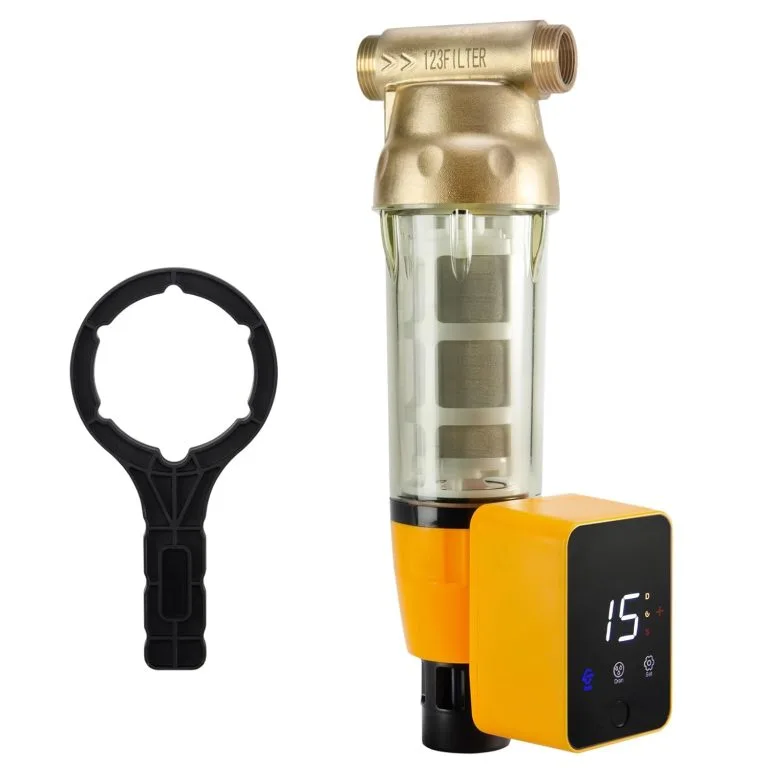
The Spin-down filter serves as the first line of defense for the WS system. Positioned before the main tank, it catches sand, silt, and large dirt particles, preventing clogging and protecting the expensive Greensand Fusion Media from damage. Regular replacement of this filter is required to maintain system performance and keep the warranty valid.
Key Specifications:
| Specification | Detail |
|---|---|
| Model Name | WSP50ARB Reusable Whole House Spin-down Sediment Filter |
| Micron Rating and Design | 50-Micron screen with reusable filter media |
| Automation Features | Self-Cleaning, Auto Flushing, Built-in Housing Scraper Included |
| Power Source and Install | Requires AC Power for Auto Flush Features. DIY Installation Possible |
| Physical Dimensions and Weight | 20" L x 10" W x 6" H and weighs 4.25 Pounds |
| Manufacturer | iSpring Water Systems |
| Current Price | Check Price |
Filter Technology and Performance
The Spin-Down filter uses a centrifugal force design, where water spins inside a clear bowl, forcing heavier sediment particles to the bottom. The water then passes through a fine screen to remove more minor silt and rust. This technology is low-cost but provides vital protection to the main AIO media.
Replacement Ease and Convenience
The filter is designed for easy homeowner maintenance. The clear housing lets you see when it is dirty and needs a change. When required, you unscrew the housing by hand. No special tools are necessary for this routine swap. Replacement is typically every 6 to 9 months for most wells.
Certifications and Trust
Although the Spin-Down filter is a simple mechanical part, it is rated for heavy-duty use. Whole-house sediment filters meet NSF Standard 42 for aesthetic effects of particulate reduction. Springwell housing meets the high-pressure standards required to maintain the system warranty.
Cost of Filter Replacement
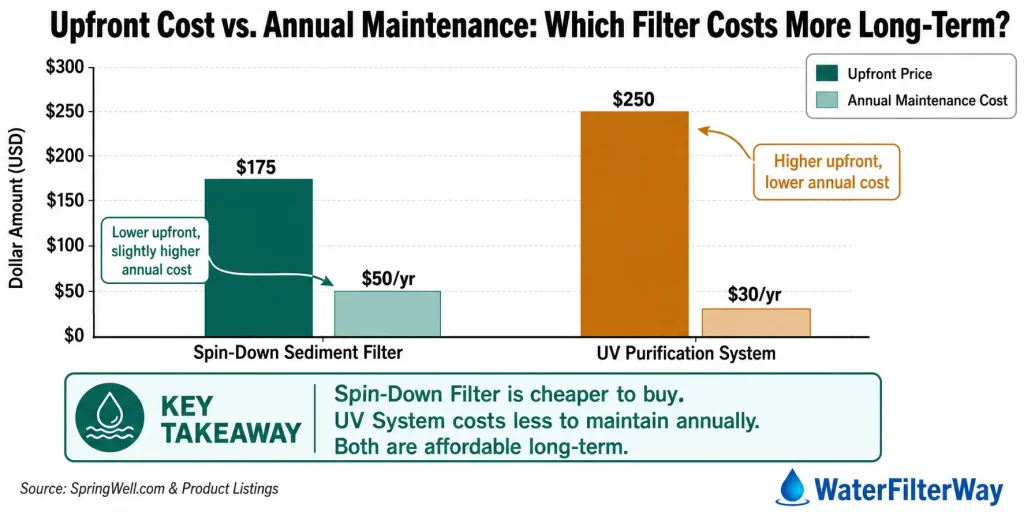
Replacement cartridges cost less than USD 50 per year. This small investment acts as a low-cost shield for the main media, which last up to 20 years. Neglecting this maintenance lead to expensive repairs or void the warranty.
Summary:
Spin-Down Filter provides essential pre-filtration, protecting the main AIO media while being easy and affordable to maintain.
| What We Like (Key Benefits) | What We Don’t Like (Requirements) |
| Provides vital protection for the 20-year main filter. | It requires a routine change every 6 to 9 months. |
| Very low annual cost for replacement cartridges. | A clogged filter causes a quick drop in house water pressure. |
| Clear housing allows you to see when it is time to change. | Failure to swap it on time can void the main system warranty. |
Final Verdict: Who Is This Filter Best For?
The Spin-Down Sediment Filter is ideal for all well water systems. It acts as a necessary safety device, catching dirt and large particles before they damage the main media. This simple component is both easy to maintain and affordable, making it an essential step to ensure the longevity and reliable performance of the entire Springwell WS system
2. UV Water Purification System
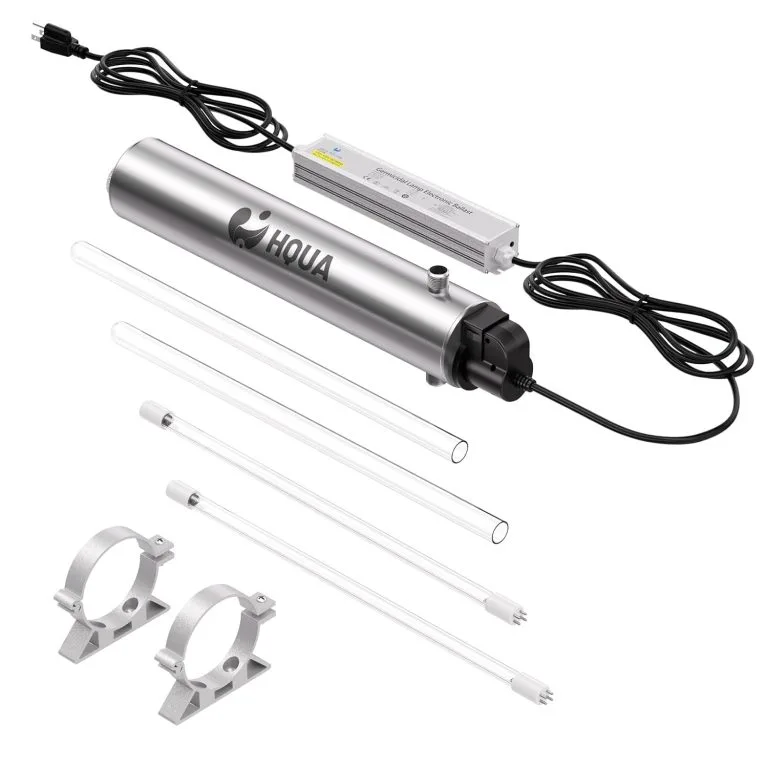
The UV water purification system is an add-on disinfection stage designed to eliminate all biological contaminants. While the Springwell WS AIO system effectively removes Iron and Sulfur, it does not remove bacteria or viruses.
Key Specifications:
| Specification | Detail |
|---|---|
| Brand and Model (Example) | HQUA Water Purifier UV System |
| Maximum Flow Rate | 12 Gallons Per Minute (Matches most whole-house needs) |
| Connection Size Options | 3/4" MNPT and 1" MNPT (Threaded connection options) |
| Power Source and Install | AC Power Required, Wall-Mounted Installation Type |
| Dimensions (Approx.) | 21" L x 3.5" W x 3.5" H (Compact unit for tight spaces) |
| Temperature Rating | Upper Temperature Rating of 140 Degrees Fahrenheit |
| Current Price | Check Price |
Filter Technology and Performance
The UV system produces germicidal UV C light at 254 nm. This light breaks the DNA of organisms like viruses and bacteria, rendering them unable to reproduce or survive. The disinfection dose is usually 40 mJ/Cm2. The system has to be installed after the primary WS filter to remove sediment or Iron that block the light and make the system less effective.
Replacement Ease and Convenience
Maintenance for the UV system is minimal, as there is no filter media to clean or backwash. The only routine maintenance is the annual replacement of the UV lamp. The lamp must be swapped every year to ensure the light intensity remains strong enough to kill pathogens. Clean quartz sleeves also help prevent mineral blockage of germicidal light.
Certifications and Trust
UV disinfection systems are frequently certified against NSF Standard 55 for Microbiological Purifiers. This standard verifies that the system delivers sufficient UV dose to kill pathogens at the maximum flow rate. Choosing a certified system provides confidence that the water is free of disease-causing organisms.
Most of the Filter Replacement
The UV system has no chemical costs and very low energy usage. The main expense is the annual lamp replacement, which must be purchased every 12 months to maintain proper disinfection. The safety benefits far outweigh this small recurring cost.
Summary: UV Water Purification System
| What We Like (Key Benefits) | What We Don’t Like (Requirements) |
| Destroys 99.99% of bacteria and viruses (E. coli, Giardia). | Requires clean water going in (must be installed after WS). |
| Disinfects without adding chemicals or changing the water taste. | The UV lamp must be replaced annually for full power. |
| High flow rate (12 GPM) suitable for whole-house use. | Requires continuous AC power to stay active. |
Final Verdict: Who Is This System Best For?
The UV Water Purification System is essential for any private well water source. If your water tests positive for bacteria or you want maximum protection from waterborne illness, this add-on is non-negotiable. It provides a safe, chemical-free disinfection barrier that works after the Springwell WS system has already treated your water for iron, sulfur, and manganese.
Comparison Table
| Feature | Spin-Down Sediment Filter | UV Water Purification System |
| Primary Goal | Protection and Pre-Filtration (Physical) | Disinfection and Purification (Biological) |
| Contaminants Removed | Sand, Silt, Rust, Dirt (Large Particles) | Bacteria, Viruses, E. coli, Giardia (Microorganisms) |
| Mechanism | Physical Screening (e.g., 50 Micron) and Centrifugal Force | UV-C Light that damages DNA to prevent reproduction |
| Placement in System | Must be First (before the main WS tank) | Must be Last (after all filters) |
| Maintenance Task | Flush sediment or replace cartridge every 6-9 months | Replace the UV Lamp annually (every 12 months) |
| Effect on Water Taste | None (Does not remove chemicals or odor) | None (Adds no chemicals or flavor) |
| Why Both Are Needed | It keeps the water clear so the UV light can work effectively and not be blocked. | It kills the tiny microorganisms that the sediment filter cannot trap. |
Which maintenance task must homeowners perform regularly on the SpringWell WS system?
Homeowners must replace the pre-filters and sediment filters of the SpringWell WS every few months to keep the system working and providing safe water. These filters catch dirt, rust, and sediment that collect over time. Regular replacement every 6 to 12 months prevents clogging, maintains proper water flow, and protects the system’s internal components.
Along with changing filters, checking O-rings, filter housings, and system seals during maintenance helps to prevent leaks and keep the system operating at maximum efficiency. Keep up with these tasks for long-term durability, consistent water quality, and to lessen the risk of expensive repairs. Water filter Way offers filter replacement schedules and maintenance tips to help homeowners care for their SpringWell WS system.
FAQ’s:
1. How does the SpringWell WS system remove iron, sulfur, and manganese?
The WS uses Air Injection Oxidation (AIO) — an air pocket oxidizes contaminants into solid particles, which Greensand Fusion Media traps and nightly backwash flushes out automatically.
2. Does the SpringWell WS system remove bacteria and viruses?
No. The WS only removes iron, sulfur, and manganese. For bacteria and virus protection, a separate UV purification system must be installed after the main WS tank.
3. How often do you replace the filter in the SpringWell WS system?
The main media lasts 10–20 years. Only the external sediment pre-filter needs replacement — every 6 to 9 months — to maintain flow rate and keep the warranty valid.
4. What warranty does the SpringWell WS system come with?
SpringWell offers a lifetime warranty on the tank and valve, plus a 6-month money-back guarantee — valid only if the system is registered and the sediment filter is changed on schedule.
5. Does the SpringWell WS system work for hard water?
No. The WS only targets iron, sulfur, and manganese. It does not remove hard water minerals. A separate water softener is needed if hard water is also a concern.
