
A water filtration system is a setup designed to clean water, making it safer, healthier, and more pleasant to drink. The system pushes water through different stages that trap dirt, chemicals, and germs. Each filter type has its own process. Carbon filters absorb chlorine and remove odor, reverse osmosis systems block very fine impurities, and ultraviolet light systems kill bacteria and viruses.
For families considering a purchase, this means no single system does everything. Some filters are designed to improve taste, while others focus on eliminating heavy metals, chemicals, or germs. Understanding these differences helps buyers match the right system to their household needs. A compact countertop system may be perfect for renters, while a whole-house setup may be the right choice for larger families or those using well water.
A water filtration system also protects beyond just drinking. It improves water clarity, supports healthy cooking, and safeguards pipes and appliances from buildup and damage. In short, it solves everyday problems like poor taste, unsafe particles, and mineral buildup, and gives peace of mind that the water you use daily is working for your health, not against it.
In this guide, you will learn about the major types of filters, how each one works, and which systems provide the best balance of value and performance. Water Filter Way simplifies decision-making by breaking down features in plain language and pointing to reliable Amazon options, so families can compare systems with confidence.
What Is the Purpose of a Water Filtration System?
The purpose of a water filtration system is to remove harmful substances from water so it becomes safe and reliable for daily use. In many areas, tap water may contain sediment, chlorine, bacteria, or even heavy metals. A filtration system passes the water through layers designed to trap or neutralize these unwanted particles.
For buyers, this is important because not every filtration system removes the same things. Activated carbon filters are excellent for chlorine and odor. Reverse osmosis filters remove dissolved solids, such as lead or arsenic. Ultraviolet filters kill bacteria. Ion exchange systems soften water by replacing calcium and magnesium with safer minerals. Knowing which contaminants are present in your local water helps you choose the right solution rather than guessing.
The benefits go beyond taste. A good system makes water look clearer, feel gentler on skin and hair, and reduces wear on appliances. Families who invest in filtration avoid long-term health risks linked with unsafe water, save money on plumbing and appliance repairs, and enjoy confidence in every sip. Water Filter Way helps guide buyers through these choices by explaining the options in everyday terms, so you can see not only how systems work but also why they are worth it.
What are the Common Components of a Water Filter?
The common components of a water filter include sediment filters, carbon filters, reverse osmosis filters, ceramic filters, and UV filters. A water filter works best when these parts are combined in the right way. Each one does a different job to clean water. Together, they remove dirt, chemicals, and germs, allowing families to enjoy safe water every day. For buyers, knowing the role of each component makes it easier to choose a system that matches the water in their home.
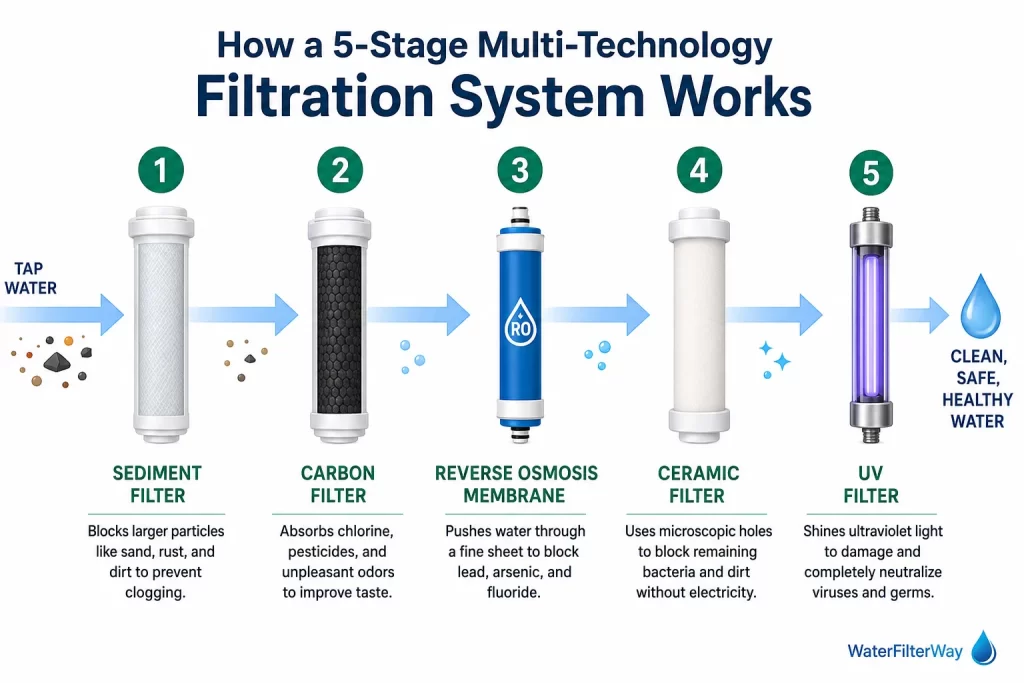
- Sediment Filters
A sediment filter blocks larger particles like sand, rust, and dirt. Water flows through a fine screen that traps these bits before they move forward. This step keeps the other filters safe from clogging. Sediment filters improve water clarity and protect appliances like dishwashers and washing machines. They also stop the buildup inside pipes, which reduces leaks and helps water pressure stay strong. Buyers who want to cut plumbing repairs and keep water clear will find sediment filters an important first step.
- Carbon Filters
A carbon filter absorbs chlorine, pesticides, and other chemicals. Water passes through carbon material that holds on to these substances. This stage improves both taste and smell. Families notice fresher water for drinking, tea, and coffee when carbon filters are in place. They also help lower exposure to compounds linked to health risks. Buyers who care about taste, odor, and safer drinking water often start with carbon filters.
- Reverse Osmosis (RO) Filters
A reverse osmosis filter uses a thin sheet called a membrane. Water is pushed through it, while tiny contaminants like lead, arsenic, and fluoride stay behind. RO filters remove some of the smallest impurities that other filters miss. The result is very pure water that supports health. These filters are especially helpful in areas with high dissolved solids or pollution. Buyers who want the highest level of purification often choose RO systems for peace of mind.
- Ceramic Filters
A ceramic filter uses tiny holes in ceramic material to block bacteria and dirt. As water moves through, the holes allow only clean water to pass. Ceramic filters last long and do not need electricity. They give safe water to homes that want a simple and eco-friendly choice. Many can be cleaned and reused, which lowers waste and cost. Buyers looking for a green and cost-effective option may find ceramic filters appealing.
- UV Filters
A UV filter shines ultraviolet light on water. The light damages germs like bacteria and viruses, making them harmless. UV filters keep water safe from illness-causing microbes. Families like them because they do not add chemicals to water, making them a clean and natural method. They work best when paired with other filters, since clear water lets the UV light reach germs more effectively. Buyers who worry about bacteria and viruses often choose UV filters for extra protection.
What Are the Types of Water Filtration Systems?
Water filtration systems fall into two main groups. The first group is point-of-use systems, also called POU. These systems clean water at the place you drink or cook, such as at the kitchen sink or in a pitcher. The second group is point-of-entry systems, also called POE. These systems clean all the water before it enters the house, so every tap and shower gets filtered. Both types help, but in different ways. Buyers should know how they compare before choosing one for the home.
| Feature | Point-of-Use (POU) | Point-of-Entry (POE) |
| Cost | Lower upfront cost | Higher upfront cost |
| Coverage Area | One tap or a small spot | Whole house |
| Contaminants Removed | Focused removal like chlorine, lead, or taste issues | Wide removal of dirt, chlorine, minerals, and germs |
| Maintenance | Filter change is quick and easy | Bigger filters, less frequent changes, but more complex |
Point-of-Use (POU) Systems
Point-of-use systems, also called POU systems, work where water is used directly. Families use them for drinking, cooking, and making tea. They filter smaller amounts of water but focus on taste and safety at the tap. Common types include under-sink units, countertop filters, and pitchers. These systems are easy to set up, budget-friendly, and need less maintenance. For buyers who want safe and clean water without setting up a large system, POU filters are a smart and simple choice.
Whole-Home (Point-of-Entry or POE) Systems
Point-of-entry systems, also called POE systems, treat water for the entire house before it enters the pipes. This means every shower, tap, and appliance receives filtered water. Families rely on POE systems when they want full protection across the home. They are also helpful for well-water users and for households that struggle with hard water. By removing sediment and minerals before water spreads, these systems protect plumbing, extend appliance life, and give peace of mind.
Why Water Filtration Matters for Your Health?
Water filtration matters for your health because it removes harmful substances that may be present in unfiltered water. Tap water can carry bacteria, heavy metals, chlorine by-products, or pesticides that slowly affect the body. By filtering these out, families avoid many hidden risks. Clean water lowers the chance of stomach issues, skin irritation, and even long-term illnesses that may come from regular exposure to unsafe particles.
Safe water also supports how the body works every day. It helps digestion, improves energy levels, and supports healthy skin. Children who drink clean, filtered water grow stronger because their developing bodies get what they need without extra toxins. Adults benefit as well, since clean water lowers stress on organs such as the liver and kidneys that normally work harder to filter waste. This makes daily life healthier and more comfortable.
Families who use a water filtration system enjoy both short-term comfort and long-term health. It is also a way to invest in wellness that keeps giving value over time. When buyers choose the right system, they not only protect their health but also save on bottled water and reduce reliance on treatments for water-related issues. At Water Filter Way, we guide families to choose filters that match their water quality and daily needs, ensuring that clean water is not just a choice but a lasting safeguard for better living.
What Role Does Water Filtration Play in Protecting Appliances?
Water filtration plays a major role in protecting appliances because it blocks harmful minerals, dirt, and chemicals before they enter machines. When water is cleaner, appliances such as dishwashers, washing machines, and coffee makers perform better and last longer. This protection lowers repair costs, saves energy, and adds long-term value for families who want reliability in their household systems.
- Removes Harmful Deposits
A good filter takes out minerals like calcium and magnesium that create scale buildup. Without these deposits, heating elements inside hot water systems and appliances work more efficiently. Buyers spend less money on descaling and reduce the risk of system failure.
- Prevents Appliance Clogs
Sediment in unfiltered water can block small openings inside machines. Filters stop these particles before they reach pumps or spray arms. This simple step keeps dishwashers and washing machines from breaking down suddenly, reducing maintenance hassles.
- Reduces Component Damage
Chemicals such as chlorine weaken rubber seals, hoses, and even metal parts over time. Filtration reduces this exposure, which means fewer components need replacement. Families benefit from longer-lasting appliances that maintain their performance over time.
- Improves Appliance Efficiency
Appliances that run on clean water use less energy. For example, a washing machine free from mineral buildup heats water faster and consumes less power. This efficiency lowers energy bills and supports steady daily use.
- Extends Appliance Lifespan
By keeping water free from damaging substances, filters help appliances stay in excellent condition for many years. Families avoid frequent replacements and enjoy reliable performance over the long term. For buyers, this makes a water filtration system not just a health choice but also a smart financial decision.
How Do Modern Water Filters Combine Technology with Convenience?
Modern water filters use advanced purification technologies with user-friendly features that make them practical for everyday family use. These systems are designed to remove chemicals, heavy metals, and germs more effectively than basic filters, giving households a higher level of protection.
- Advanced Technology for Thorough Filtration
Reverse osmosis membranes in modern units prevent minute particles, activated carbon absorbs chlorine and smells, ultraviolet light kills bacteria and viruses, and multi-stage layers aim for several pollutants all at once. Buyers can more easily pick a filter that fits local water conditions by comparing models depending on which of these technologies they require.
- Convenient Design for Easy Upkeep
Along with strong performance, modern filters focus on convenience. Many come with clear installation kits, quick-change cartridges, and built-in indicators that alert families when replacements are needed. These details remove the guesswork from maintenance and help users avoid costly service calls.
- Practical Options for Every Home
Modern filters are available in compact under-sink designs that save kitchen space or portable countertop units that require little to no plumbing work. Families with limited room can find models that fit seamlessly into daily routines without major adjustments.
- Balanced Value for Buyers
The real strength of modern water filters lies in their balance of advanced technology and practical usability. Families gain safer water for health and wellness while also saving time and effort with straightforward upkeep. This mix makes them a smart investment for households that want both protection and convenience.
How Investing in a Water Filtration System Ensures Safe Water for Your Family?
Investing in a water filtration system ensures that every glass of water in the home is clean, safe, and free from harmful contaminants. Families that take the time to choose the right system protect themselves from common problems like chlorine, heavy metals, bacteria, and even hidden toxins that untreated water may carry. Filtered water lowers the risks associated with long-term exposure to unsafe particles. Children benefit by growing stronger with fewer health concerns, while adults experience better energy, digestion, and overall wellness. The whole family gains peace of mind knowing their water supports health instead of threatening it.
A filtration system is more than an upgrade; it is an investment. Clean water lowers the demand for bottled water, helps to avoid expensive medical problems, and preserves equipment from mineral buildup. This enhances daily life and results in long-term savings. Buyers can weigh the health and economic advantages against the initial cost, which would help them to make a more educated decision.
Water Filter Way helps purchasers find reliable online companies and simplifies the decision-making process by clarifying systems in plain words. Families may know what to anticipate before making a purchase thanks to professional insight and product selections. This direction helps guarantee reliable defense for years to come, as well as clean water right now.
FAQ’s:
Do water filtration systems remove all contaminants?
No, water filtration systems do not remove all contaminants, but water filtration is extremely important for safe drinking. Each filter type targets specific substances, such as chlorine, heavy metals, or bacteria, but no single system cleans everything. That is why many families use multi-stage filters that combine different methods for broader protection.
How long do whole-house water filters last?
Whole-house water filters last between 6 months and 3 years, depending on the filter type, water quality, and household usage. Regular checks and timely replacements keep performance steady. Long-lasting filters give maximum clean water and lower the risk of buildup inside appliances.
Are water filters worth it for municipal water?
Yes, water filters are worth it for municipal water. Even treated city water may contain chlorine, sediment, or pipe-related contaminants. Filtration adds an extra layer of safety and better taste. Families who use filters notice fresher drinking water and fewer mineral stains in sinks and tubs.
Can water filters improve skin and hair health?
Yes, water filters can improve skin and hair health. By reducing chlorine, sediment, and harsh minerals, filtered water prevents dryness and irritation, helping skin and hair stay healthier. Many households find that filtered showers leave hair softer and skin less itchy.
Are these systems suitable for both city water and well water?
Yes, these systems are suitable for both city water and well water. The right choice depends on the source, as city water needs chlorine and chemical removal, while well water often requires sediment and mineral treatment. Water tests guide families toward the correct filter for their home supply.
Do filters lower water pressure?
Yes, filters can lower water pressure when they clog or if the system is not sized properly. Regular maintenance and correct installation prevent most pressure issues. Families who service filters on time rarely face noticeable drops in water flow.
What is the average cost of installing a whole-house filter?
The average cost of installing a whole-house filter ranges from $200 to
