
Home
The best RO system for well water is one that includes strong pre-filtration and matches your specific contaminants, not just a popular brand name. Unlike city water, well water may contain sand, iron, and even bacteria that would kill a standard filter in weeks. Safety starts with a water test; if you notice “rotten egg” odors or orange stains, a basic under-sink unit will not suffice without a dedicated iron or sediment pre-filter.
For 2026, leading brands protect the RO membrane against well water damage. Systems with UV sterilization, for example, are the new standard for well owners; no live bacteria reach your glass. For hard water, look for brands that make “permeate pumps,” or modular designs that let you add a softener or extra sediment stages easily.
Well Water RO Comparison (2026)
| Product Image | Brand & Model | Best For | Key Feature for Wells | Why It's Safe | Price |
|---|---|---|---|---|---|
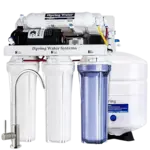 | iSpring RCC7 | Budget DIY | Clear Housing | You can see when sediment is clogging the filter | Check Price |
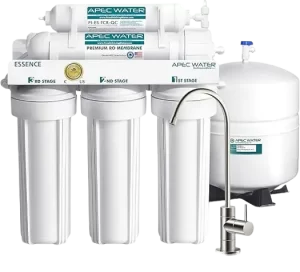 | APEC ROES-50 | Reliability | Heavy-Duty Filters | Built to handle higher TDS and rough water | Check Price |
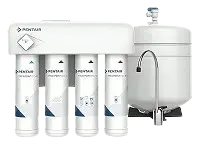 | Pentair GRO-475M | Efficiency | High-Recovery Membrane | High water pressure helps flush out well minerals | Check Price |
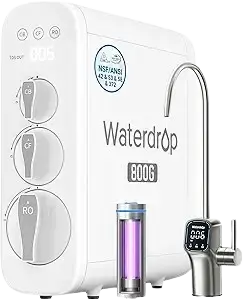 | Waterdrop G3P800 | Speed & Safety | Integrated UV Light | Kills 99.9% of bacteria often found in untreated wells | Check Price |
What Makes Well Water Different From City Water for RO Systems?
The main difference between well water & city water is in pretreatment & regulation. Well water is raw groundwater despite municipal “city” water treatment at a central facility meeting EPA standards; usually chlorine kills pathogens and filters remove large particles, whereas well water is untreated groundwater. This means the homeowner pays for all filtration and safety requirements of the water source.
The Three Main Challenges for Well Owners
1. High Sediment Load
Well water is pumped underground from aquifers that have lots of silt and sand, along with other natural materials. With no dedicated sediment pre-filter, these particles can physically clog an RO membrane in weeks and drop water pressure dramatically.
2. Iron & Mineral Content
Clear water iron is a common problem in groundwater that city systems removed years ago. Above 0.3 ppm iron will oxidize inside the RO system and “foul” the membrane, permanently destroying its ability to filter water. City water is also checked for hardness periodically, but well water can vary dramatically in calcium and magnesium levels.
3. Bacteria Risk
In pipes, city water uses residual disinfectants like chlorine/chloramine. So, well water has no such protection. Private wells are prone to bacteria risk from surface runoff or septic leaks, which makes a UV sterilization stage a mandatory safety requirement for many rural RO setups.
In the end, while an RO system is the same for both sources, a well-water system is only “safe” if it is part of a larger treatment strategy that addresses these raw environmental factors
Why Is Pre-Filtration Mandatory Before Using RO on Well Water?
Pre-filtration is mandatory because sediment and iron can clog and destroy the RO membrane quickly. Consider the RO membrane a superfine screen with tiny holes. It stops chemicals very well but is very fragile. When raw well water pours directly into it, pieces of sand, dirt, and rust become “biological sandpaper” that scratches the membrane or plugs the holes until water no longer flows through.
The Role of the Micron Filter
A dedicated sediment filter protects your RO. Most experts recommend a 5-micron or 1-micron filter as the first stage of a well-water filter setup. The “heavy” materials—silt, scale, and organic matter—are trapped here before entering the expensive RO stage. A membrane that should last two years may fail in less than two months without this pre-filtration.
Protecting Your Filter Lifespan
A multi-stage water treatment approach extends the life of your filter. By catching the dirt in a cheap, $10 sediment cartridge, you avoid having to replace the $100+ RO membrane. In 2026, some high-end systems for wells will include a “clear housing” for the first stage so you can visually check for clogging and change the filter before the whole water filtration system shuts down.
Which Contaminants Can RO Remove From Well Water and Which Require Additional Systems?
Reverse osmosis is a highly effective method for water purification, but it is not universally applicable to every well. The RO membrane effectively removes contaminants from many minerals and chemicals, but it has clear filtration limits for the more serious contaminants that originate from raw groundwater.
What RO Removes Effectively
Arsenic and fluoride removal by an RO system are the gold standard, two common well-water concerns that cannot be filtered otherwise. It also removes most dissolved solids, including salt, nitrates, and lead. If your well water is “clear” but contains many minerals, an RO system can make it taste just as pure as bottled water in most cases.
What Requires Additional Systems
- Iron Removal
If your water leaves orange stains in your sink, you have too much iron. While RO can catch tiny amounts, high iron removal requires a dedicated iron filter or water softener. Otherwise, the iron will “rust” inside the membrane and ruin it.
- Bacteria Filtration
An RO membrane physically blocks many germs, but it is not a disinfection system. For true safety against E. coli or coliform, a UV filter is mandatory to kill pathogens.
- Hydrogen Sulfide
If your water smells like “rotten eggs,” an RO system will not fix the odor. You will need an “air injection” or carbon pre-filter to treat the gas before it enters the RO unit.
Is Any RO System Safe for Well Water if It Has Multiple Stages?
No, more RO stages do not make a system safe for well water unless it includes proper pre-treatment and matches your specific water conditions. A common myth about RO systems used in filter marketing: “10-stage” filters sound better, but nine of those stages are basic carbon and one a membrane, and weeks later a huge sediment load or iron will blow the system apart.
Stage Count vs. Function
The effectiveness of a water filtration system for wells depends on the type of stages, not the number.
- The Problem with Stage Count
Many brands treat every level on one composite filter as a stage to up their numbers. A 3-stage system containing a high-quality sediment filter, a quality RO membrane, and a UV filter is safer for well water than the 7-stage system intended for city tap water.
- The “Safety” Gap
Standard filtration stages remove chemicals like chlorine. The bacteria and heavy minerals in groundwater are not suitable for them. You need functional stages that deal with filtration performance issues like “rotten egg” odors or living pathogens for well safety.
What Actually Matters for Well-Being
| Factor | Misleading Idea | Real Truth |
|---|---|---|
| Stage Count | More stages = better | Not necessarily |
| System Safety | 10-stage RO is safest | Function matters more |
| Well Water Suitability | Any RO works | Needs UV + iron + sediment |
| Key Focus | Marketing numbers | Filtration function |
True filtration efficiency on a well comes from a system design that includes the following:
- A 5-micron pre-filter
To stop sand and silt from clogging the system.
- UV Sterilization
To kill bacteria that can bypass or grow inside the filters.
- Iron Pre-treatment
If your water has orange staining, no amount of RO stages will help until the iron is removed by a dedicated softener or air injection system.
Don’t be fooled by water filter stages as a quality metric. Always prioritize the specific function of each stage over the total stage count.
Which RO Brands Are Actually Safe and Reliable for Well Water Use?
ISpring, APEC, Pentair, and Waterdrop are the most reliable reverse osmosis brands in 2026. Safety comes down to how you configure them for your well. An expensive “city water” model from a top filtration brand will fail on a well if it lacks parts to handle sand or bacteria properly.
The Top 4 Well Water RO Comparison
With high sediment (sand/silt), the iSpring RCC7 is the most practical, as you can visually monitor the filtration stages. For those concerned about “living” contaminants such as coliform, the UV-staged Waterdrop G3P 800 is the best bet. Whatever brand you choose, always check your iron levels first. If your water turns your sink orange, you must add an iron pre-filter to any of these models to keep them running.
How Much Does It Cost to Run an RO System on Well Water Long Term?
Frequent pre-filter replacement and extra pre-treatment systems make running an RO system pricier than city water. Although a standard city unit will run you $120 a year to maintain, your well water maintenance plan may cost $180 to $300 a year depending on the sediment and iron levels.
The Yearly Cost Breakdown
The biggest water filter expense for well owners isn’t the RO membrane itself, but the filters that protect it.
- Sediment Pre-filters ($40-$80/year)
In a well, you may need to change these every 3 months instead of every 6. If your water has a high sediment load, these $10-$15 filters are your first line of defense.
- Carbon & Post-filters ($40-$60/year)
These are usually changed once a year to keep the water tasting crisp and to protect the system from odors.
- RO Membrane Cost ($40-$120 every 2 years)
This is the heart of the water system. If your pre-filters are working, this lasts 24 months. If not, you’ll be replacing it annually.
- UV Bulb Replacement ($60-$100/year)
If your system has a UV stage for bacteria safety, the bulb must be replaced every 12 months, even if it’s still glowing.
Hidden Operating Costs
The operating cost also includes your electricity for the well pump. Since RO systems “waste” water to clean the membrane, your pump will run more often. In a typical home, this expense adds about $5-$10 per year to your electric bill. However, the biggest filtration system cost is “neglect.” Skipping a $15 sediment filter can lead to a $150 repair if the entire unit clogs or the pump burns out.
How Do You Choose the Right RO System Based on Your Well Water Test Results?
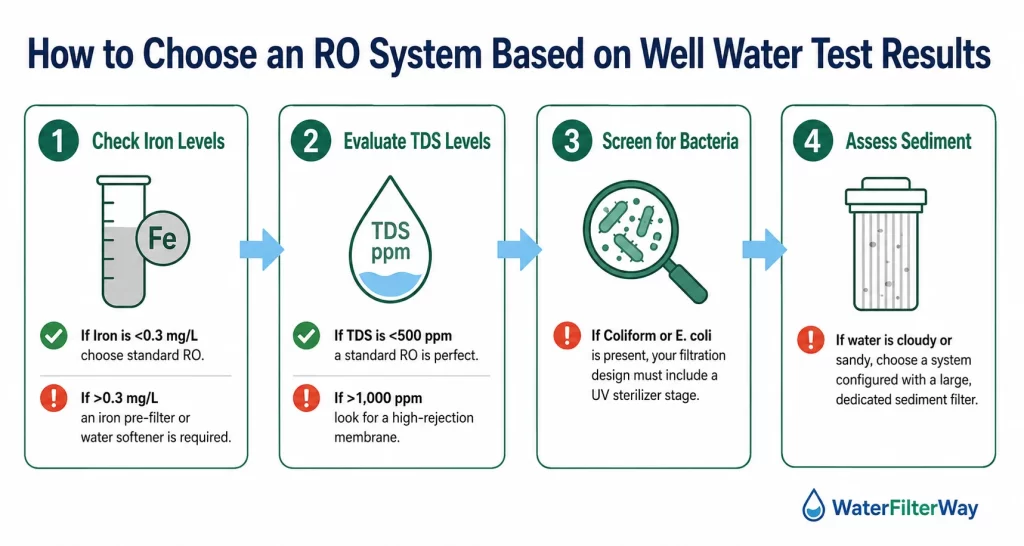
Which RO system is right for you depends on the water test results, sediment level, iron concentration, and bacterial load. Without professional well water analysis, you are merely guessing, which can lead to a poor choice of filtration system within months. Follow this simple logic tree to match your water quality test to system matching.
Step 1: Check Your Iron Levels
- If Iron is <0.3 mg/L
You are safe to use a standard RO system like the APEC ROES-50.
- If Iron is >0.3 mg/L
You must install an iron filter or water softener before the RO unit. High iron levels will “slime” the RO membrane, causing it to fail almost immediately.
Step 2: Evaluate Your TDS Levels
- If TDS is <500 ppm
A standard 5-stage RO system is perfect for water purification.
- If TDS is >1,000 ppm
Look for a “high-rejection” membrane or a system with a permeate pump to maintain filtration efficiency against high contamination levels.
Step 3: Screen for Bacteria
- If Coliform/E. coli is Present
Your filtration design must include a UV sterilizer. An RO membrane alone is not a legal or safe “kill stage” for pathogens in groundwater.
Step 4: Assess Sediment and Turbidity
- If Water is Cloudy/Sandy
Choose a system with a large, dedicated sediment filter (like the iSpring RCC7). You may even need a “spin-down” pre-filter to catch heavy sand before it reaches your under-sink unit.
By using your water testing data to guide your RO selection, you ensure your system actually protects your health rather than just clogging your pipes.
Which RO System Should You Choose for Your Specific Well Water Situation?
Choosing the best RO system for your home isn’t about finding the most popular brand; it is about system selection that matches your specific well water analysis. In 2026, the most reliable water purification system is one that addresses your well’s unique “pain points,” whether that is heavy sand or invisible bacteria.
The 4 Buyer Profiles for Well Water
The High-Sediment Home: iSpring RCC7
The iSpring is your best well water filter if your well draws in sand and silt. Its transparent first-stage housing lets you see the sediment load in real time, so you know when to swap the cheap pre-filter before it clogs the expensive membrane.
The Iron-Heavy Household: Pentair + Pre-filter
A standard RO will fail if your water turns orange and stained. You need a filtration system recommendation starting with a Pentair iron-reduction tank. This water treatment stage strips away “clear water iron” that would “slime out” your RO membrane.
The Budget-Focused DIYer: APEC ROES-50
The APEC is the industry standard for a “no-nonsense” RO comparison winner. It uses standard-sized filters, which are affordable to replace and very easy to find, which makes it the very best long-term choice for anybody who wants safe water at a reduced operating cost.
High-Usage & Tech Family: Waterdrop G3P800
If you have a large family and need the fastest RO system, this tankless unit is our top buyer guide pick. With its 800 GPD flow & integrated UV filter, it’s a lifeline against the bacteria found in private wells.
By aligning your RO system selection with these specific profiles, you ensure your water purification investment lasts for years rather than months.
Does Well Water Always Require a UV Filter with an RO System?
No, a UV filter is only required if your water testing confirms the presence of living pathogens like coliform or E. coli. While some homeowners consider UV purification a safety net against microbial contamination, it is not necessary if your well is deep, properly capped, and consistently tests negative for bacteria. But because water safety is your responsibility on a private well, many 2026 filtration system professionals recommend UV if you have a shallow well near agricultural runoff.
Which Micron Sediment Filter is best for well water before RO?
A 1-5 micron sediment filter is typically best for providing maximum RO system protection from the sand and silt found in groundwater. The industry standard for general sediment removal is a 5-micron pre-filter; however, if your well produces very fine “flour” sand, a 1-micron water filter size is a better water treatment plan. Picking the right micron filter locks these tiny particles in a cheap cartridge before they clog your expensive filtration system.
Can RO Systems Handle Iron in Well Water Without Additional Filters?
No, RO systems cannot handle high iron levels without pre-treatment such as a dedicated iron filter or water softener. Iron removal limits for a standard RO membrane are typically capped at 0.3 mg/L or less as the iron oxidizes and “slimes” the internal components of your water filtration system, causing total failure of your groundwater treatment setup.
How Often Should You Replace Filters When Using RO on Well Water?
Filters need more frequent replacement when using well water due to higher sediment and water contamination levels compared to treated city water. A 6-month maintenance schedule would normally be adequate, but a high sediment load might warrant a filter change every 3 or 4 months to prevent water flow loss. Monitoring your water system upkeep will help control the replacement cost and keep your filtration system providing year-round RO maintenance.
Is a Tankless RO System Better for Well Water Use?
Tankless RO systems are not inherently better for well water unless pre-treatment is properly installed to handle the raw groundwater quality. The RO system design is more compact and offers faster water flow, but the units are very sensitive to water pressure variations and scaling. For a system comparison, a tankless RO is probably more reliable if your well pump produces a low yield, but a tankless RO with integrated UV is a better option for bacteria-prone wells.
Frequently Asked Questions
What is the best reverse osmosis system for well water?
The best RO system for well water depends on the contaminants present, such as sediment, iron, hardness, or bacteria. A good system should include appropriate pre-filtration and an RO membrane suited to your water quality.
What is the best RO system for well water?
A quality RO system with effective sediment and carbon filtration can provide excellent drinking water from a private well. The right choice depends on your water test results and whether additional pre-treatment is needed.
Can you use a reverse osmosis system with well water?
Yes, reverse osmosis can be used with well water to reduce many dissolved contaminants. However, well water should be tested first because high sediment, iron, hardness, or other contaminants may require pre-treatment.
What is the best reverse osmosis system for drinking water from a well?
The best system is one that matches the specific contaminants in your well water and provides adequate pre-filtration before the RO membrane. A water test can help determine which filtration stages are most important.
What should you look for in an RO filter for well water?
Look for strong sediment and carbon pre-filtration, a high-quality RO membrane, and compatibility with your well water conditions. If your water contains high iron, hardness, or sediment, additional pre-treatment may be necessary.