
People who are new to the whole-house water market say that Pelican Water is now part of the Pentair family. Even though the tank’s name is Pentair Water Solutions, the technology inside is still the same Pelican system that many homeowners know and love. This guide contrasts SpringWell with Pentair/Pelican to see which brand delivers the best performance for a 2026 install based on price & value.
The price tag you pay today is what most reviews pay attention to, but here we dig into a cost almost no one pays attention to: your hidden cost. The carbon media lifespan. The difference is how many gallons each system can filter before the internal media needs to be replaced completely. We break down what this gap means to your wallet over the next ten years so you don’t pay a huge maintenance bill later on.
We also check NSF certifications and third-party testing to see which brand has actual data behind its claims. One brand certifies a full system for chlorine removal, while the other certifies individual parts. Knowing what these certificates prove and the things they don’t is the only way to know if your water is as clean as the brochure states.
We make a clear verdict on your home type and water issues. You need a system that can be installed outdoors, a unit with a high flow rate for a large family, or the lowest possible long-term maintenance. We’ll help you find the right model. Ending this guide is our direct recommendation: stop comparing & start drinking cleaner water.
| Comparison Factor | SpringWell CF1 | Pelican Pentair PC600 |
|---|---|---|
| System Type | Tank system (catalytic carbon + KDF, 4-stage ActivFlo) | Tank system (catalytic GAC + copper/zinc media, 3-stage) |
| Flow Rate | 9 GPM (CF1) / 12 GPM (CF4) | 8 GPM service / 12 GPM peak |
| Carbon Media Lifespan | 10 years - no media replacement needed | 5 years - media replacement required |
| Media Replacement Cost | None for 10 years | ~$100-$200 every 5 years |
| True 10-Year Total Cost | ~$1 | 350 (upfront + 10 years maintenance),~$1,350-$1,550 (upfront + maintenance + media replacement) |
| NSF Certification | Components certified (system-level debated) | IAPMO NSF/ANSI 42 (97% chlorine) + NSF/ANSI 61 |
| PFAS Removal | Yes - catalytic carbon + KDF (claimed, lab-tested) | No primary certified claim |
| Chloramine Removal | Yes - catalytic carbon | ActivFlo lab verified,Yes - catalytic GAC (limited independent data) |
| Warranty | Lifetime on tanks and valves | 90-day satisfaction + limited manufacturer warranty |
| Return Policy | 6-month money-back (25% restocking fee) | 90-day return |
| Outdoor Installation | No - indoor only | Yes - suitable for outdoor use in non-freezing climates |
| Smart Features | Optional smart tank head with app | No smart features |
| Where to Buy | Direct online only | Home Depot, Lowe's, and online |
| Initial Flush Required | Standard flush (shorter process) | 48-hour flush before drinking water |
| Best For | Long media life, PFAS removal, smart features | NSF chlorine certification, outdoor installation |
| Current Price | Check Price | Check Price |
Is Pelican the Same as Pentair? What Buyers Need to Know First
Yes, Pelican and Pentair are now the same brand. Pentair, a global water treatment giant, acquired Pelican Water Systems in 2019. If you are searching for the classic “Pelican PC600” or “Pelican PC1000,” you will now find them sold as the Pentair Pelican PC600-P or simply the Pentair Whole House Water Filter System.
What Changed (and What Didn’t)
The core technology, the stainless steel tank, the carbon media, and the internal specs remain identical. The systems still carry the same IAPMO NSF/ANSI 42 certification for chlorine removal that made the original Pelican units popular. The main shift is in the branding, customer support structure, and warranty backing, which are now handled by Pentair’s corporate headquarters.
One practical difference to keep in mind is the company structure. SpringWell remains an independent, family-owned US company based in Florida. Pentair, by contrast, is a massive, publicly traded global corporation (NYSE: PNR). For buyers who prefer the specialized focus of an independent brand over a large industrial conglomerate, this “corporate vs. independent” distinction is often the deciding factor between the two.
SpringWell’s Media Lasts 10 Years, Pelican’s Lasts 5: What Does This Really Cost You?
This is the most important financial difference between the two brands—and it’s the one that most comparison pages miss entirely. The SpringWell CF1 uses a massive bed of catalytic carbon and KDF media rated to last 10 years (or 1,000,000 gallons) before it needs replacing. In contrast, the Pelican (Pentair) PC600 is rated for only 5 years (or roughly 650,000 gallons).
Because Pelican’s media expires twice as fast, you have to “re-bed” the tank twice in the time a SpringWell owner does it once. This isn’t a simple cartridge swap; you must disconnect the tank, dump out the heavy, wet, spent carbon, and pour in new media using a funnel. A Pelican PC600 media replacement kit currently costs between $270 and $330, while the larger PC1000 kit runs $350 to $430. If you aren’t a DIYer, you’ll also need to budget $150-$250 in plumbing labor for each swap.
The Honest 10-Year Total Cost
While Pelican often looks cheaper at checkout, the long-term math tells a different story:
- SpringWell CF1: Upfront (~$1,040) + 10 years of sediment pre-filters (~$400) + 0 media replacements = $1,440 total.
- Pelican PC600: Upfront (~$800) + 10 years of sediment pre-filters (~$350) + 2 media replacements at year 5 and year 10 (~$600) = $1,750 total.
For those who plan to stay in their home longer than five years, SpringWell is the cheaper system, although it has a higher sticker price. It makes financial sense with Pelican only if you want the absolute lowest “move-in cost or plan to sell your home before the first media change arrives.
Which Brand Has Stronger NSF Certification and Does It Actually Matter?
When it comes to “official” badges, Pelican and SpringWell take very different paths. Understanding the difference between a system-level and a component-level certification is the only way to cut through the marketing.
Pelican
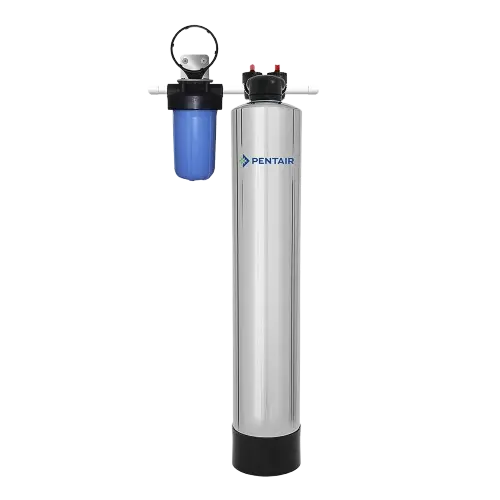
Pelican PC600 & PC1000 systems are independently certified to NSF/ANSI 42 by IAPMO. It is a “full system” certification. That means a third party did not just test the carbon. They tested the whole assembled unit and found it reduces chlorine taste & odor at least 97%. Pelican also has an NSF/ANS 61 certification; which means the tank and inside parts are safe to drink and won’t return chemicals to your water
SpringWell
The certification process for SpringWell is a little more involved. While components used by the company are NSF-certified – such as the tank and the media – the whole system does not yet have a full NSF/ANSI 42 or 53 performance certification.

But SpringWell makes up for this with third-party lab testing. Independent Tap Score reports for the CF1 indicate that it reduces chlorine and THMs to undetectable levels as disinfection byproducts. This is better than NSF 42’s 97% requirement, but a lab report versus an ongoing NSF certification makes it less “official” for some buyers.
The Practical Verdict
- Choose Pelican for documented & certifiable chlorine reduction documentation for warranty claims or local building codes.
- Choose SpringWell if you care more about filtration depth. Its KDF/Carbon mix targets broader health-based contaminants, including PFAS & heavy metals, even if those claims have yet to be stamped with an NSF seal.
Which System Is Better at Removing PFAS and Chloramine?
More US cities are switching to chloramines, a stable but harder-to-remove disinfectant, and PFAS worries become acutely important, with mechanical differences between the two brands.
Chloramine Removal
Both the SpringWell CF1 and Pelican PC600 use catalytic carbon, which is the industry standard for breaking down chloramines. However, performance depends on “contact time”, how long the water stays in the carbon bed.
- SpringWell: Uses a “flex bed” design and ActivFlo technology to prevent water from “channeling” (taking the path of least resistance). Independent Tap Score lab testing confirmed that this setup reduced chloramine byproducts (THMs) to non-detectable levels.
- Pelican: Uses catalytic GAC and a copper/zinc (KDF) oxidation stage. While Pelican explicitly claims chloramine reduction in its manuals, there is less publicly available, third-party lab data verifying its chloramine performance compared to SpringWell’s extensive Tap Score reports.
PFAS Removal
PFAS removal is a high bar for any whole-house system.
- SpringWell: Explicitly markets CF1 removal for PFOA, PFOS, and PFAS removal. Their KDF media, combined with high-grade catalytic carbon, will trap these organic molecules. Independent testing showed SpringWell reduced these contaminants in 1,000,000 gallons.
- Pelican: The PC600 meets NSF/ANSI 42 for “aesthetic” effects such as chlorine taste and odor. There is no certification or manufacturer claim for PFAS removal with it. If your local water report has PFAS contamination, SpringWell is safer.
How Do SpringWell and Pelican Really Compare on Warranty and Returns?
When you spend $1,000+ on a filtration system, the “fine print” on buyer protection is just as important as the filter media. Following Pentair’s acquisition of Pelican, the gap between these two brands regarding long-term security has widened significantly.
The Warranty
- SpringWell
SpringWell offers a true lifetime warranty on all “covered items,” including the tanks, valves, bypass, and fittings. If a tank cracks or a valve head fails due to a manufacturing defect in 2035, you are covered.
- Pelican (Pentair)
Major components like tanks and valves are now covered for 5 years. Though a huge global company, Pentair’s standard warranty document is far shorter than SpringWell’s independent guarantee.
The Return Policy
- SpringWell’s 6-Month Guarantee
You can try the system for up to six months. If you aren’t satisfied, you can return it. However, be aware of the 25% restocking fee. On a $2,100 combo system, that is a $525 loss, not including the shipping costs you must pay to send a 50 lb tank back to Florida.
- Pelican’s 30-Day Window
Pentair has an even stricter official online store policy: 30 days from receipt of the item. They have to be in “new, unused condition.” This makes “trying” the system and returning it if you dislike the water quality virtually impossible; Pelican’s policy is sort of a “change of mind window” for uninstalled products.
If you want “trial period peace of mind,” SpringWell is the winner – if you can bear the high restocking fee. If you want lifetime hardware protection, SpringWell gives you that versus Pentair’s 5-year cap. Pelican or Pentair is for the 100% sure buyer who does not expect a return or manufacturer support after the purchase.
Which One Should You Actually Buy: SpringWell or Pelican?
In 2026, for most city-water homeowners, the SpringWell CF1 is the better long-term investment. Add in Pelican’s five-year media replacement cost of roughly USD 300-USD 400, and the price gap is gone; you get a system with a longer warranty, better PFAS evidence, and a generous trial period.
What actually is the best depends entirely on your home setup and purchasing habits.
- The “Certified-Only” Buyer: Buy the Pelican PC600 or PC1000
If you require a documented, third-party performance stamp to satisfy a home inspector or local code, Pelican is the winner. Its IAPMO NSF/ANSI 42 certification provides verifiable proof of 97% chlorine reduction, whereas SpringWell’s certification is currently limited to individual components rather than the full system.
- The Outdoor Installer Buy Pelican
If you live in a warm climate (like Florida or Arizona) and need to install your filter on the side of the house, Pelican is your only choice. SpringWell explicitly states that outdoor installation voids their lifetime warranty, while Pelican’s stainless steel tank is designed to handle non-freezing outdoor environments.
- The Retail Traditionalist Buy Pelican
If you prefer the security of a brick-and-mortar store, Pelican systems are available at Home Depot and Lowe’s. This allows you to see the unit in person, use pro-installation services from a major retailer, and handle potential returns at a physical service desk rather than shipping a 50 lb tank back to a manufacturer.
- The Long-Term Value & PFAS-Conscious Buyer Buys the SpringWell CF1
This is the “set it and forget it” choice. With a 10-year media life and a lifetime warranty on tanks and valves, it offers the lowest total cost of ownership over a decade. Furthermore, its independent Tap Score lab results provide the strongest evidence for removing “forever chemicals” (PFAS) and chloramine byproducts.
- The Large, High-Demand Home: Compare the CF4 vs. PC1000
If you have 4+ bathrooms, the Pelican PC1000 offers a higher flow rate of 15 GPM compared to the SpringWell CF4’s 12 GPM. In a household where multiple showers, a dishwasher, and a washing machine run simultaneously, those extra 3 gallons per minute prevent noticeable pressure drops.
What Happens to the Black Water When You First Install a Pelican Filter?
Seeing black or very dark water upon installation of a Pelican (Pentair) filter is a normal, documented part of the startup process. This happens because microscopic particles of activated carbon, called “carbon fines,” shake loose during shipping and when water first rushes through the tank. Pelican recommends a 48-hour flush period before drinking or cooking with the water. During this window, run all taps in the home to clear the lines periodically; the water will turn black, then gray then clear.
Can You Install a Pelican or SpringWell Filter in a Garage or Outdoors?
Pelican PC600 & PC1000 systems give homeowners in warm climates such as Florida or Arizona the advantage of being rated for outdoor installation if protected from freezing. SpringWell CF1 & CF4 systems require indoor installation; however, placement in a non-climate-controlled outdoor space specifically voids the warranty. Both brands will suffer internal damage when exposed to temperatures below 32°F, but Pelican is your only option if you have an outdoor utility closet or unconditioned garage as your primary water entry point.
Does SpringWell or Pelican Have a Better Option for Well Water Homes?
Though both are competitive for city water, SpringWell is the clear leader for well water users. SpringWell WS is a high-performance air-injection oxidizing filter that removes 7 PPM of iron and 8 PPM of hydrogen sulfide, “that rotten egg” smell. Pelican offers well water systems, but both the water treatment community and independent reviews indicate that SpringWell’s WS iron filter is the stronger, more reliable choice for heavy well water contaminants. When on a private well, compare the specialized well-water models to the standard city-water units described here.
Are There Any Real User Complaints About SpringWell That Pelican Avoids?
Yes, honest editorial oversight requires pointing out that SpringWell charges a documented 25% restocking fee on returns, which can cost buyers over USD 500 on large combo systems, a common complaint point in BBB and forum threads. Since Pelican is sold by big retailers like Home Depot, buyers can sometimes avoid manufacturer return headaches by using the retailer’s more lenient in-store return policies. In addition, SpringWell has no physical retail presence; you can’t touch the unit in person before buying, while Pelican, in local aisles, gives you a “hands-on” advantage that SpringWell lacks with its direct-to-consumer model.
Frequently Asked Questions
Is SpringWell better than Pelican in 2026?
For most city-water homes, SpringWell offers better long-term value with a 10-year media lifespan, lifetime warranty, and stronger PFAS reduction evidence. Pelican is a better fit for buyers who want NSF-certified system performance or outdoor installation.
Which system costs less to own over 10 years?
SpringWell generally has a lower total ownership cost because its media lasts up to 10 years. Pelican media typically requires replacement after about 5 years, adding extra maintenance expenses over time.
Does Pelican have better NSF certification than SpringWell?
Yes. Pelican systems hold IAPMO NSF/ANSI 42 certification for chlorine reduction, while SpringWell relies on NSF-certified components and independent lab testing rather than full system-level certification.
Which system is better for PFAS and chloramine removal?
SpringWell has an advantage for PFAS-conscious homeowners because it combines catalytic carbon and KDF media with independent lab testing. Both systems use catalytic carbon for chloramine reduction.
Can SpringWell and Pelican be installed outdoors?
Pelican systems can be installed outdoors in non-freezing climates. SpringWell recommends indoor installation, and outdoor installation may void the warranty.
