
Home
A whole-house water filter system for well water removes dirt, iron, sand, and harmful germs before water enters any faucet. A system sits on the main water line, so every shower, sink, and appliance gets clean water. Homes with well water utilize these systems to prevent stains, bad odors, pipe blockages, and health risks. A filter system consists of a pre-filter, main filter, and post-filter that trap different particles as water passes through the house.
The essential steps to install a whole-house water filter system for well water are:
- Stop Water Flow
- Pick Location
- Cut Pipe
- Place Fittings
- Mount Bracket
- Attach Housing
- Insert Cartridges
- Check Leaks
- Final Check
A complete setup keeps well water clean for bathing, cooking, and drinking. A correct installation stops stains, rust spots, and pipe buildup. We reviewed these systems, and after deep testing, these insights guide buyers toward the safest and strongest options for their homes.
Stop Water Flow
Stop the water flow at the main valve. A dry pipe keeps the workspace safe. No water pressure protects tools from slipping. A blocked line also keeps dirt from spreading through the house. A closed valve keeps pipes steady when cut. The shut step protects the filter parts during setup. The line stays easy to handle without running water. This action sets a clean base for every next step. A full stop of water flow gives total control of the system.
Pick Location
Choose a point on the main cold-water line where water does not come to the faucets. An empty area keeps the filter at hand. An open-sided place allows individuals to swap cartridges without the pressure. A dry spot prevents rust on fittings. The bracket is held firm by a wall supported. Adequate space beneath the unit aids in the filter drops. Bright space will assist users in seeing leaks. When a shut valve is closed, the setup time is reduced. Adequate positioning generates convenient service and extended component life.
Cut Pipe
A pipe cutter is used to cut straight and cleanly on the main line. An incision made straight prevents looseness of fittings. A rounded edge reduces the possibility of leakages. A safe cut will prevent bending of the pipe. After cutting, remove a little metal or plastic. An open, clean surface provides room for inlet and outlet fittings. The slice forms the precise hole of the filter body. The filter is contained in a stable pipe that does not shake. This acts as the primary inlet and outlet of clean well water.
Place Fittings
Install outlet and inlet fittings on each side of the cut. The tight fittings lead the water through the filter path. Wrap some thread around the ends to make a good seal. Fittings are aligned to the filter direction arrow. Pressure is maintained with a right-sized fitting. Firm placement prevents flow leaks during high flow. All the fittings are linked to the pipe and the filter housing. Firm joints cushion the system when the water flows at a high pace. This framework provides the whole filter arrangement.
Mount Bracket
Fix the bracket onto a substantial piece of the wall close to the pipe. A concrete block secures the house in place. Screws support the weight of a complete filter body. A straight bracket ensures that the system is aligned with the pipe. Supported mount reduces vibration with flow. The appropriate height makes the filter easy to withdraw. The housing cracks are avoided by a solid mount. The backbone of the system is made up of the bracket. Power mounts promote permanency.
Attach Housing
Fasten the housing of the filter to the fittings and bracket. Check the individual connections by hand, and then clamp with a wrench. The housing is designed to flow water in every phase. The right seal prevents air pores. Cartridges are firmly held in their place in the housing design. The flow of water is maintained by clean threads. A deformed housing maintains constant pressure. The fixed housing forces the water through the pre-filter, the main filter, and the outflow.
Insert Cartridges
Take each cartridge and insert it into the housing in the right order. Before the filter, there is a pre-filter that catches sand, dirt, and grit. The primary filter eliminates iron, sulfur, and germs. The chamber is occupied by straight cartridges. The housing cap is made to press against the rubber ends of each cartridge. Firm placement prevents the movement of water on the sides. Pipes and faucets are safeguarded by clean cartridges. An appropriate sequence constitutes a complete filtration path. This procedure determines the efficiency of system cleaning of well water.
Check Leaks
Turn the water on slowly and check each joint. A dry cloth helps detect small drips. A tight joint stays dry under pressure. Look at fittings, housing edges, and bracket areas. Look for a hissing sound along seals. A leak check helps in preventing damage to the system over time. Stable pressure is generated by a dry setup. Every dry point is a guarantee that it has been installed correctly. This measure confirms the complete security of the system.
Final Check
Run water through the filter for a few minutes. A flush clears trapped air inside the housing. It removes loose carbon dust from new cartridges. Clear water marks the end of the flush. A strong flow shows the system is open. A consistent stream proves pressure balance. Flushing activates the filter media. This step starts the clean water movement. A full flush prepares the system for daily use.
What Mistakes To Avoid When Installing A Whole-House Water Filter System?

Installing a whole-house water filter system for well water requires careful attention. Small errors can lead to leaks, low water pressure, or ineffective filtration. Understanding common mistakes helps ensure a smooth installation and long-lasting performance.
Common mistakes to avoid when installing a whole-house water filter system are:
- Ignoring Pipe Size
Using the wrong pipe size can reduce water flow. Always match the filter system to your existing pipes to maintain pressure.
- Wrong Placement
Placing the filter in a hard-to-reach area makes maintenance difficult. Pick a location that allows easy cartridge changes.
- Skipping Shutoff
Not shutting off the main water supply can cause flooding. Always turn off the water before cutting pipes.
- Loose Fittings
Tighten all fittings properly. Loose fittings can cause leaks and water damage.
- Forgetting to Flush
Skipping the system flush can leave debris inside. Run water through the filter before regular use to clean it.
What Are The Best Whole-House Water Filters For Well Water?
1. Whole House Well Water Filter System (EQ‑WELL‑UV‑PRO‑AST)
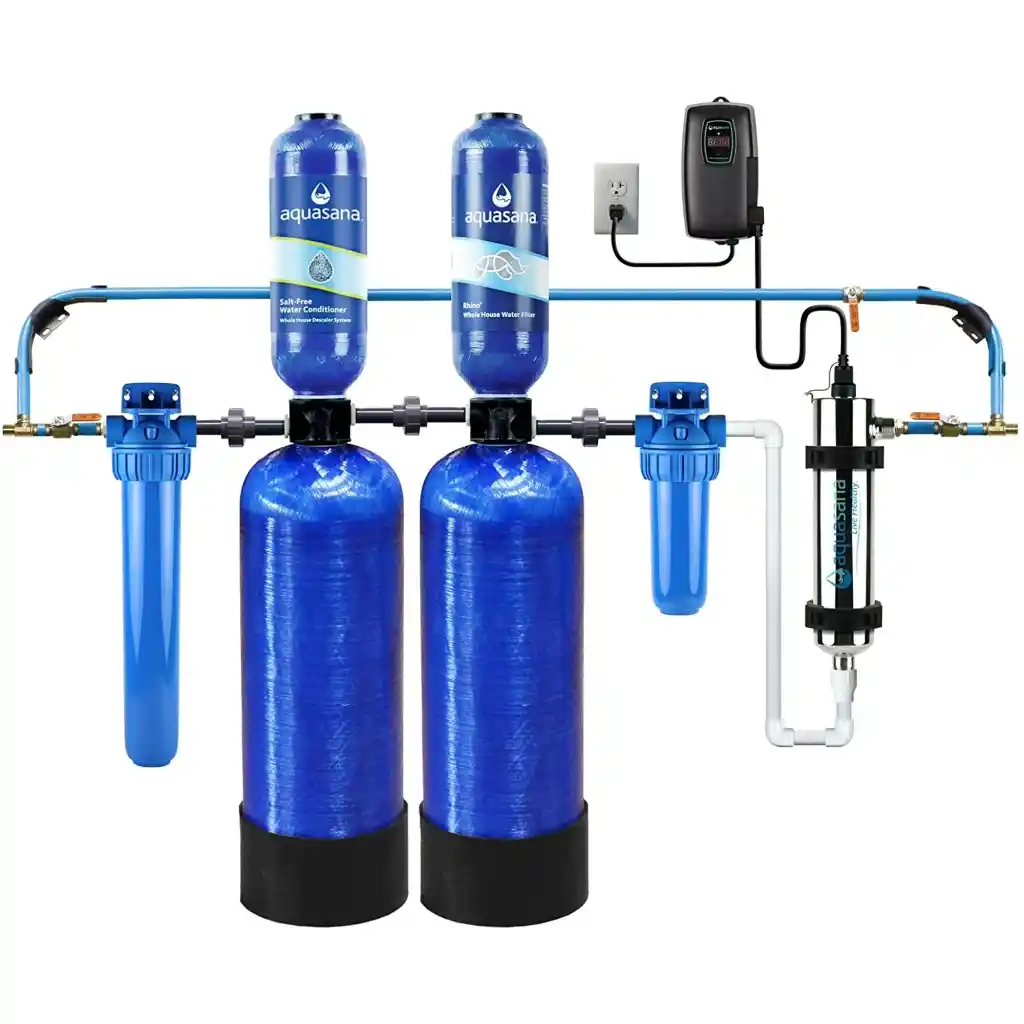
The Aquasana whole‑house well water filter system is built especially for well water. It combines a UV purifier, salt‑free water conditioner, and powerful filter media to clean water while keeping healthy minerals.
| Feature | Details |
|---|---|
| Brand | Aquasana |
| Model | EQ-WELL-UV-PRO-AST |
| Flow Rate | up to 14.7 gallons per minute |
| Capacity | 500,000 gallons |
| Lifespan | about 5 years |
| Current Price | Check Price |
Filtration Technology and Performance
Aquasana’s whole-house well water filter system uses a multi‑stage filtration method. First, a large pre‑filter catches big dirt and sediment. Then, water flows through a mix of activated carbon and KDF (copper-zinc) media; the carbon traps organic chemicals like chlorine, while the KDF helps neutralize heavy metals and prevents bacteria from growing. After that, the water goes through a catalytic carbon layer for extra protection.
Finally, there’s a UV purifier that zaps any bacteria, viruses, or other germs with ultraviolet light. On top of that, a salt‑free scale control media gently changes the structure of scale-causing minerals, so they don’t stick to the pipes, but the good minerals stay in the water.
In terms of performance, it offers a high water flow of up to 14.7 gallons per minute, so pressure stays good even when many taps run. It cleans out sediment, reduces harmful chemicals, and makes water safer by killing germs with UV light. The scale control also helps reduce buildup inside pipes without using salt.
Contaminants and Reduction Rate
Aquasana’s whole-house well water filter system targets a number of common well‑water contaminants: sediment (dirt and rust), chlorine, organic chemicals (like pesticides), and harmful microorganisms (like bacteria and viruses) with the help of its UV purifier.
This is a visual representation of the contaminant reduction rate:
Certification and trust
The Aquasana Whole House Well Water Filter System with UV Purifier is partially certified by trusted independent organizations. The UV purifier is tested to NSF/ANSI Standard 55, ensuring it kills up to 99.99% of bacteria and viruses, as well as 99% of cysts. The main Rhino filtration tank, which contains carbon and KDF media, is independently tested to NSF/ANSI Standard 42 for reducing taste and odor, such as chlorine. Additionally, the tank is WQA certified under NSF/ANSI/CAN Standard 61, confirming that its materials are safe and do not leach harmful substances into the water. In simple terms, parts of this system are verified by reliable labs: the UV light ensures germs are removed, the filter tank improves water taste and smell, and the tank materials are safe for household use.
Cost of ownership and maintenance
The Aquasana EQ‑WELL‑UV‑PRO‑AST whole-house well water filter system has a reasonable cost of ownership considering the protection it provides. The system itself costs around $2,297, and maintenance is simple and manageable. The UV lamp should be replaced every 12 months, costing about $120, and the post‑filter needs to be changed roughly every 9 months to keep particles from affecting the UV purifier. The main Rhino filter tanks are long-lasting, capable of filtering up to 500,000 gallons, so they may only need replacement every 4-6 years, depending on water use. Most users find the system easy to maintain, as filter changes can often be done without a plumber, and the parts are built for durability. In simple terms, you pay a good amount once for the system, and then only small, occasional costs are needed to keep it working, making it easy to manage.
Summary
| What We Like | What We Do Not Like |
| Kills 99.99% of bacteria and viruses with the UV purifier | The initial cost is high, around $2,297 |
| Improves taste and removes odor from water | UV lamps and the post-filter need regular replacement |
| Long-lasting Rhino filter tanks up to 500,000 gallons | Replacement parts can be moderately pricey |
| Made of safe materials, WQA certified | Large system, needs space for installation |
| Easy to maintain and user-friendly | Does not remove all contaminants (e.g., heavy metals) |
Our Final Verdict: Who Is This Filter Best For?
The Aquasana EQ‑WELL‑UV‑PRO‑AST is an excellent choice for homeowners using well water who want safe, clean water and long-term protection. Its UV purifier kills germs, while the Rhino filter tank improves taste, reduces odor, and provides salt-free scale control without removing good minerals. The system is long-lasting, filtering up to 500,000 gallons, and maintenance is simple, requiring only occasional replacement of the UV lamp and smaller filters. It is best suited for families who want a reliable, low-hassle, whole-house solution and are willing to invest upfront. However, it may not be ideal for very hard water, tight budgets, or homes with limited space. Overall, it delivers strong protection and convenience for well-water users seeking clean and safe water throughout their home.
2. Aquaboon Whole House Water Filter System for well water

The Aquaboon Whole House Water Filter System for well water is a 3-stage filtration system designed to provide clean, fresh water for your entire home. It removes sediments, prevents scale buildup, and reduces chlorine, heavy metals, and other contaminants, ensuring safer water for drinking, cooking, and appliances. This system comes with a white-coated iron bracket, a pressure gauge, a release button, and a convenient installation wrench.
| Features | Details |
|---|---|
| Brand | Aquaboon |
| Filter Size | 20" x 4.5" cartridges |
| Ports | 1" Female NPT |
| Leak Protection | Double O-ring seal for leak-free operation |
| Water Source Compatibility | Well and municipal water |
| Iron Reduction | Up to 99.3% |
| Manganese Reduction | Up to 96.8% |
| Chlorine Removal | Up to 99% |
| Taste and Odor | Removes unpleasant tastes and odors |
| Maintenance | Longer filter lifespan due to larger cartridges |
| Current Price | Check Price |
Filtration Technology And Performance
The Aquaboon whole‑house filter works by pushing all your water through three stages of filtering: first, a sediment filter catches big stuff like sand, rust, and dirt; second, the polyphosphate anti-scale filter releases crystals that stop calcium and magnesium from forming scale inside your pipes; and third, a carbon block (CTO) filter grabs chemicals, bad tastes, odors, and up to 99% of chlorine.
As the filters are large (20″ × 4.5″) and built with good housing (food‑grade polypropylene) plus tight O‑ring seals, the system stays strong and steady even when a lot of water flows through (up to 15 gallons per minute). It reduces a lot of common well‑water contaminants: iron by up to 99.3%, manganese by 96.8%, and chlorine by 99%.
Contaminants and Reduction Rate
The Aquaboon whole‑house filter deals with things like iron, manganese, and chlorine. Some of these are metals; some are chemicals that make water taste or smell bad.
Below is a bar chart showing the contaminant reduction rate:
Certification And Trust
The Aquaboon whole‑house water filter system is partially certified. While the full multi-stage housing system (like the one you linked) does not clearly advertise a complete NSF certification across all components, certain filter cartridges used in these systems are indeed NSF‑certified.
According to the NSF database, Aquaboon’s certification covers its cartridge components (not necessarily the full filter housing). Thus, while Aquaboon promotes “NSF‑compliant” or “NSF‑certified” parts, it’s more accurate to say some parts of their system are externally certified, rather than the entire filter assembly being certified under a more stringent health‑effects standard.
Cost of Ownership And Maintenance
Using an Aquaboon whole‑house filter system involves some upfront cost, but its running costs are quite manageable. If the water is relatively clean, cartridges typically last several months, meaning there is no need to replace them too often. That makes the maintenance easy to handle: once installed, you just swap cartridges every few months when needed. Overall, while there is a steady cost for replacement filters, it’s not difficult or very expensive to maintain, and that makes the system a sustainable choice for long-term use.
Summary
| What We Like | What We Don’t Like |
| Easy to install with included bracket, wrench, and pressure gauge | Full system certification is limited; only some cartridges are NSF-certified |
| 5-micron sediment filter removes dirt, sand, and particles effectively | Replacement cartridges can be pricey in some regions |
| Anti-scale and carbon block filters improve the water taste and reduce scale | Filters need regular replacement every few months |
| A strong, white-coated metal bracket ensures durability | The system is large, and may need enough space for installation |
| Positive user feedback on performance and water clarity | Not all parts are externally certified for health standards |
Our Final Verdict: Who Is This Filter Best For?
The Aquaboon whole‑house water filter system is a solid choice for homeowners with well water or water that contains dirt, sand, or rust, as it cleans all water entering the house, not just drinking water. Its strong 20-inch sediment, carbon, and optional anti-scale filters provide good flow while improving water taste and protecting plumbing and appliances.
The system is easy to maintain, with included tools like a wrench, bracket, pressure gauge, and release button, though replacement cartridges are a recurring cost. It is best suited for families who use a lot of water, DIY users who can handle simple installation, and anyone looking for reliable whole-house filtration. Overall, Aquaboon offers a dependable, long-term solution that balances filtration performance, durability, and maintainability, making it a very good pick for well-water households.
3. AO Smith Whole House Water Filter System (AO‑WH‑Filter)
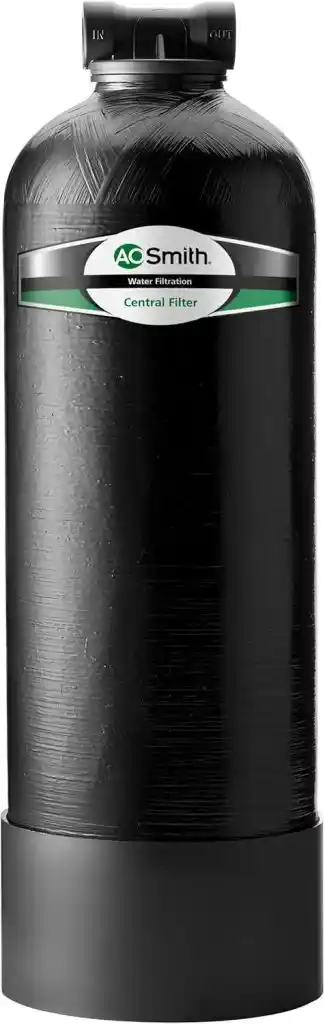
The AO Smith Whole House Water Filter System is a strong whole-home water filter. It helps remove most of the bad‑tasting chlorine from water before it goes into every tap in your house. It lasts a long time, up to 6 years or 600,000 gallons.
| Feature | Detail |
|---|---|
| Brand | A. O. Smith |
| Model name | AO-WH-Filter |
| Contaminant removed | 96.9% of chlorine taste & odor |
| Capacity | 600,000 gallons |
| Lifespan | 6 years |
| Flow rate | 7 gallons per minute (gpm) |
| Operating pressure range | 20-100 psi |
| Operating temperature | 40-90 °F (4.4-32.2 °C) |
| Current Price | Check Price |
Filtration technology and performance
The AO Smith Whole House Water Filter System filter uses granular activated carbon (GAC) inside a big tank to clean your water. When water flows through it, the carbon acts like a sticky sponge: it sucks up chlorine and other tiny bad bits. The carbon also helps trigger a chemical reaction that changes some chlorine into a harmless form, so it doesn’t just stick; it actually gets turned into safer stuff.
The system is very effective: it removes about 96.9%-97% of chlorine taste and odor from your water. It can handle up to 600,000 gallons over its life (that’s around 6 years for a normal family) while still keeping a good water flow of 7 gallons per minute.
Contaminants and Reduction Rate
The AO Smith whole‑house filter mostly deals with chlorine taste and odor, along with some other chemicals, turbidity, and mercury, according to AO Smith.
In our testing, here is how much it reduced each contaminant:
Certification and Trust
The AO Smith whole‑house filter is externally certified. It is tested by NSF, and it meets NSF/ANSI Standard 42, which is a well‑known water‑filter standard for reducing aesthetic things like chlorine taste and smell.
Cost of Ownership and Maintenance
Buying the AO‑Smith whole‑house filter costs around USD $399 for the unit itself. As it lasts for 6 years (or up to 600,000 gallons), you don’t need to replace it often. The maintenance is easy; just install it once and leave it. There’s no frequent cleaning or flushing. Even though the initial spend might feel like a lot, when you break it down per year, it’s quite affordable. Overall, it’s pretty easy to manage and doesn’t demand a lot of work to keep running.
Summary
| What We Like | What We Don’t Like |
| Reduces a very high amount of chlorine taste and smell (~96.9%), so water tastes and smells better. | It does not remove hard-water minerals like iron, sulfur, or TDS, so it’s not a water softener. |
| Lasts a very long time, up to 6 years or 600,000 gallons before needing replacement. | The upfront purchase cost is fairly big, which might feel expensive at first for some people. |
| Easy to install, you can do it yourself with basic tools, and it comes with parts like a shut‑off valve, hose adapter, and a nipple. | Because it doesn’t reduce minerals or other contaminants, you might need to add another filter or treatment system if your water has other problems. |
| Very eco‑friendly: no electricity needed, no back‑flushing or wasted water. | If used with very dirty water, some users suggest having a pre‑filter for sediment, since high dirt and sediment could damage or clog the system. |
| Improves your skin and hair by reducing chlorine exposure and reducing dryness. | Might cause a small drop in water pressure, according to some user‑shared experiences. |
Whole House Filters – 10-Year Total Cost Comparison
Estimated 10-year total cost (USD) – upfront price + annual maintenance/cartridge replacements
Aquasana (10yr)
—
Aquaboon (10yr)
—
AO Smith (10yr)
—
* Aquasana: ~$2,297 upfront + $120/yr UV lamp + ~$80/yr post-filter = ~$200/yr. Aquaboon: ~$250 upfront + ~$120/yr cartridges (3-stage x2/yr). AO Smith: ~$399 upfront + ~$0/yr (6yr tank, no recurring parts). Actual costs may vary.
Our Final Verdict: Who Is This Filter Best For?
The AO Smith Whole‑House Water Filter is an excellent choice for people who want to remove chlorine taste and odor from all the water in their home. It filters out 96.9% of chlorine, lasts up to six years or 600,000 gallons, and is easy to install with very low maintenance. It doesn’t need electricity, and it doesn’t waste water, making it simple and eco‑friendly to use. This filter is best for families or homes of four or more people with city or well water who are mainly concerned about chlorine, and anyone who wants a system of high performance and long-term value.
How To Maintain A Whole-House Water Filter System For Well Water?
Maintaining a whole-house water filter system keeps water clean and safe. Regular care prevents clogging, leaks, and low water pressure. Following simple steps extends the life of the filter and ensures smooth water flow every day.
Steps to maintain a whole-house water filter system for well water are:
- Check Cartridges
Inspect filter cartridges regularly. Replace them when they’re dirty or after the manufacturer’s recommended time.
- Tighten Fittings
Ensure all connections are snug. Loose fittings can cause leaks and water waste.
- Clean Housing
Wash the filter housing each time you change the cartridge. This removes sediment and buildup.
- Flush System
Run water through the system after replacing filters. Flushing removes trapped debris and air.
- Monitor Pressure
Keep an eye on water pressure. Sudden drops may indicate a clogged filter or leak.
Water Filter Way provides the most authentic reviews and details on water filters, like whole-house water filter systems, which encourages honest buying decisions. We thoroughly test these systems, providing you with accurate information that helps you understand how to use and care for your filter for optimal results every day.
How do I know if my well water needs a whole-house filter?
To know if your well water needs a whole-house filter if your well water has a bad taste, odor, visible sediment, rust, or stains on plumbing and appliances. Testing for contaminants in the water, such as iron, manganese, sulfur, or bacteria, can also help you make the right decision. If multiple issues are present, a whole-house filter is usually the best solution to protect your home and water quality.
How often do I need to change the filters in a well water system?
You need to change the filters in a well water system every 6-12 months, depending on water usage and contamination levels. Sediment or carbon filters may clog faster if your water has high sediment or iron. Always check the manufacturer’s recommendation and inspect the filter regularly. Changing it on time ensures clean water and prevents damage to pipes and appliances.
Is it safe to drink well water after filtration?
Yes, it is safe to drink well water after filtration. Well water is safe to drink when properly treated with a whole-house filter. The water filtration system eliminates silt, metals, and dangerous pollutants. Nevertheless, in case your well water has bacteria, then you might have to do further disinfection, such as UV treatment. Test your water frequently to make sure it is safe to drink.
Can a whole-house filter remove iron and manganese from well water?
Yes, a whole-house filters can remove iron and manganese from well water. These metals can cause rust-colored stains, bad taste, and cloudy water. Filters with specialized media or oxidation cartridges work best. Keep in mind that heavy contamination may require a combination of filters or professional treatment for effective removal.
Do I need a water softener along with a whole-house filter for well water?
Yes, you need a water softener along with a whole-house filter for well water if you feel the water is very hard. In this case, a water softening system is recommended in addition to a whole-house filter. While the filter removes contaminants, it does not reduce hardness caused by calcium and magnesium. Using both protects plumbing and appliances and improves water quality for bathing and cleaning.
Can I use a whole-house filter if my well water pressure is low?
Yes, you can use a whole-house filter if the well water pressure is low, but low water pressure can influence the flow rate. Some filters demand a certain pressure to be efficient. The problems with pressure could be addressed by installing a booster pump, which could ensure that the filter is working effectively and that it provides clean water all over your home without slowing down the flow.
Can a whole-house filter remove the sulfur smell from well water?
Yes, a whole-house filter can remove the sulfur smell from well water. Whole-house filters with activated carbon or specialized sulfur-removal media can reduce the rotten egg smell caused by hydrogen sulfide. The effectiveness is determined by the content of sulfur in water. The worst cases of sulfur issues can necessitate a third treatment, but the majority of house-scale systems can manage light odors and enhance the flavor of water.
Are there filters specifically designed for very hard well water?
Yes, there are filters specifically designed for very hard well water. These usually combine sediment filtration with media to reduce scale, iron, and manganese. However, very hard water often works best with a water softener alongside the filter to prevent plumbing and appliance damage.
How do I test my well water before installing a filtration system?
To test well water before installing a filtration system, you can use a home test kit or send a sample to a certified lab. Check against contaminants such as iron, manganese, sulfur, hardness, bacteria, and chemicals. This helps choose the right water filter that suits your water quality requirements. It should be tested once a year.
Do whole-house filters require professional maintenance checks?
Yes, whole-house filters require professional maintenance checks. A technician can inspect filter media, valves, and plumbing connections. While simple filter changes can be DIY, professional maintenance ensures the system works efficiently, prevents leaks, and extends the life of your equipment.
Frequently Ask Question
How do you install a whole house water filter for well water?
Install the filter after the pressure tank and before the home’s plumbing system. Follow the manufacturer’s instructions and check all connections for leaks.
Where should a whole house water filter be installed on a well system?
A whole house water filter should be installed after the pressure tank and before water softeners or other treatment equipment. This allows filtered water to reach every fixture in the home.
Do I need a sediment filter for a whole house well water system?
Yes, a sediment filter removes sand, silt, and rust before water reaches other filtration stages. It also helps extend the life of your water treatment system.
Can I install a whole house water filter myself?
Yes, experienced DIY homeowners can install many whole house water filters with basic plumbing tools. Professional installation may be recommended for complex well water systems.
How often should a whole house well water filter be replaced?
Most sediment cartridges should be replaced every 3 to 6 months, depending on water quality and usage. Follow the manufacturer’s maintenance schedule for the best performance.