
PFAS is effectively reduced using reverse osmosis, activated carbon, or ion exchange systems. The PFAS definition includes PFOA and PFOS, which are synthetic tap water contaminants commonly called forever chemicals. These chemicals resist natural breakdown during standard water purification. Effective PFAS filtration needs certified water treatment options. Non-certified filters leave forever chemicals in the water supply. Homeowners select a PFAS water filter based on the specific contamination level. Reverse osmosis PFAS systems give the highest removal rates. Activated carbon PFAS filters trap the chemicals through adsorption. Ion exchange PFAS systems use resin to capture the contaminants. To achieve reliable PFAS removal, you must use proper equipment.
| Method | PFAS Reduction Level | Use Case | Limitation |
| Reverse Osmosis | 90 to 99% | High contamination levels | Creates wastewater |
| Activated Carbon | 70 to 95% | Moderate contamination | Depends on contact time |
| Ion Exchange | 80 to 95% | Short-chain compound removal | Requires pre-filtration |
What Are PFAS and Why Are They Difficult to Remove from Water?
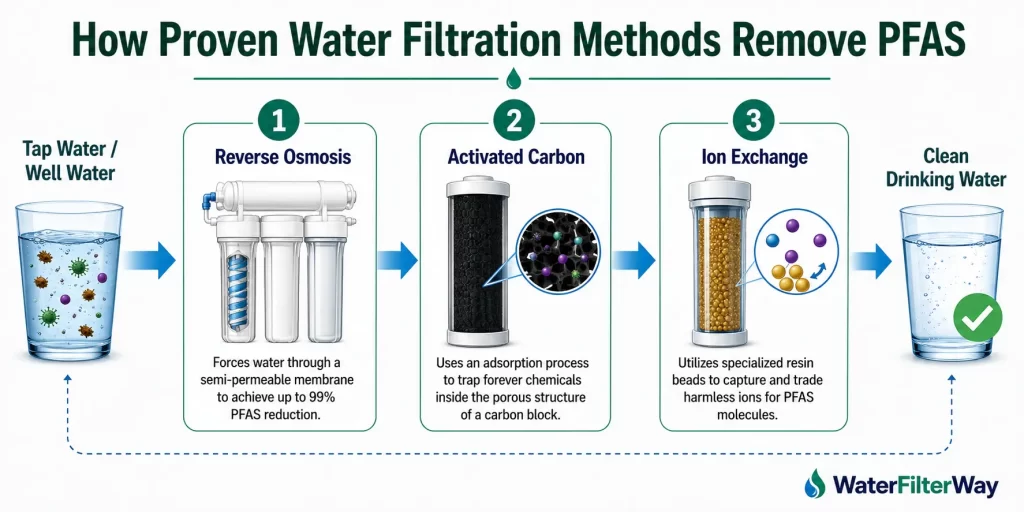
PFAS are man-made chemicals that are hard to break down because they have a very strong carbon-fluorine bond. PFOA and PFOS are the most studied types of water pollutants. These chemicals stay in water for a long time because they do not easily react with heat, water, or natural breakdown processes. This is why they are called “forever chemicals.” PFAS mix easily in water and do not settle or separate; it is hard to filter them using normal water filters. Most basic filtration systems cannot catch them because they are too small and stay fully dissolved. Because of this stability and small size, PFAS can pass through regular treatment systems and remain in drinking water unless special filtration methods are used.
Which Water Filtration Methods Actually Remove PFAS?
| Feature | Reverse Osmosis (RO) System | Activated Carbon Filter |
|---|---|---|
| Price | $100 to $600 (Higher End) | Lower Entry Point |
| Filtration Stages | Multi-Stage with Membrane | Carbon Block / GAC |
| Reduction Level | 90 to 99% PFAS Reduction | 70 to 95% PFAS Reduction |
| Key Limitation | Creates Wastewater | Depends on Contact Time & Saturation |
| Filter Life | Varies based on membrane quality | 2 to 12 months |
| Mechanism | Pressure filtration via semi-permeable membrane | Adsorption process |
| Best For | High PFAS contamination levels | Moderate PFAS contamination |
Reverse osmosis, activated carbon, and ion exchange are the only proven methods for PFAS filtration. These water filtration methods provide different levels of filtration effectiveness based on their design. Reverse osmosis PFAS removal has the highest rejection rate by forcing water through a semi-permeable membrane. Activated carbon adsorption traps contaminants inside the porous structure of the carbon block. An ion exchange resin mechanism changes harmless ions for PFAS molecules. These purification technologies target the specific chemical structure of forever chemicals. Proper contaminant removal requires matching the filtration comparison data to your local water quality. Standard sediment filters lack the technology for meaningful PFAS reduction.
How Effective Is Reverse Osmosis at Removing PFAS?
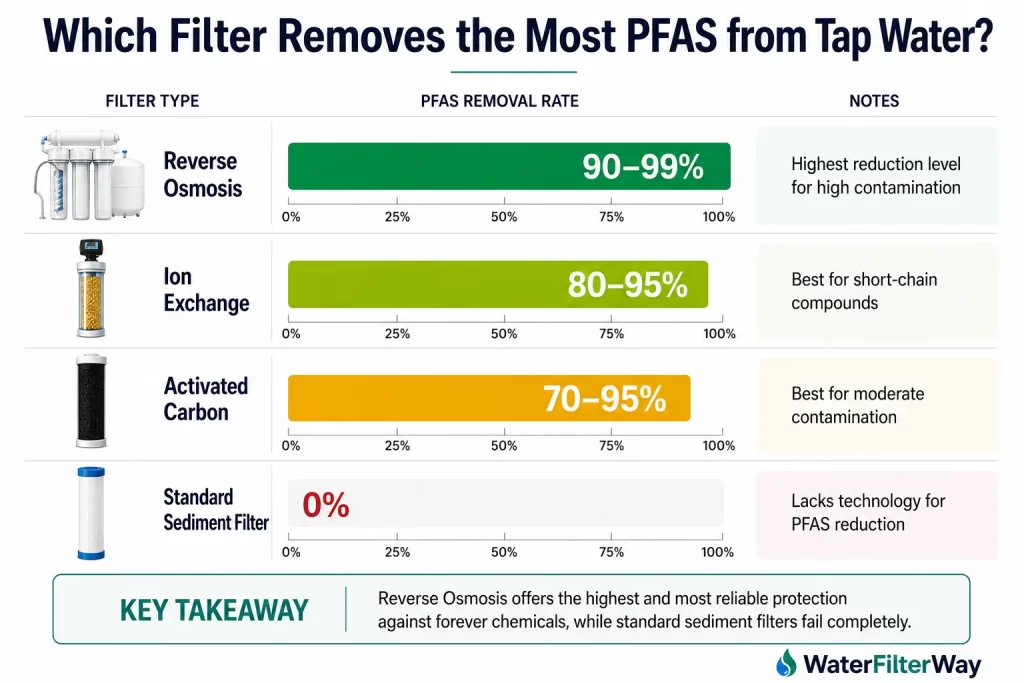
Reverse osmosis removes up to 90 to 99% of PFAS, depending on membrane quality. This is because the RO membrane filtration blocks molecules at the microscopic level. Reverse osmosis PFAS systems use pressure filtration to separate pure water from dissolved contaminants. The membrane technology rejects the large PFAS molecules and flushes them out. Water quality improvement relies on the condition of the semi-permeable membrane. RO performance has the highest level of PFAS reduction available for residential water purification. High PFAS rejection rate systems give purified water with minimal residual contaminants.
Do Activated Carbon Filters Remove PFAS Effectively?
Activated carbon can reduce PFAS, but effectiveness depends on contact time and carbon quality. The adsorption process traps contaminants inside the filter. A solid carbon block filter provides better PFAS reduction than standard GAC filtration. The carbon filter’s effectiveness drops as the storage approaches its saturation limits. Activated carbon PFAS systems need slow water flow to maximise contact time. Water purification depends on these limits to achieve good contaminant removal. Proper water treatment needs to replace the media before the adsorption process fails.
Is Ion Exchange a Reliable Method for PFAS Removal?
Ion exchange resins effectively remove PFAS, especially short-chain compounds. The PFAS removal method uses specialised resin beads to capture contaminants. The contaminant exchange is done through an ion exchange process where the resin releases chloride and traps the forever chemicals. Ion exchange PFAS systems give target removal for water purification. This filtration technology differs from traditional water softening and filtration processes. PFAS adsorption on resin is an alternative system for homes that cannot install reverse osmosis. Proper resin filtration needs exact water chemistry conditions to work.
What Factors Affect PFAS Removal Efficiency in Home Filters?
Factors that affect PFAS removal efficiency in home filters depend on filter type, contact time, membrane quality, and water chemistry. System performance drops when the flow pushes water through the media quickly. High contamination level inputs reduce the total filtration efficiency. PFAS removal factors include the physical filter size and the total volume of processed water. Membrane quality affects the lifespan of water filtration variables. For filter effectiveness, balancing the contact time with the specific contamination level is required.
Does Boiling or Standard Filtration Remove PFAS?
No, boiling and standard filters do not remove PFAS. The PFAS boiling myth comes from a misunderstanding of water purification myths. Boiling water causes an evaporation effect that increases the contaminant concentration in the remaining water. The chemical stability of these molecules prevents heat from breaking them down. Standard filtration fails to capture dissolved chemicals. Ineffective methods leave PFAS stability intact. Water treatment errors occur when users rely on purification meant for basic sediment. Ignoring filtration misconceptions saves you from accidental contaminant concentration.
How Much Does PFAS Removal Cost and Is It Worth It?
PFAS removal costs range from $100 to $600, depending on the system type. The initial filtration investment is based on the chosen technology. An RO system price typically sits at the higher end of the water filtration budget. A carbon filter cost is a lower entry point for water purification pricing. The total cost and the ongoing maintenance cost. System pricing shows the filtration capability. Checking the filter expense ensures you select a system that provides verifiable results.
Which PFAS Filtration System Should You Choose for Your Home?
The best system depends on the contamination level and water usage type. Four different buyers define the PFAS filtration guide. First, a high PFAS profile needs an RO system. Second, a moderate PFAS profile needs a carbon block system. Third, whole-house purification systems use large GAC systems. Fourth, mixed contaminants need a combination system. The RO vs carbon filter debate relies on actual water testing data. Proper filtration planning gives the best home water filter for specific water treatment systems. Compare the systems to your local water report before buying.
Do All Activated Carbon Filters Remove PFAS Equally?
No, PFAS removal depends on carbon type, size, and contact time. The GAC vs carbon block distinction defines the adsorption efficiency. Carbon filter types determine the overall filtration performance. High filter quality ensures consistent contaminant removal during water purification.
How Long Do PFAS Filters Last Before Replacement?
PFAS filter lifespan varies from 2 to 12 months, depending on usage and contamination level. Filter saturation determines the exact filter replacement schedule. Proper water system upkeep requires strict replacement timing to maintain filtration performance. Consistent water purification maintenance ensures ongoing filter durability.
Can Whole House Systems Remove PFAS Effectively?
Whole-house systems can reduce PFAS but are generally less precise than point-of-use RO systems. A whole-house PFAS filter typically uses large GAC systems to maximise filtration coverage. The system performs bulk water treatment for the entire property. This home filtration improves overall water quality but has lower PFAS reduction than under-sink options.
Does Water Testing Confirm PFAS Contamination?
PFAS contamination can only be confirmed through certified lab testing. Lab water testing gives accurate detection for thousands of compounds. Water analysis relies on certified testing to ensure precise PFAS identification. Water safety testing shows the true water quality test results.
Is Reverse Osmosis Enough for High PFAS Levels?
Yes, but combining RO with pre/post carbon filtration improves overall PFAS reduction consistency. Multi-stage filtration uses a carbon pre-filter to protect the RO membrane. These water purification systems maximize the filtration efficiency. RO systems feature specific filtration design elements for better water treatment.
FAQ’s:
1. What is the most effective way to remove PFAS from tap water?
Reverse osmosis is considered the most effective method, reducing approximately 90–99% of PFAS. Activated carbon and ion exchange systems can also reduce PFAS, but their performance depends on filter quality and proper maintenance.
2. Do activated carbon filters remove all PFAS chemicals?
No. Activated carbon filters can reduce many PFAS compounds, but their effectiveness depends on the carbon type, contact time, and filter condition. Carbon block filters generally perform better than standard granular activated carbon (GAC) filters.
3. Can boiling water remove PFAS?
No. Boiling does not destroy or remove PFAS. In fact, as water evaporates, the concentration of PFAS in the remaining water may increase.
4. Are whole-house PFAS filters better than reverse osmosis systems?
Whole-house systems can reduce PFAS throughout the home, but under-sink reverse osmosis systems typically provide higher PFAS removal for drinking and cooking water.
5. How can I know if my tap water contains PFAS?
The only reliable way to confirm PFAS contamination is through certified laboratory testing. A water quality report may not include detailed PFAS results unless specific testing has been performed.
6. How often should PFAS water filters be replaced?
Replacement schedules depend on the filter type, water usage, and contamination level. Most activated carbon filters last between 2 and 12 months, while reverse osmosis membranes generally last longer with proper maintenance.
