
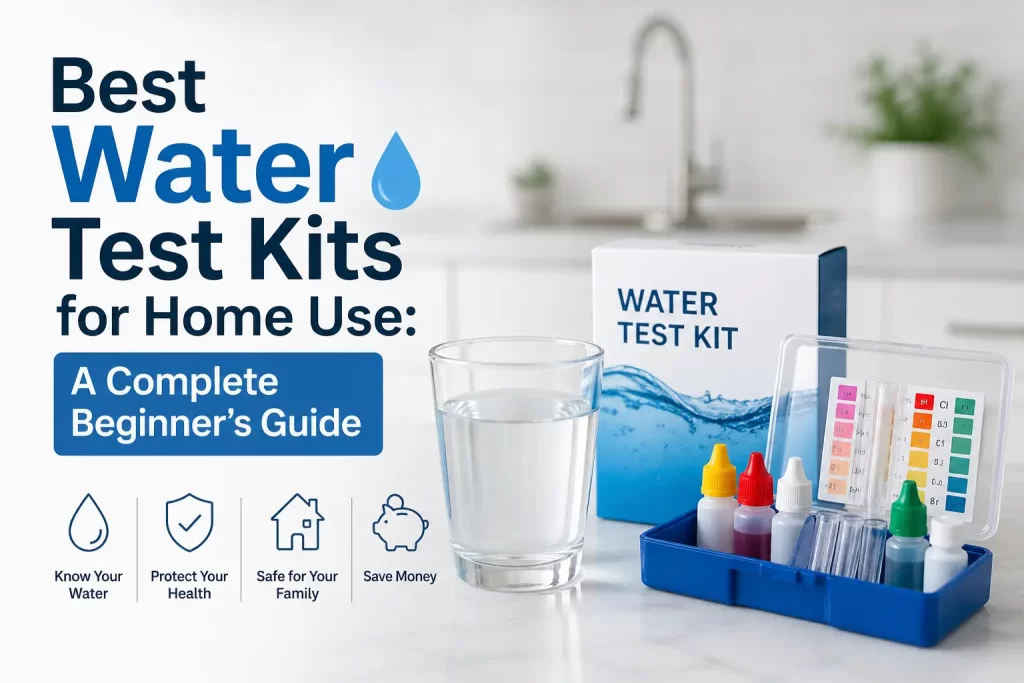
A water testing kit is a tool that can detect chemicals and biological substances in your drinking water. They keep your family safe from harmful bacteria, lead, arsenic, and other pollutants that you can’t see.
Home kits use different methods to determine what’s in your well or tap water. When rapid test strips come into contact with certain chemicals, they change color, giving you immediate information about pH and chlorine levels. More advanced systems send water samples to a lab, where scientists use special tools to find small amounts of heavy metals and industrial waste.
There are hundreds of different testing options on the market right now, and they all have different levels of detail. We looked into and reviewed the five best water testing kits to help you choose the one that will work best for you:
- Safe Home 200-in-1 Ultimate Drinking Water Test Kit
- Tap Score Advanced Home Water Test Kit
- Watersafe Bacteria Water Test Kit
- Trace Analytical Laboratories Premium Drinking Water Test Kit
- Hach Hardness and Iron Color Disc Test Kit
To pick the best water testing kit, you need to think about where your water comes from, how much money you have, and what kinds of pollutants are in it. We help you make these decisions by comparing the accuracy and value of each major brand. Our expert guides make sure you buy a kit that gives you the exact safety information you need to keep your home healthy.
What Are Water Test Kits?
Water test kits are home lab sets that use chemical strips or liquid drops to check the quality of your drinking water. Users dip a reactive paper into a sample to quickly detect harmful substances such as lead, nitrates, and bacteria. You compare the color that comes out with a chart that reveals the presence of pollutants without requiring a professional plumber. Regular checks give you peace of mind by finding hidden toxins before they cause damage.
Why Is Testing Your Home Water Important?
Testing your home water is important because invisible toxins lack flavor, color, and odor, which makes them hard to identify, and they cause many harms. Monitoring your supply protects your family from long-term health risks and prevents expensive plumbing repairs.
Essential benefits of verifying your water quality include:
- Detection of Invisible Contaminants
Lead and arsenic are hazardous substances that remain undetected without any expert testing. Home kits can test for these tasteless poisons before they enter the human body.
- Protection for Vulnerable Residents
The elderly, babies, and pets with weaker immune systems need clean water. Clean drinking water will help in avoiding neurological impairment and sudden stomach problems.
- Preservation of Plumbing and Appliances
Copper pipes corrode, and costly faucets are damaged by acidic water. Testing will tell you about pH levels that can corrode materials and help save thousands in repairs.
- Elimination of Hard Water Buildup
Excess calcium and magnesium lead to white, crusty deposits on showerheads and dishwashers. Knowledge about your water hardness will help you choose the right softener, thus making your appliances last longer.
- Removal of Foul Smells and Tastes
Water with a lot of chlorine or sulfur can smell like a swimming pool or rotten eggs. Accurate results show exactly where these annoying sensory problems are coming from.
- Verification of Filtration Performance
Many homeowners believe that their pitcher or reverse osmosis (RO) systems will work perfectly for the rest of their lives. Regular checks show that your filters effectively remove pollutants.
- Monitoring Well Water Safety
People who live in cities receive regular treatment and government oversight that private wells don’t. Frequent testing finds agricultural runoff and bacterial blooms that occur during flooding.
Keeping a regular testing schedule gives you a clear picture of your home’s environment. Knowing your water profile makes sure that every drop is safe to drink, cook with, and bathe in.
What Are the Basic Types of Water Test Kits for Home Use?
The basic types of water test kits for home use are test strips, liquid reagents, digital meters, and mail-in laboratory services. Choosing the right type ensures you get the best information about your family’s drinking water supply.
Some common types of water test kits that people use at home include:
- Test Strips (Dip-and-Read)
Test strips are chemically treated paper strips that change color when you dip them into a water sample.
- Pros: These kits are inexpensive and can tell you the basic levels like pH or chlorine in a matter of seconds.
- Cons: The results depend on how well you can match colors by sight, so they aren’t as accurate as other methods.
- Liquid Reagent Kits (Titration)
To use these sets, you have to add certain chemical drops to a vial of water until the water changes color. You can find out exactly how much iron or calcium is in your water by counting these drops.
- Pros: Adding chemical drops to a vial gives you a more accurate, detailed reading for things like water hardness.
- Cons: You need a steady hand and extra time to get an accurate reading by counting every drop.
- Digital TDS Meters
These small, hand-held electronic devices measure how well water conducts electricity to figure out how many dissolved particles are in it.
- Pros: Clear numerical screens eliminate the guesswork of color charts and enable thousands of uses.
- Cons: Electronic sensors only measure Total Dissolved Solids (TDS) and do not detect specific poisons such as lead or arsenic.
- Color Disk Kits
You mix a chemical into your water and place it inside a viewing box next to a rotating plastic wheel. Turning this wheel until the colors match reveals the exact contaminant level through a small window.
- Pros: A rotating plastic wheel does a much better job of matching colors than just paper strips do for metals.
- Cons: You have to spend more money up front to get these packages, and each test takes more steps to complete.
- Mail-In Laboratory Tests
Homeowners fill sterile bottles with tap water and send them to professional scientists for high-tech analysis.
- Pros: Professional scientists use advanced machinery to find hundreds of hidden toxins with 100% accuracy.
- Cons: Sending samples to a lab is much more expensive, and it takes a few days to get the final results.
The safest way to keep your home safe is to do quick checks at home and an annual lab test. Regular checks help you keep an eye on how your water quality and filter performance change over time.
What Do Home Water Test Kits Measure?
Home water test kits measure the levels of chemicals, minerals, and biological safety indicators in the water you drink. You can tell if your home needs a special filtration system by keeping an eye on these specific pollutants and their levels.
Water test kits measure several common pollutants and parameters, such as
- pH (Potential Hydrogen)
This test measures how acidic or basic your water remains on a scale from 0 to 14. Testing helps you identify corrosive water that can ruin copper pipes or high alkalinity that can cause a bitter, soapy taste.
- Water Hardness (Calcium and Magnesium)
These kits track dissolved minerals such as calcium and magnesium that form white, crusty buildup on fixtures. Measuring hardness helps you determine the right setting for a water softener to keep your appliances safe.
- Chlorine and Chloramines
Disinfectant tests check the amount of chemicals that city plants add to water to kill germs as it moves through the system. Monitoring helps you confirm whether a carbon filter is needed to remove strong chemical odors that irritate your skin.
- Nitrates and Nitrites
Kits detect these odorless nitrogen compounds that often enter wells through runoff from farm fertilizer or septic leaks. Measuring these levels helps you prevent a major health risk for infants regarding blood oxygen levels.
- Total Dissolved Solids (TDS)
This means the total count of all minerals, salts, and metals dissolved in your water. A reading of TDS (Total Dissolved Solids) is valuable in judging an overall purity and signals the need to replace Reverse Osmosis (RO) filters.
- Coliform Bacteria
Bacteria tests identify primary warning signs of fecal contamination or pathogens like E. coli in your plumbing. This measurement helps you decide if your well needs immediate disinfection or a UV (ultraviolet) light system.
- Iron and Manganese
These kits test for metallic elements that leave black or reddish-brown stains on laundry and porcelain. Testing helps you choose the right iron-specific filter to remove metallic tastes and keep your white clothes safe.
When you measure these pollutants, you can focus on specific issues instead of just guessing which filter to buy. By tracking these levels, you can see when your water quality suddenly changes.
How to Use a Home Water Test Kit?
To use a home water kit, you collect a new sample, use the testing tool, and look at the immediate reaction. Most beginners do well by carefully timing the chemical exposure and writing down the color changes.
The main steps for using water test kits are
- Collect a Fresh Sample
Run your cold water tap for 30 seconds to flush out water that has been sitting in the pipes. To get a good reading, fill a clean, dry glass or the collection vial that came with it with this fresh stream.
- Prepare Your Workspace
Put all the strips, vials, and color charts that come with it on a flat surface that isn’t in direct sunlight. Keep your hands clean and dry so you don’t get any dirt on the test strips’ sensitive chemical pads.
- Apply the Test Strip
For the exact number of seconds listed in the manual, dip the reagent strip into your water sample. Take it off quickly, but don’t shake it too hard, because shaking it too hard can mix the chemicals between the pads.
- Wait for Color Development
For about 60 seconds, hold the strip horizontally to allow the chemical reaction to finish. Don’t lay the strip flat on a paper towel because the fibers can soak up the liquid and mess up the reading.
- Compare Against the Chart
While working in bright, natural light, match each pad’s color to the provided reference scale. To keep a permanent digital record of your results, take a quick picture of the strip next to the chart.
- Activate Bacteria Vials
Fill the vial with water to the marked line to mix it with the included bacterial growth powder. Put the cap on tightly and keep the bottle in a warm place for 48 hours to see if the liquid changes color. This color change indicates that harmful bacteria are present in your water sample and are growing.
- Document and Analyze
Write down every reading in a notebook to track how your water quality fluctuates over several months. Compare these numbers to EPA (Environmental Protection Agency) guidelines to determine if you need a new filtration system.
Watch this short guide to learn how to read your lab report and understand what those numbers mean for your family’s safety.
Home Water Testing vs. Professional Lab Testing: Which One Is Best?
When it comes to home water testing vs. professional lab testing, the best one depends on your specific goals, budget, and safety concerns.
Home Water Testing
Home kits utilize reactive strips or liquid drops to provide nearly instant results at your kitchen table.
- Pros: These packages are affordable and deliver answers about basic levels like pH or chlorine within minutes.
- Cons: Human error during the dipping process reduces accuracy, and these kits fail to detect “forever chemicals” or trace metals.
- Best Uses: These tools are best for regularly checking pool chemistry, monitoring water softeners, and ensuring basic carbon filters are working.
Professional Lab Testing
Certified facilities employ expert scientists and high-tech equipment to analyze your water samples at the molecular level.
- Pros: You receive a certified report covering hundreds of contaminants with 100% precision and expert treatment recommendations.
- Cons: Shipping samples to a lab costs more and requires a wait of several days for the final data.
- Best Uses: This professional standard is needed for annual safety checks of well water, real estate transactions, and when lead or arsenic contamination is suspected.
How to Choose the Best One?
To find the right method, you need to think about your short-term needs and the risks they pose to your long-term health. If you only want to check for chlorine or hard water levels, start with a cheap home kit. If you smell something strange, use a private well, or have family members who are at risk at home, get a professional lab test. Monthly home checks and one yearly lab analysis are the best ways to keep your family safe.
What Are the Top Water Test Kits in 2026?
The top water test kits in 2026 are those that give accurate results, detect common contaminants, and help you choose the right water filtration system. We are looking at the top five systems and evaluating them on their accuracy, the number of contaminants they can remove, and how well they work with different types of water.
1. Safe Home 200-in-1 Ultimate Drinking Water Test Kit
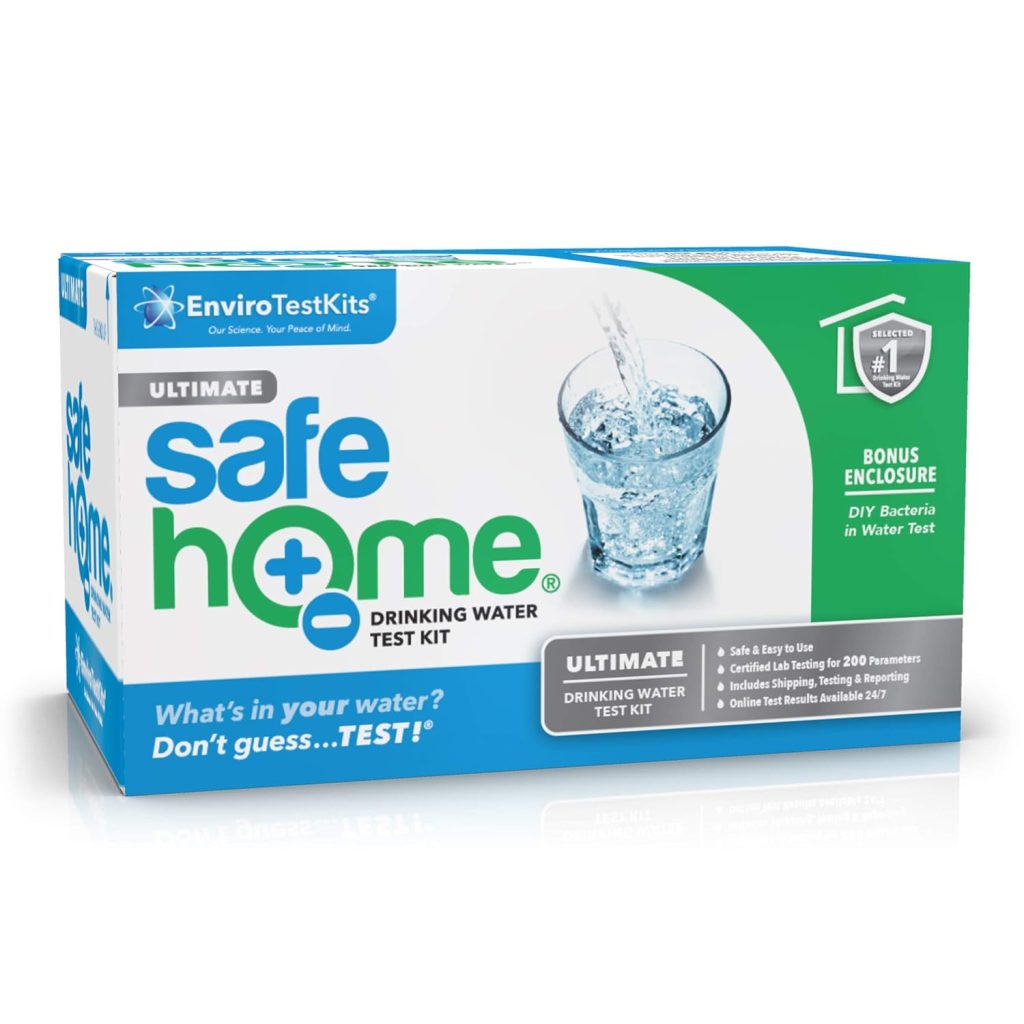
The Safe Home 200-in-1 Ultimate Drinking Water Test Kit serves as a comprehensive laboratory analysis tool for homeowners seeking maximum data. This kit covers a wide range of 200 parameters to provide the most detailed water-quality profile available to the general public. It works perfectly for real estate transactions, mortgage loans, or deep well water screenings.
| Feature | Specification |
| Brand | Safe Home |
| Price | $499.95 |
| Item Form | In-Lab Test Kit |
| Number of Parameters | 200 |
| Results Time | 7 to 10 Business Days |
| Shipping | Free Return Shipping Included |
Advanced Laboratory Testing Process
Safe Home operates its own EPA-certified (Environmental Protection Agency) laboratory to maintain complete quality control over every sample. Users fill the provided collection vessels according to the instructions and register the kit online. Placing the vessels in the free return shipper allows for easy drop-off at any UPS Store. Scientists analyze the water for metals, physical properties, and organic compounds using professional-grade equipment.
Contaminants Detected
| Category | Contaminants Included |
| Metals (31 Total) | Lead, Arsenic, Aluminum, Mercury, Copper, Zinc, Silver |
| Inorganics (7 Total) | Fluoride, Nitrate-N, Nitrite-N, Sulfate, Chloride |
| VOCs & Pesticides | 150+ parameters, including Chlordane, Aldrin, and VOC TICs |
| Physical Properties | pH, Hardness, TDS (Total Dissolved Solids), Turbidity |
| Bacteria | Coliform and E. coli (via included DIY home kit) |
Certifications and Trust
- EPA Certified Lab: Safe Home owns and operates the laboratory where all testing occurs.
- Good Housekeeping Seal: This brand remains the exclusive provider of water test kits to earn this prestigious seal.
- Top Industry Rankings: The New York Times and The Spruce ranked this kit as “Best Overall” for five consecutive years.
- Expert Backing: The team comprises scientists with over 150 years of combined experience in water testing.
Cost of Ownership
- One-Time Purchase: The initial price of $499.95 covers the entire 200-parameter analysis.
- Included Lab Fees: Buyers pay zero additional fees for the laboratory work after purchasing the kit.
- Free Shipping: US residents receive a free return shipping label for sending samples to the lab.
Summary
| What We Like | What We Don’t Like |
| Covers an unmatched 200 different parameters | High initial investment price of $499.95 |
| Includes a free DIY bacteria test for home use | Results require a 7- to 10-business-day wait |
| Provides EPA-certified results for legal use | Extensive paperwork is required for lab registration |
Our Final Verdict: Who Is This Kit Best For?
This kit is the gold standard for homeowners facing highly complex issues related to well water or property-related legal requirements. It is meant for anyone in need of 100% accurate, professional-grade reports that identify carcinogenic compounds and heavy metals.
2. Tap Score Advanced Home Water Test Kit
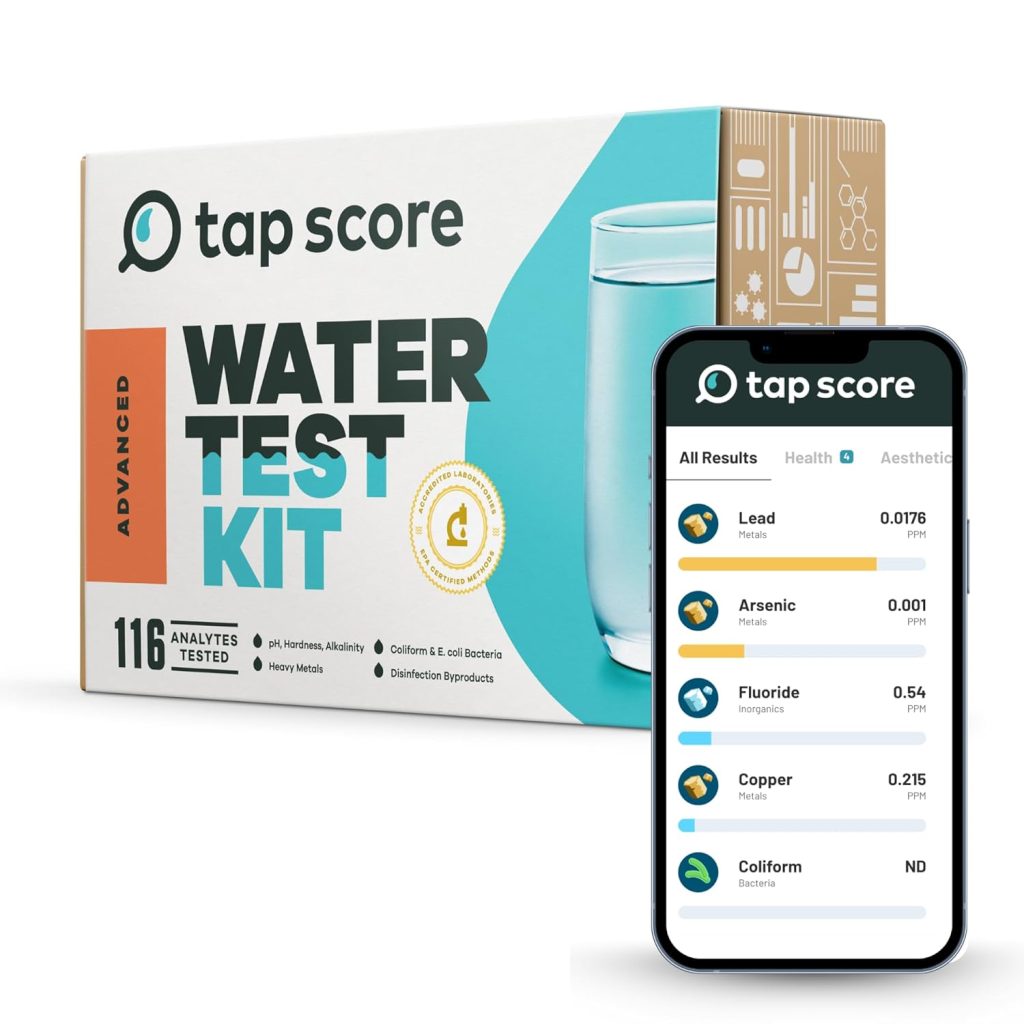
The Tap Score Advanced Home Water Test Kit offers thorough laboratory analysis for home users of either city or well water. It tests for 116 analytes to identify insidious heavy metals, industrial chemicals, and bacterial growth. It offers a professional solution for families living near industrial areas or operating private water supplies.
| Feature | Specification |
| Brand | Tap Score (SimpleWater, Inc) |
| Price | $299.00 |
| Item Form | Mail-in Lab Kit |
| Analytes Tested | 116 |
| Turnaround Time | 5 Business Days |
| Shipping | Prepaid Return Labels Included |
Advanced Laboratory Testing Process
The testing process involves collecting a fresh water sample at home using the provided sterilized vials and bottles. Users follow step-by-step instructions to ensure the sample remains uncontaminated before mailing it to a specialized facility. SimpleWater utilizes a network of EPA-, NELAC-, and ISO-certified laboratories to perform high-precision analyses. You receive an interactive online report explaining your specific health risks and plumbing impacts within 5 days.
Contaminants Detected
| Category | Contaminants Included |
| Heavy Metals | Lead, Copper, Arsenic, Mercury, Uranium, Cadmium |
| Bacteria | Total Coliform and E. coli |
| Inorganics | Nitrates, Nitrites, Fluoride, Chloride, Sulfate |
| General Chemistry | pH, Hardness, Alkalinity, Silica, TDS |
| Organics | Disinfection Byproducts and Industrial VOCs |
Certifications and Trust
- Certified Laboratory Network: Certified by the EPA, NELAC, ISO, and state agencies for laboratory testing accuracy.
- Top Industry Rating: This kit has been Wirecutter’s Best Home Water Test since 2020.
- Unbiased Data: Tap Score recommends the filters but does not endorse any brands or products.
Cost of Ownership
- All-Inclusive Purchase: The $299.00 price covers everything, including the kit materials, the lab analysis, and expert help.
- Shipping Benefits: Prepaid return shipping labels mean that the user doesn’t have to pay for any extra shipping costs.
- Long Shelf Life: Unused test kits remain good for 12 months after purchase.
Summary
| What We Like | What We Don’t Like |
| Provides 100% unbiased filtration advice | The price point remains high for basic city water |
| Features a very fast 5-day lab turnaround | Requires 12-month use before the kit expires |
| Includes expert chat support with PhDs | An interactive report can feel complex for some |
Our Final Verdict: Who Is This Kit Best For?
This kit is the ideal choice for health-conscious families and well owners who need scientific proof of their water safety. It provides the most actionable data for people wanting to buy a specific water filter based on real laboratory findings rather than guesswork.
3. Watersafe Bacteria Water Test Kit – 100 Pack
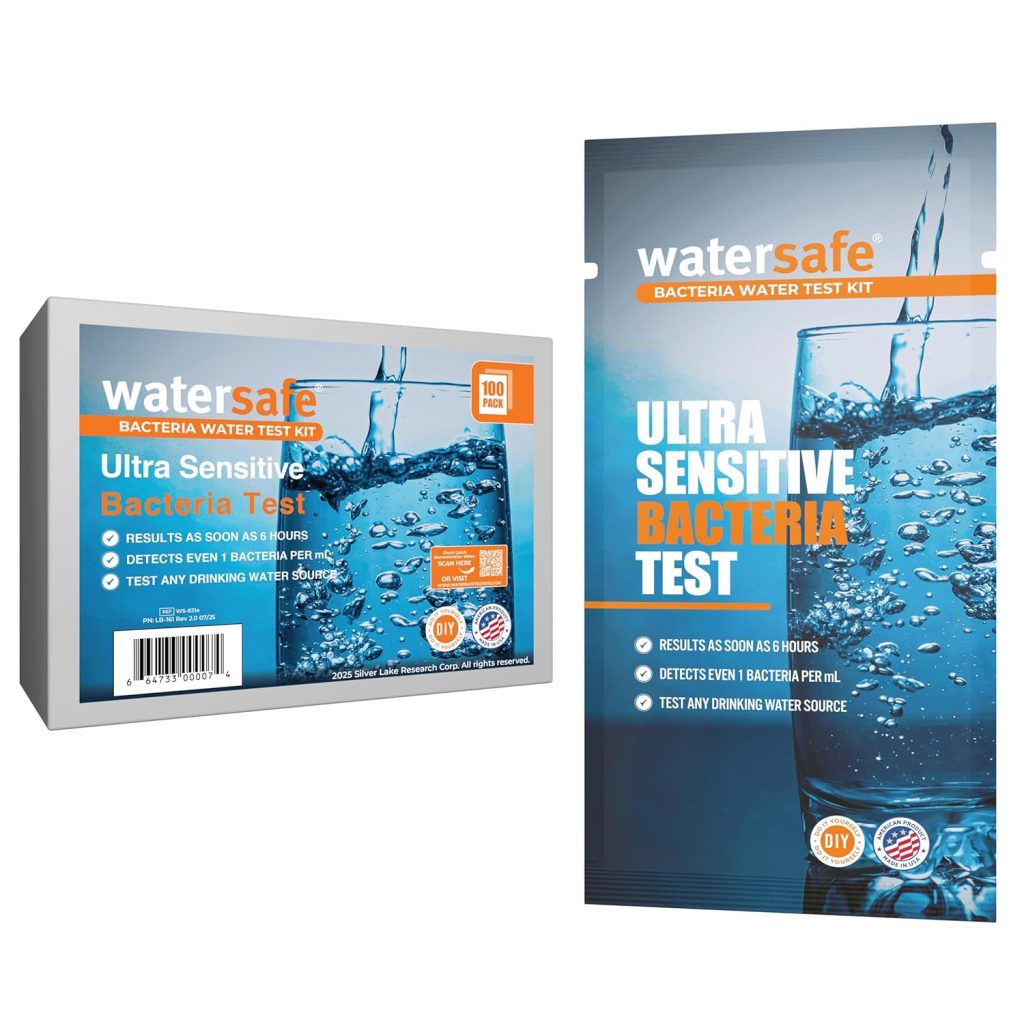
The Watersafe Bacteria Water Test Kit offers a quick way to find harmful biological growth in different types of water. This bulk package lets you check for coliform and non-coliform bacteria often without having to pay for lab tests. It is a must-have for homeowners, travelers, and property managers who need quick answers.
| Feature | Specification |
| Brand | Watersafe |
| Price | $499.00 |
| Item Form | DIY Bacteria Test Kit |
| Quantity | 100 Tests |
| Results Time | 6 to 48 Hours |
| Manufactured In | USA (FDA-registered facility) |
Advanced Laboratory Testing Process
This kit utilizes a simple collect-and-shake method that anyone can perform without professional training. Users fill the provided test vial with a water sample and shake it for a few seconds to activate the reaction—higher levels of contamination result in a clear color change within as little as six hours. Lower bacterial concentrations or cooler environments require a longer waiting period of up to 48 hours for the final reading.
Contaminants Detected
| Category | Contaminants Included |
| Primary Bacteria | Total Coliform (including E. coli) |
| Additional Bacteria | Non-Coliform Bacteria |
| Specific Pathogens | Salmonella and Enterococcus |
| Detection Level | Even one bacterium per mL (Milliliter) |
Certifications and Trust
- FDA-Registered Facility: Production occurs at a United States facility registered with the Food and Drug Administration.
- EPA-Style Technology: The kit uses similar technology to methods approved by the Environmental Protection Agency.
- Three Decades of Experience: The brand has been trusted by homeowners and the government for over 30 years.
- Professional-Grade Accuracy: Researchers and universities worldwide use these kits to verify results right away.
Cost of Ownership
- Bulk Pricing Advantage: The $499.00 price for 100 kits makes each test much cheaper than buying them separately.
- Zero Lab Fees: Users save money because they don’t have to mail anything or have it processed by another lab.
- No Extra Equipment: Everything needed for 100 individual tests is included in the package.
Summary
| What We Like | What We Don’t Like |
| Delivers lab-quality results as fast as 6 hours | Only tests for bacteria and not heavy metals |
| Requires zero shipping or laboratory waiting | A large 100-pack may be too much for single homes |
| Detects extremely low levels of contamination | Results can take up to 48 hours in cold weather |
Our Final Verdict: Who Is This Filter Kit For?
For property managers and RV owners who travel frequently, this is the perfect kit. It can test water for safety at any time. Users can relax because it checks for dangerous E. coli and Salmonella without having to pay for 100 separate laboratory visits.
4. Trace Analytical Laboratories Premium Drinking Water Test Kit
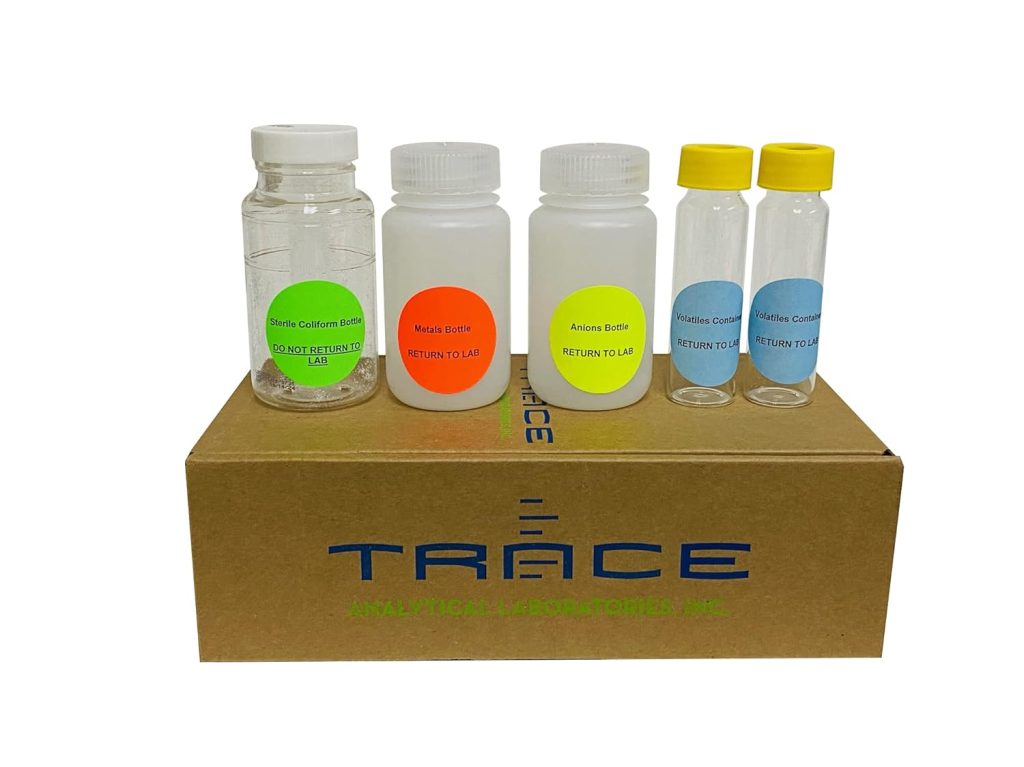
Trace Analytical Laboratories’ Premium Drinking Water Test Kit provides excellent scientific analysis for both city and private well water users. The kit performs checks on over 100 parameters to identify potential hidden hazards, such as fecal bacteria, industrial solvents, and toxic metals. It provides a professional-grade health assessment for homeowners concerned about aging infrastructure or environmental runoff.
| Feature | Specification |
| Brand | Trace Analytical Laboratories |
| Price | $195.00 |
| Item Form | Mail-in Lab Kit |
| Parameters Tested | 100+ |
| pH Range | 6.5 – 8.5 |
| Shipping | Free Return Shipping Included |
Advanced Laboratory Testing Process
You start the testing process when you get the special collection bottles and simple DIY instructions. You get samples right from your tap and put them in the packaging that comes with them. Using the prepaid return shipping label, you send the samples to the Trace Analytical facility for high-tech screening. Scientists analyze the water using strict quality protocols and email you a detailed report.
Contaminants Detected
| Category | Contaminants Included |
| Bacteriological | Total Coliform and E. coli |
| Heavy Metals | Lead, Arsenic, Mercury, Copper, Cadmium, Thallium |
| Volatile Organics | 64 VOCs, including TTHMs (Total Trihalomethanes) |
| Anions | Nitrate, Nitrite, Fluoride, Chloride, Sulfate |
| Minerals | Calcium, Magnesium, Sodium, Potassium, Hardness |
Certifications and Trust
- DoD-ELAP Accreditation: This certification ensures compliance with stringent QA/QC (Quality Assurance/Quality Control) requirements for environmental testing.
- ISO/IEC 17025:2017: This standard recognizes the laboratory’s technical competence in performing specific water analyses.
- TNI Accredited: Trace meets the requirements of the NELAC Institute as a Nationally Accredited Environmental Laboratory.
- State Approvals: The Michigan EGLE and Indiana Department of Health have evaluated and approved this lab for organic and inorganic chemistry.
Cost of Ownership
- All-Inclusive Price: The $195.00 fee covers the sampling materials, laboratory testing, and final report.
- Prepaid Logistics: Buyers save on shipping costs because the kit includes a free return label to the laboratory.
- Professional Reporting: The cost includes a detailed interpretation of results compared against EPA safety standards.
Summary
| What We Like | What We Don’t Like |
| Offers a highly competitive price for 100+ parameters | Limited to a specific pH range of 6.5 to 8.5 |
| Includes 64 different Volatile Organic Compounds | Requires waiting for mailing and lab processing |
| Holds multiple national and state lab certifications | Does not provide instant on-site results |
Our Final Verdict: Who Is This Kit Best For?
If you’re on a budget but still want certified, high-quality lab data, this kit is the best choice. It works great for people who live in cities and are concerned about disinfection byproducts or for well owners who need to ensure their water is safe from bacteria.
5. Hach Hardness and Iron Color Disc Test Kit, Model HA-77
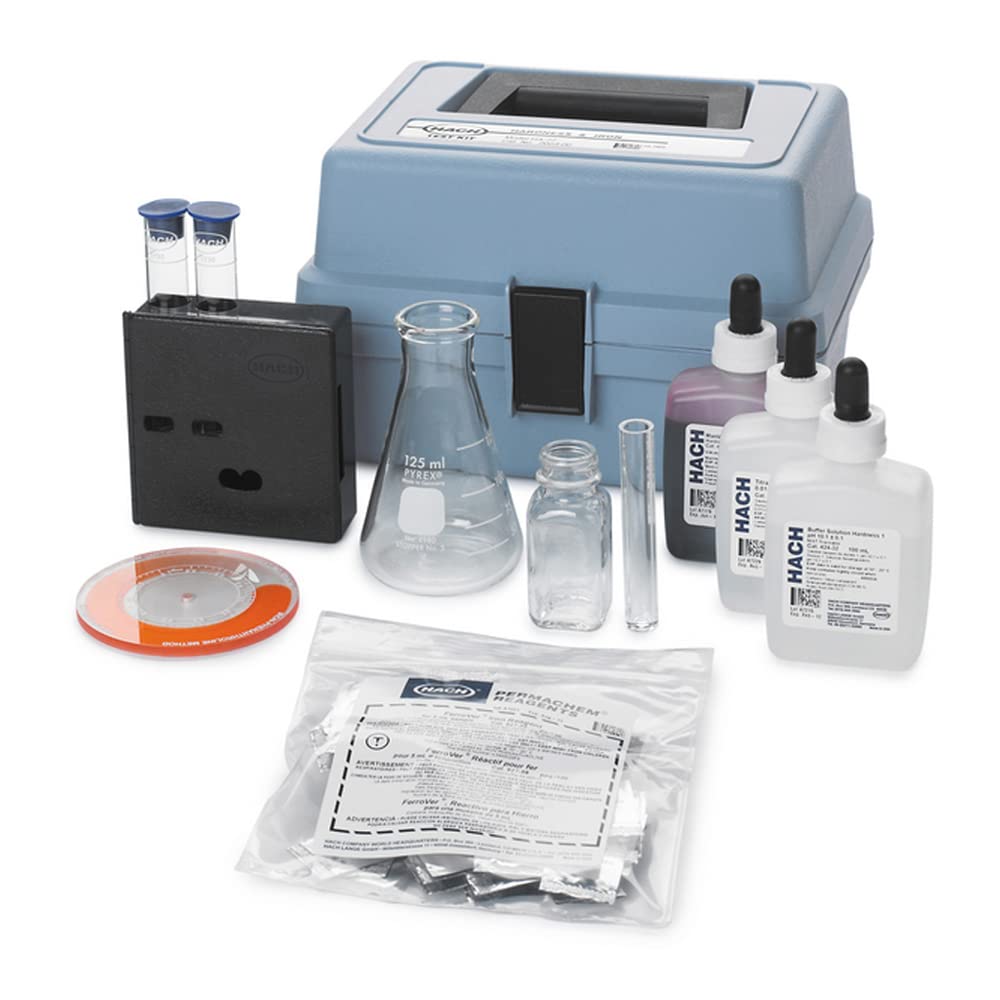
The Hach Hardness and Iron Color Disc Test Kit, Model HA-77, is a professional and portable way to test two important water quality factors. This manual system uses special liquid reagents and a physical color comparator to give much higher resolution and accuracy than regular test strips. It is a good choice for field technicians, aquarium hobbyists, and homeowners who need to maintain their well water systems.
| Feature | Specification |
| Brand | Hach |
| Price | $193.00 |
| Item Form | Color Disc and Titration Kit |
| Model Number | HA-77 (202300) |
| Test Capacity | 100 Tests |
| Power Source | None (Manual Operation) |
Advanced Laboratory Testing Process
This kit uses manual methods to deliver accurate on-site results without electronic sensors. To find out how hard water is, you perform a drop-count titration. You add reagent drops to a flask until the liquid changes from pink to blue. Determining iron levels requires mixing a powder pillow into a sample and placing it inside a comparator box with a rotating color disc. Matching the sample color to the disc provides a clear numerical reading of iron concentration in milligrams per liter.
Contaminants Detected
| Category | Contaminants Included |
| Water Hardness | Total Hardness (1 to 30 gpg) |
| Metallic Iron | Dissolved Iron (0 to 4 mg/L) |
| Equipment | Includes FerroVer Iron Reagent and Hardness Solutions |
| Resolution | greater detail than basic test cubes or strips |
Certifications and Trust
- Professional Grade Standard: Hach is one of the world’s leading companies that makes analytical tools for water treatment professionals.
- No Batteries Required: Manual chemistry ensures the kit works in any environment without worrying about electronic failure.
- Rugged Construction: The entire set comes in a durable plastic carrying case designed for heavy use in the field.
- Quality Controlled Manufacturing: Thermo Fisher Scientific oversees the production of the reagents and apparatus for this model.
Cost of Ownership
- Reagent Refills: Users can purchase replacement reagent pillows and buffer solutions after exhausting the initial 100 tests.
- Long-Term Durability: The physical comparator box and glass viewing tubes last for years with proper cleaning and care.
- Zero Lab Fees: Ongoing costs remain low because the kit requires no outside laboratory processing or shipping fees.
Summary
| What We Like | What We Don’t Like |
| Delivers professional-level accuracy in the field | Glass viewing tubes can break if dropped |
| Requires no power source or calibration | Limited to only testing hardness and iron |
| Includes everything needed for 100 full tests | Color matching can be tricky in low light |
Our Final Verdict: Who Is This Kit Best For?
This kit is a great investment for homeowners who need to keep a close eye on their water softener’s performance or high iron levels. It gives professionals the reliable data they need without repeatedly paying for shipping samples to a lab.
2026 Top Water Test Kit Comparison
| Brand | Model | Price | Key Advantage | Best Usage |
| Safe Home | 200-in-1 Ultimate | $499.95 | Most comprehensive list of 200 different toxins. | Home inspections and mortgage loan approvals. |
| Tap Score | Advanced Home | $299.00 | Fast 5-day turnaround with PhD expert support. | Families need deep health and plumbing data. |
| Watersafe | Bacteria 100-Pack | $499.00 | Bulk testing for 100 on-site bacteria checks. | Property managers and RV travelers. |
| Trace Labs | Premium Kit | $195.00 | Certified lab accuracy for under $200. | Budget-conscious well or city water users. |
| Hach | HA-77 (202300) | $193.00 | High-resolution manual iron and hardness levels. | Monitoring water softeners and iron filters. |
For legal or real estate testing that needs a full lab report, use the Safe Home 200-in-1 Ultimate. Choose Tap Score Advanced to learn about health risks and select the best filter for your home. The Watersafe 100-Pack is the best choice for frequent bacterial testing, and Trace Labs Premium is a cheap option. The Hach HA-77 gives you accurate results for iron and hardness problems, so you don’t have to worry about stains or scaling.
The best kit is the one that works with your water source. Most homeowners start with a Tap Score lab test to learn everything about their water. Then, they use Hach or Watersafe for cheap monthly upkeep.
How Can You Choose the Best Water Test Kit for Your Home?
You can choose the best water test kit for your home by knowing where your water comes from and what safety issues you face. By choosing a kit that matches your household’s needs, you can make sure you get the most useful data for your money.
When picking the best water test kit for your home, you should think about the following important things:
- Water Source Compatibility
It is necessary to test municipal tap water for heavy metals and chlorine from outdated pipes. Since private wells are more likely to be contaminated by nitrates, coliform bacteria, and agricultural runoff, they need to be tested more frequently.
- Contaminant Coverage
Basic test kits measure five to ten common parameters, such as pH and hardness. Advanced kits detect more than 100 dangerous substances, including arsenic, volatile organic compounds (VOCs), and other specific toxins.
- Precision and Accuracy Needs
Simple test strips give you a quick color range that works well for checking your filter’s performance once a month. Mail-in lab tests give you the most precise information you need to make official real estate transactions or health decisions.
- Ease of Interpretation
Look for kits that include a clear, waterproof color chart and a thorough instruction manual. Digital meters provide a direct reading on an illuminated screen, eliminating the need for measurement.
- Shelf Life and Quantity
You can buy test strips in bulk if you want to monitor your groundwater over time. Just make sure to check the package’s expiration date so the chemicals will still work when you need them.
- Certification and Reputation
Many of the well-known brands use EPA-certified labs for their mail-in tests. You can avoid kits with unclear results or color charts that are hard to read by reading reviews from other people.
By choosing the right test kit, you can save money by avoiding the need to buy extra filters. Water Filter Way makes it easier to access clean, safe water by giving you clear buying guides, honest reviews, and side-by-side comparisons. Our experts review the latest filtration technologies and make complex lab data easy to understand so you can use them at home.
FAQs About Water Testing Kits
How Often Should You Test Your Water?
You should test your water at least once every year for common chemical and bacterial changes. Private well owners need annual screenings for nitrates and coliform to ensure safety from groundwater runoff. Test more frequently if you notice sudden changes in the taste, color, or smell of your household supply.
What Should I Do If My Water Fails a Test?
If your water fails the test, stop drinking it immediately and switch to a bottled supply. You must identify the specific pollutant and shock-chlorinate your well if bacteria are present. Consult a professional to install a targeted treatment system to remediate the health risks found in your pipes.
How Accurate Are At-Home Water Testing Kits?
The accuracy of at-home water testing kits varies greatly based on the technology used in the strips or vials. Digital meters and liquid titration kits are more accurate than paper strips, which rely on color matching. These tools are good for general screening, but they aren’t as accurate as those from certified labs.
Do I Need a Water Test Kit if My City Treats the Water?
Yes, you need a water test kit if your city treats the water because pollutants can enter through aging local pipes. Lead and copper often leach into your supply after the water leaves the treatment plant and travels to your faucet. Testing helps you decide if a specialized water purification system is necessary for your home.
Can Test Kits Detect Bacteria?
Yes, many test kits can detect bacteria such as coliform and E. coli by using special vials that change color. These DIY kits need to be kept at room temperature for 48 hours before they can give reliable results. If you get positive results, it means your water is unsafe and needs to be cleaned right away, or a professional UV (ultraviolet) light system needs to be put in.
Can Water Test Kits Help Me Choose the Right Filtration Solution?
Yes. Water test results help you choose the right filtration solution by showing you exactly what pollutants are in your tap water. You don’t waste money on general filters that might not remove common contaminants in the water at your address. This information makes sure you get a system that fits your needs perfectly.
Do I Need Different Kits for Hot and Cold Water?
No, you don’t need separate kits for hot and cold water. You should test only cold water, since it gives the most accurate picture of your drinking water. Hot water can pull extra metals from pipes or the water heater, which may affect the results. For the most reliable readings, always follow the manufacturer’s instructions and use a room-temperature water sample.
Are Cheap Test Kits Accurate?
No, cheap test kits aren’t very accurate because they often use low-quality reagents that can only find a small number of things. These cheap options don’t capture small amounts of heavy metals, which can be harmful to your family’s health over time. Buying a higher-quality kit ensures you have reliable information to make important safety decisions.
Can Water Test Kits Confirm if My Filtration System Is Working?
Yes, water test kits can confirm if your filtration system is working by comparing samples taken before and after treatment. Testing the filtered water directly shows if your cartridges need to be replaced because chemicals have gotten through or minerals have built up. Regular monitoring highlights the importance of water filtration by proving your family remains protected from toxins.

