
A SpringWell water purification system cleans all the water entering a house. This system works by putting the incoming water through a large tank or special filters filled with media like carbon. The media traps the bad stuff, chemicals, dirt, and smells, making the water pure before it reaches any faucet or shower.
Homeowners use these systems because they get much cleaner, better-tasting water in every room, which also protects plumbing and appliances from damage. This filtration is important because it takes out chlorine and other gross things that city or well water contains. The great benefits are fresher drinking water and softer skin and hair.
SpringWell uses many smart technologies to do this job, which are listed below:
- Multi-Stage Filtration
- Ultraviolet (UV) Disinfection
- Salt-Free Scale Conditioning
- KDF and Specialty Media.
Our comprehensive guide explains how SpringWell Water Purification Systems work and covers all the main types of technologies. We also give detailed reviews of three specific SpringWell purification systems (SpringWell CWH-3, SpringWell CWH-1, and the UV SpringWell Purification filter) to help make the best decision for a clean, pure water supply every day.
What is the SpringWell Water Purification System?
The SpringWell water purification system is a wide term for the company’s full line of water cleaning products. This whole family of products includes powerful filters and conditioners designed to treat every drop of water that comes into your house. It is the central filtration setup, known as a Point-of-Entry (POE) device, connecting directly to your main water line. It cleans water for your kitchen sink, shower, washing machine, and bath all at once.
This water filtration system targets many nasty things in your water. It primarily removes chlorine and chloramines, which cause bad taste, plus dirt, sediment, and harmful gases called volatile organic compounds (VOCs). SpringWell also provides dedicated purification technologies, such as the Ultraviolet (UV) stage, which treats specific contaminants like bacteria and viruses. You can see, this really ensures safety for drinking and using the water.
It’s a smart setup; this uses one big tank or cartridge filled with filtering stuff instead of small filters on individual faucets, giving the water a single, powerful cleaning before it travels through your plumbing.
How does the SpringWell Purification System work?
The SpringWell Purification System works by employing multiple, sequential treatment methods to target different contaminants.
- Multi-Stage Filtration
Water passes through physical and chemical filter media to remove suspended solids like dirt and rust, and bonded chemicals such as chloramines.
- Ultraviolet (UV) Disinfection
It uses UV light waves to inactivate harmful microorganisms like bacteria and viruses, making them unable to reproduce and cause illness.
- Redox/Adsorption Processes
Specialized media like Activated Carbon and KDF (Kinetic Degradation Fluxion) chemically interact with pollutants like chlorine and heavy metals, pulling them from the water.
- Scale Conditioning
This uses non-chemical means like Template Assisted Crystallization (TAC) to neutralize hard water minerals, stopping them from sticking to your pipes.
- High Flow-Rate Design
All SpringWell systems are engineered to maintain consistent water pressure (GPM) throughout the home while purifying, so you won’t get a weak shower.
What are the Types of SpringWell Purification Technologies?
The types of SpringWell purification technologies are listed below. These systems combine several smart stages to give you the highest quality water possible.
Multi-Stage Filtration
This technology uses a combination of filters to clean your water in multiple steps. It utilizes chunky sediment filters to physically stop large particles like dirt and rust. Then it uses carbon blocks to chemically adsorb contaminants. This stage targets aesthetic issues like bad taste and odor, as well as harmful chemicals such as VOCs and pesticides.
Ultraviolet (UV) Disinfection
This is a powerful, non-chemical purification method. It uses UV-C light to kill or sterilize harmful pathogens like bacteria and viruses. UV disinfection is essential for private well water or surface water sources that may be compromised by contaminants such as E. coli. It pairs with the other filters to make sure the water is clear, which allows for effective UV exposure. That way, the light works best.
Salt-Free Scale Conditioning
This is a preventative treatment that reduces the ability of minerals like calcium and magnesium to form damaging scale. It uses Template Assisted Crystallization (TAC) technology, which is considered a form of water treatment and purification, though it doesn’t actually remove those minerals. This system requires no salt, no electricity, and no maintenance beyond simple cartridge replacement, making it a great choice for them.
KDF and Specialty Media
This purification step focuses on pulling out heavy metals like lead, mercury, and copper. The KDF (Kinetic Degradation Fluxion) media also acts as a bacteriostatic agent. This means it prevents mold and bacterial growth inside the filter bed, keeping the entire system cleaner and working longer.
What are the Key Benefits of the SpringWell Purification System?
The key benefits of the SpringWell purification system are wide-ranging, improving not only the water you drink but also protecting your entire home. It truly is a smart investment that keeps giving back.
The following are the benefits:
- Improved Water Quality
It removes unpleasant chemical tastes and odors, making water safer and much more enjoyable to drink right from the tap. You get clean, crisp water everywhere in the house.
- Health & Wellness
It reduces exposure to harsh chlorine during showering and bathing, leading to softer skin and hair that holds its natural oils better.
- Appliance Lifespan
This protects high-value appliances, like water heaters and dishwashers, and your plumbing from damaging sediment and scale buildup, making them last longer.
- Comprehensive Coverage
Because of its Point-of-Entry (POE) design, it delivers high-quality water to every tap, shower, and fixture in the home.
- Efficiency
Cartridge-based systems offer low maintenance, requiring only periodic, easy filter replacement that doesn’t take much time at all.
What are the best SpringWell water purification systems?
The best SpringWell water purification systems are reviewed by us in detail so you can have an idea about the capacity and features of the top models. We carefully examined these specific filters to determine how they perform for homeowners like you.
1. SpringWell CWH-3 Whole House Cartridge System
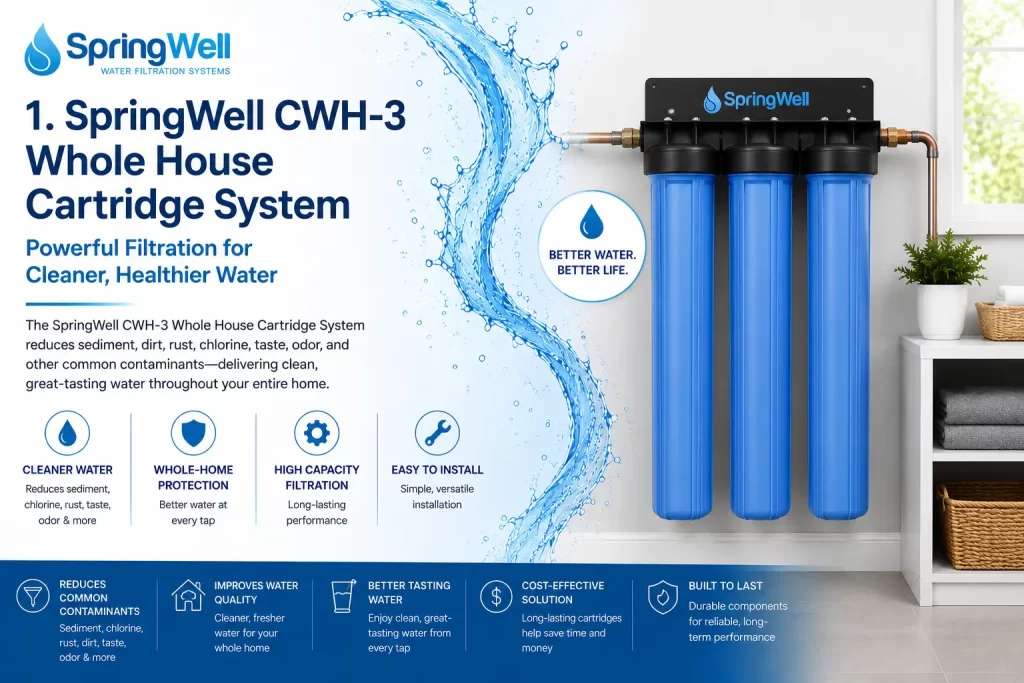
The SpringWell CWH-3 whole-house cartridge system is a powerful filter, perfect for homeowners with limited space. This model combines strong carbon cleaning and scale protection into a single, easy-to-manage unit. When you don’t have space for a huge tank, this model is a great choice instead.
Filtration Technology and Performance
This system uses smart technology to give you very clean water. Water first moves through a thick carbon block that pulls out bad stuff like chlorine, bad taste, and smells. They also built this filter to remove serious bad things like PFOA, PFAS (forever chemicals), and weed killers. The CWH-3 uses a final 0.5-micron filter that removes lead and other harmful chemicals, such as VOCs. This multi-step process ensures your water is completely safe.
Contaminants and Reduction Rate
| Contaminant | Percentage Removed/Reduced |
| TTHMs (Disinfection Byproducts) | 100.0% |
| Chlorine (Taste/Odor) | 99.2% |
| Lead | 97.5% |
| Chloramine (Hard-to-Remove Disinfectant) | 96.5% |
| PFOA/PFAS (Forever Chemicals) | 95.8% |
| VOCs (Volatile Organic Compounds) | 94.9% |
Cost of Ownership and Maintenance
The first cost for the CWH-3 is $1,135. You get a huge perk from the built-in Salt-Free Softener part. This part uses TAC media to change hard water minerals, stopping them from sticking to your costly appliances. It never needs salt, electricity, or backwashing, which is a great help. Replacing the filter for the CWH-3 system costs about $347.25 each year. This upkeep is very simple: you just swap out the old cartridges for new ones every 12 months. This means you don’t have to drain or backflush anything to keep the water flowing strongly.
Summary
| What We Like | What We Don’t Like |
| Filters Lead and PFOA/PFAS (Very Pure Water). | Must change cartridges yearly (a small cost). |
| Salt-Free Scale Control (Protects machines). | The yearly replacement cost is higher than that of big tank filters. |
| Small size, saves space, with 20 GPM flow. |
Our Final Verdict: Who is This Filter Best For?
The SpringWell CWH-3 works best for homeowners who care about saving space or anyone who wants very pure water without the bother of a big tank. This is the ideal solution if you need confirmed removal of bad things like lead and want to stop scale damage, all while having strong water pressure in your smaller home or apartment. You can easily find out how to install this type of system.
2. SpringWell Ultraviolet (UV) Water Purification System
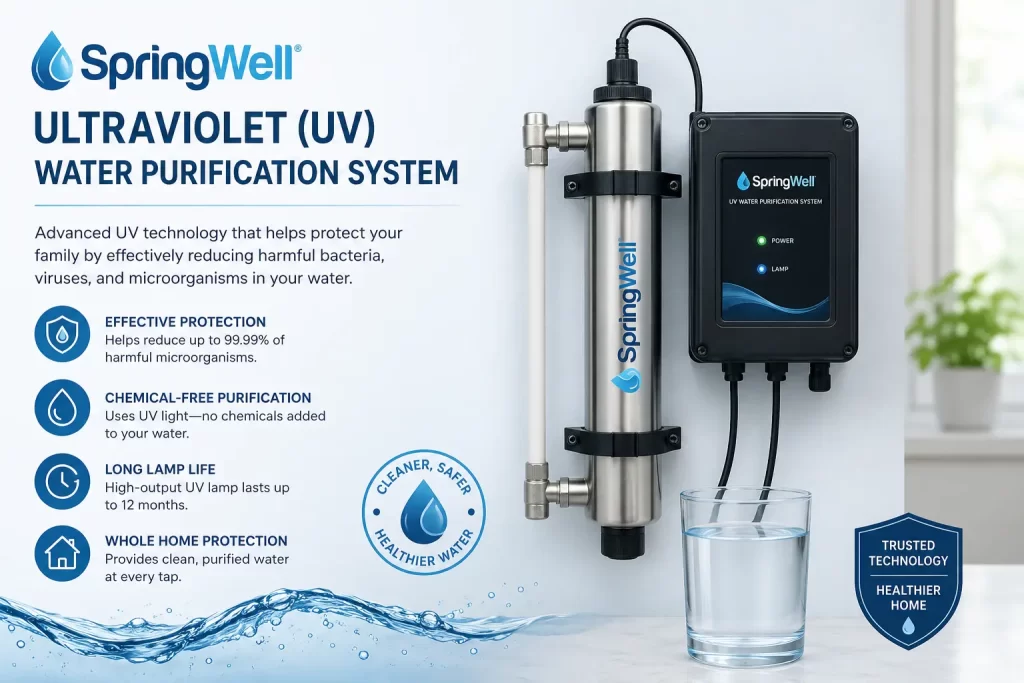
The SpringWell UV purification system is different because it uses light, not filters, to clean water. This system shines a powerful UV light to kill or sterilize harmful living impurities like bacteria and viruses. People choose this system for the safest water possible, especially if their water source comes from a well or is not treated by the city. It gives you protection without adding any chemicals.
Filtration Technology and Performance
This system uses Ultraviolet Light (UV) to clean your water. The light prevents living impurities from growing in the water, killing germs like E. coli and viruses. This UV process is highly effective and does not add any chemicals to your clean water supply. The system includes a safety feature: a warning alarm tells you right away if the UV light power drops too low to kill the germs. The company designed this compact system to fit easily under a counter or in a cabinet.
Contaminants and Reduction Rate
| Contaminant | Reduction Rate (%) |
| Bacteria and Viruses (Pathogens) | 99.99% |
| Chlorine (City Water) | 97.3% |
| Lead | 94.2% |
| Heavy Metals | 90.5% |
| Pharmaceuticals | 91.7% |
Cost of Ownership and Maintenance
The first cost for this UV system is $1,000.90. Because this is a light-based system that uses electricity, the main thing you need to replace is the UV lamp. The lamp gives you over 4,500 hours of protection. You must replace the lamp when it stops working to ensure the water remains safe. This maintenance is easy to do and ensures you continue to get clean, healthy water.
Summary
| What We Like | What We Don’t Like |
| Kills bacteria and viruses (safest water). | Higher initial price point. |
| Does not use any harsh chemicals. | You must change the UV lamp on time. |
| Includes a warning alarm for safety. |
Our Final Verdict: Who is This Filter Best For?
The SpringWell UV System is best for homeowners who use well or surface water where bacteria are a concern. You should get this system if you need to neutralize living impurities without changing the water’s taste or adding chemicals. This unit offers total peace of mind for residential, apartment, or small-office use. You can check the UV review in detail.
3. SpringWell CWH-1 Whole House Cartridge System
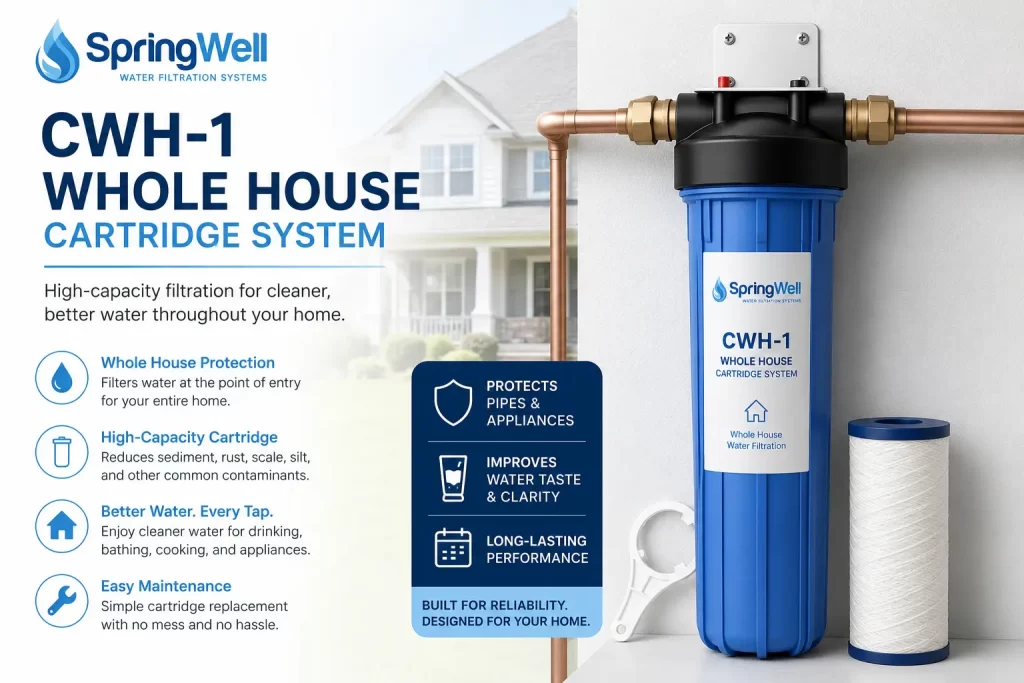
The SpringWell CWH-1 is the simplest model in the cartridge family. This system cleans water in just two steps and primarily addresses the most severe chemical and taste issues in city water. This is a great choice if you just want clean, tasty water but don’t need the extra lead or scale protection that other systems offer. It gives you simple, strong cleaning in a small size.
Filtration Technology and Performance
This small system uses a strong two-step cleaning process. First, a 5 micron sediment filter catches all the dirt, rust, and grit, which keeps the main filter safe. Next, the water flows through a large Carbon Block and CTO (Chlorine/Taste/Odor) Cartridge. This cartridge is the main worker. It takes out large amounts of chlorine and chloramine, which cause bad taste and smell, giving you softer skin and better hair. The carbon is also built to greatly reduce other chemicals like PFOA, PFAS, MTBE, and TTHMs.
Contaminants and Reduction Rate
| Contaminant | Reduction Rate (%) |
| Sediment/Rust | 99.0% |
| Chloramine (Disinfectant) | 97.8% |
| Chlorine (Taste/Odor) | 96.5% |
| PFOA/PFAS (Forever Chemicals) | 95.3% |
| Herbicides/Pesticides | 94.3% |
Cost of Ownership and Maintenance
The CWH-1 is a smart choice for people watching their budget. The first cost is lower at $675 than the bigger models because it does not have the lead filter or the TAC scale control part. Your upkeep stays simple and cheap. Replacing the filter costs only about $128.80 per year, which is not much money for whole-house protection. You can change this single cartridge yourself very easily, needing only one simple yearly swap, which means no messy backflushing.
Summary
| What We Like | What We Don’t Like |
| Great cleaning for taste/odor (97%+ Chlorine removal). | It does not filter lead or scale. |
| Lowest starting price. | Filter life is shorter than the big tank filters. |
| Upkeep is simple and cheap ($128.80/year). |
Our Final Verdict: Who is This Filter Best For?
The SpringWell CWH-1 works best for the homeowner focused on saving money who wants to stop chemicals and make the water better in their city home. This filter works best if your city water is mostly clean, you mainly need to remove chlorine, poor taste, and odors, and you want a simple, low-cost cleaning process.
This table shows the comparison between these three SpringWell Water systems:
| Factor | CWH-1 Cartridge System | UV Purification System | CWH-3 Cartridge System |
| Initial Price | $675 | $1,000.90 | $1,135 |
| Max Water Flow (GPM) | Up to 20 GPM | Up to 15 GPM | Up to 20 GPM |
| Capacity/Lifespan | 12 months | 6 months | 12 months |
| Primary Target | Chlorine, Taste, Odor | Bacteria, Viruses, Germs | Lead, PFOA/PFAS, Scale |
| Scale Protection | No | No | Yes (Salt-Free TAC) |
| Maintenance Type | Cartridge Swap | Bulb Swap | Cartridge Swap |
This graph shows the price comparison among these three products:

This graph shows the comparison of GPM and the lifespan of the three products:

How to Maintain a SpringWell Purification System in the Long Run?
Maintain a SpringWell purification system in the long run with simple, scheduled actions that protect your system and save you money over time. Proper care ensures your family enjoys pure, clean water for many years without expensive repairs.
The following are the maintenance tips:
- Change Filter Cartridges on Time
The manufacturer recommends changing the sediment filter every 6 to 12 months, depending on water quality. The main carbon cartridges in models like the CWH-1 or CWH-3 require replacement every year. Failure to replace water filter cartridges causes the filter to clog, resulting in a significant drop in water pressure throughout your house.
- UV Lamp Replacement is Key
For systems with the UV add-on, you must replace the UV lamp yearly. An old lamp or a dirty quartz sleeve cannot kill bacteria, so you must clean the sleeve when you replace the lamp. This action ensures the system continues to safely destroy germs without using chemicals.
- Check Systems for Performance Signs
A drop in water quality, such as a return of bad taste, chlorine smell, or dirt in your water, tells you immediately if a filter element needs replacement. Monitoring your system keeps the water quality high all the time.
- Simple Care for Scale Control
The salt-free softener (TAC media) requires almost no upkeep. Use this part if you want to avoid the trouble of adding salt bags or checking electrical parts. Still, you simply check the unit every few months for visible wear or leaks to ensure it protects your valuable appliances.
What Are the Signs You Might Need a SpringWell Water Purification System?
The signs that you need a SpringWell water purification system are often visible or noticeable in the taste and smell of your water, and they point to bigger problems with your home’s supply.
The following are the signs:
- Chlorine or Chemical Smell
You often smell a strong bleach-like odor when you turn on the kitchen faucet or shower. This smell comes from chlorine or chloramine, which the city uses to clean the water. Removing these chemicals makes your drinking water taste better right away.
- Sediment or Rust in Water
You see small floating particles, dirt, or red-brown rust flakes in the water, especially after you run the tap for a bit. This sediment comes from old pipes or dirty well water. This dirt clogs up faucets and harms appliances over time.
- Metallic or Bitter Taste
The water tastes strange, like metal or something bitter. This taste usually means you have too much iron, copper, or other heavy metals present in the water supply. It makes beverages and cooked food taste unpleasant.
- Scale or Hard Water Signs
You see white, chalky buildup around your showerheads, on dishware, or inside your coffee maker. This is a scale from hard water minerals. Scale ruins heating elements and makes expensive appliances break down much sooner than they should.
- Dry Skin and Hair After Shower
Your skin feels itchy and tight after showering, and your hair feels dry and stiff. High levels of chlorine in the water strip away natural oils. Removing the harsh chemicals makes your skin feel softer and your hair look better.
Water Filter Way provides original and trusted reviews about the best purification systems and water quality issues you may face. We are the most authentic source for details on filters like SpringWell, providing accurate, helpful information to help you make the best choice for your home.
