
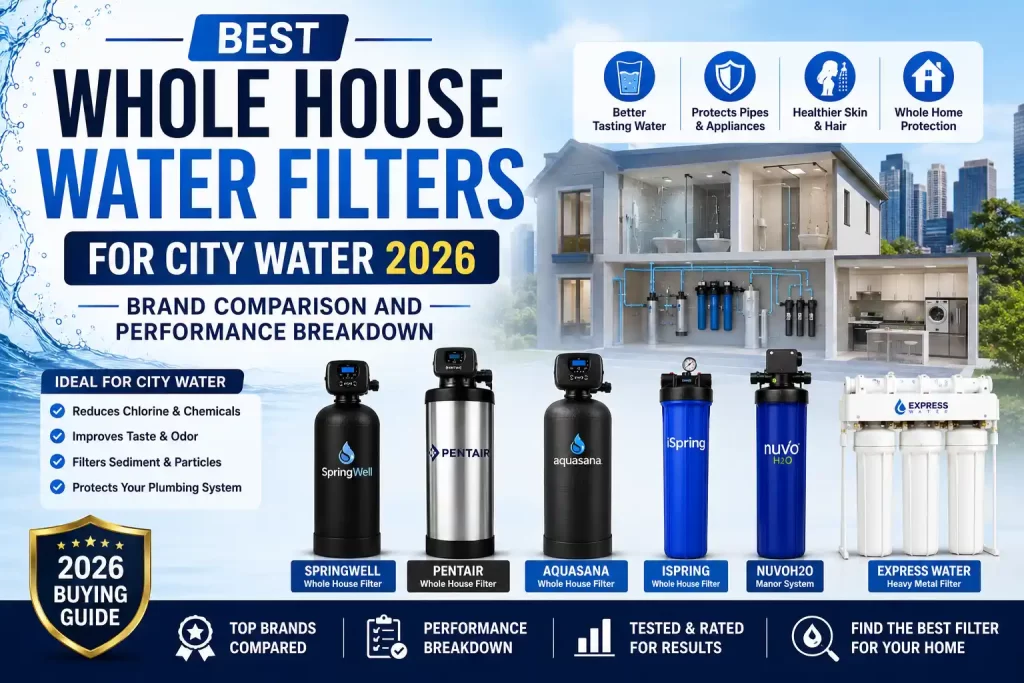
The best whole-house water filters for city water rely on carbon-based filtration but differ in flow rate, system design, and maintenance. Evaluating these filtration systems, you have to look at their capacity to handle municipal disinfection chemicals, primarily chlorine and chloramine. Different filtration brands use different media types, structural designs, and maintenance cycles for water purification. There are 4 main systems that dominate the 2026 market for municipal water treatment.
The following table compares the SpringWell CF, Aquasana Rhino, Pelican PC, and iSpring WGB across critical performance criteria.
| Image | System Model | Flow Rate (GPM) | Media Type | Maintenance Cycle | Current Price |
|---|---|---|---|---|---|
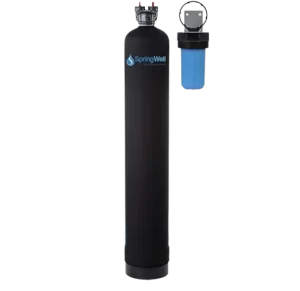 | SpringWell CF | 9 to 20 GPM | Catalytic Carbon | 1,000,000 Gallons | Check Price |
Aquasana Rhino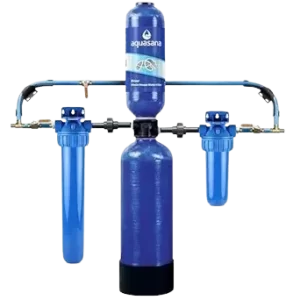 | Aquasana Rhino | 7 to 14.7 GPM | Standard Carbon + KDF | 1,000,000 Gallons | Check Price |
Pelican PC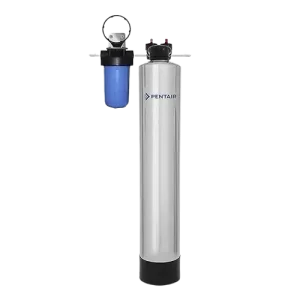 | Pelican PC | 10 to 15 GPM | Catalytic Carbon | 600,000 Gallons | Check Price |
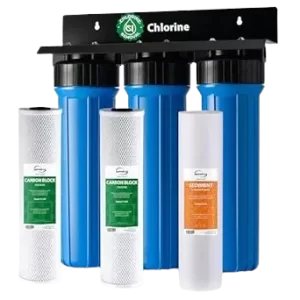 | iSpring WGB | up to 15 GPM | Coconut Shell Carbon | 100,000 Gallons | Check Price |
What Makes a Whole House Water Filter Suitable for City Water?
A whole-house water filter suitable for city water focuses on reducing chlorine, chloramine, and volatile organic compounds. Municipal water treatment plants already handle biological contaminants through chemical disinfection. City water systems need carbon media filtration to neutralise these chemical disinfectants rather than sediment-heavy or iron exchange filters designed for well water. There are 3 main filtration requirements for treating municipal water. First, the filtration system must manage the chlorine residual used by the city to keep water safe during transport. Second, the system must handle VOCs that develop when disinfection chemicals interact with organic matter. Third, the home water filter needs precise flow rate matching to maintain household water pressure during peak usage. Installing well-water systems on municipal water lines wastes money and gives mismatched performance. Standard municipal water systems do not need heavy heavy-metal filtration unless local pipes are damaged. To design a proper water system for a city home, you need a high-capacity carbon filter that provides adequate contact time to adsorb chemicals without restricting the home’s water flow.
How Do SpringWell, Aquasana, and Pelican Systems Differ in Filtration Design?
SpringWell, Aquasana, and Pelican systems differ in their system architecture, using separate upflow, dual-tank, and catalytic carbon designs. SpringWell uses a backwashing upflow catalytic carbon design. Aquasana relies on a dual-tank system combining standard carbon with KDF media. Pelican uses a combined filtration-conditioning structure with a non-backwashing carbon setup. These filtration design differences directly impact water flow, filtration efficiency, and maintenance demands. SpringWell’s backwashing filter automatically cleans and resettles its catalytic carbon bed. This structural design prevents media channeling and maintains consistent water pressure over time. Aquasana’s system structure pushes water through different stages, requiring KDF media to extend the life of its standard carbon. This design reduces chlorine but requires more frequent tank replacements since it lacks an automatic backwashing feature. Pelican integrates filtration and water conditioning into a streamlined setup, using catalytic carbon to handle chloramines. However, without a backwash head, the media bed can compact over time. Understanding these water filtration engineering differences saves buyers from assuming similarly priced filters perform the same.
Which Whole House Filter Removes Chlorine Most Effectively?
Systems using catalytic carbon with automatic backwashing, like the SpringWell CF, remove chlorine most effectively. Catalytic carbon gives an advanced adsorption mechanism with highly reactive surface areas designed to neutralise both chlorine and stubborn chloramines. The effectiveness of chlorine removal depends heavily on media depth and water contact time. There are 3 critical factors determining water filtration efficiency for chlorine removal. First, the depth of the carbon bed controls how long the water remains in contact with the filtration media. Second, backwashing capabilities prevent channeling, ensuring water does not bypass the active carbon adsorption sites. Third, the system’s ability to handle heavy usage.
How Does Flow Rate Affect Real Household Performance?
Flow rate tells whether a water filtration system can maintain stable water pressure for multiple uses. The Gallons Per Minute (GPM) rating gives the maximum volume of water the filter can process before affecting household demand. Undersized systems cause quick pressure drops and inconsistent filtration performance during peak usage. There are 3 distinct flow rate scenarios in home water usage. A 1 to 2 bathroom home requires 7 to 9 GPM to operate smoothly. A 3 to 4-bathroom home demands 12 to 15 GPM to prevent pressure loss. A 5+ bathroom home needs a minimum of 20 GPM for continuous showers and appliance usage. When filtration capacity falls below household demand, it causes a pressure drop. Properly sizing the system capacity according to the home gives strong water pressure while allowing the carbon media to adsorb municipal chemicals.
Does Every City Water System Need a UV Filter?
No, a UV filter is not universally required for city water because municipal chlorine already provides residual disinfection. City water treatment facilities use chlorine or chloramine to destroy microbial threats, and this chemical residual protects the water as it travels through local pipes. A UV is only needed when there is no chemical protection. There are 2 main reasons why a UV filter is needed. First, if a home uses large water storage tanks after the primary carbon filter, a microbial killer is required. Second, homes experiencing frequent boil-water advisories benefit from UV water disinfection as a permanent secondary defence line. Marketing often pushes UV systems as mandatory for home water safety, but standard municipal water needs chemical removal, not additional sterilisation. Adding a UV setup to a direct-flow carbon filtration setup is an unnecessary cost.
How Do Maintenance Requirements Compare Across Different Brands?
Maintenance requirements vary significantly; backwashing systems need only a media swap every 10 years, while budget cartridge systems require filter replacements every 3 to 6 months. These differences in the maintenance directly influence both system maintenance and long-term ownership costs. There are different servicing differences between water system designs. Tank-based systems with programmable backwashing heads do their own media cleaning. Homeowners only need to change the small pre-filter every 6 to 9 months, while the primary filtration media lasts roughly 1,000,000 gallons. In contrast, standard non-backwashing tanks require full unit replacements every 3 to 5 years because the media compacts over time. Cartridge-based filtration systems need manual media replacements. Users must shut off the water supply, depressurise the lines, and physically swap heavy, wet filter blocks multiple times a year. While cartridge setups give a lower purchase price, the maintenance cost and physical filter service labour increase the expense of premium tank systems. No home filtration system is maintenance-free, but automated designs improve system longevity and reduce manual care.
Which System Offers the Best Long-Term Value for City Water Homes?
Premium tank-based catalytic carbon systems offer the best long-term value for city water homes due to their 10-year durability and low maintenance expense. Calculating filtration return on investment included total ownership cost, which includes the upfront installation cost, replacement parts, and the system’s reliable lifespan. There are 3 main components to water system budget analysis. First, budget cartridge systems cost under $400 upfront but require $150 to $300 annually in media replacement. Over a 10-year period, this budget option costs over $2,500. Second, non-backwashing tank systems cost $800 to $1,200 upfront but require full system replacements every 5 years, making the cost roughly $2,000 for10-year. Third, premium backwashing systems cost $1,000 to $1,600 but need almost zero major maintenance expense for a decade. The system investment pays off through long-term cost savings, flow consistency, and system durability. Choosing a water filter based on initial pricing leads to higher maintenance costs and drops in water pressure as cheap media degrade rapidly.
Which Whole House Filter Should You Choose Based on Your Home Setup?
You should choose your whole-house filter based on your household demand, bathroom count, and specific water quality issues. Proper filtration selection helps avoid pressure drops and ensures the filtration system matches the exact water demand of your plumbing setup.
The following are 4 different buyer profiles for home filtration choices:
- Small Homes (1 to 2 Bathrooms, Low Demand): Choose a high-quality cartridge system like the iSpring WGB32B. It gives enough flow for small spaces without requiring a large installation footprint.
- Medium Households (2 to 3 Bathrooms): Choose the Aquasana Rhino. It handles moderate water usage efficiently and provides excellent chemical reduction for standard city water.
- Large Homes (4+ Bathrooms): Choose the SpringWell CF+ (High Flow model). It gives 20 GPM to avoid pressure drops in multi-bathroom homes
- Homes Needing Filtration + Conditioning: Choose the Pelican Premium Combo system. It handles municipal chemicals while preventing hard water scale buildup without using salt.
How Do Budget Cartridge Systems Compare to Tank-Based Systems?
Budget cartridge systems use small, replaceable filter blocks that need to be changed, while tank-based systems use massive media beds designed for 5 to 10 years of use. Cartridge filters give faster pressure drops and flow inconsistency as debris quickly covers their limited surface area. Tank systems maintain water flow and need lower maintenance due to their structural volume.
What Role Does Certification Play in Comparing Brands?
NSF/ANSI certifications prove that a water filter actually meets strict contaminant reduction standards through independent, validated testing. Non-certified brands rely on self-tested results, which do not guarantee standardised water safety or consistent filtration claims. Choosing a system with official product validation ensures the system will perform exactly as advertised.
How Does Installation Complexity Vary Between Systems?
Cartridge systems feature a smaller installation footprint and simpler plumbing setup, while tank-based systems need larger spaces and drain line connections for backwashing. DIY plumbing is feasible for simple cartridge filters, but professional installation is recommended for multi-tank setups needing main water line modifications.
What Happens When a Filter Is Undersized for a Home?
An undersized filter affects water flow, causing pressure drops across the entire home during peak usage. This system problem forces water through the media too quickly, due to which the filtration process is compromised, and chemicals bypass the filter. Matching your household demand to the correct GPM rating prevents system failure.
How Do Different Systems Impact Water Taste and Odour?
Carbon filtration directly improves water taste and removes odours by adsorbing the chlorine and VOCs injected by municipal treatment plants. The sensory improvement depends heavily on the volume of carbon and the proper flow rate, allowing enough contact time. If the media degrades, the chlorine taste will return to the drinking water.
FAQ’s:
1. What is the best whole-house water filter for city water?
For most city water homes, a catalytic carbon system like the SpringWell CF is a strong choice because it reduces chlorine, chloramine, VOCs, and unpleasant taste and odor.
2. Do city water homes need a UV filtration system?
Not usually. Municipal water is already disinfected with chlorine or chloramine. UV filtration is mainly useful for homes with storage tanks or additional microbial concerns.
3. How do I choose the right flow rate (GPM) for my home?
Choose a system based on bathroom count and simultaneous water usage. Small homes typically need 7–9 GPM, while larger homes may require 12–20+ GPM.
4. Are tank-based filters better than cartridge systems?
Tank-based systems generally offer longer media life, lower maintenance, and more consistent water pressure, while cartridge systems have a lower upfront cost.
5. Do whole-house water filters improve water taste and odor?
Yes. Carbon-based filtration reduces chlorine and VOCs, which are the main causes of unpleasant taste and odor in municipal water supplies.

