
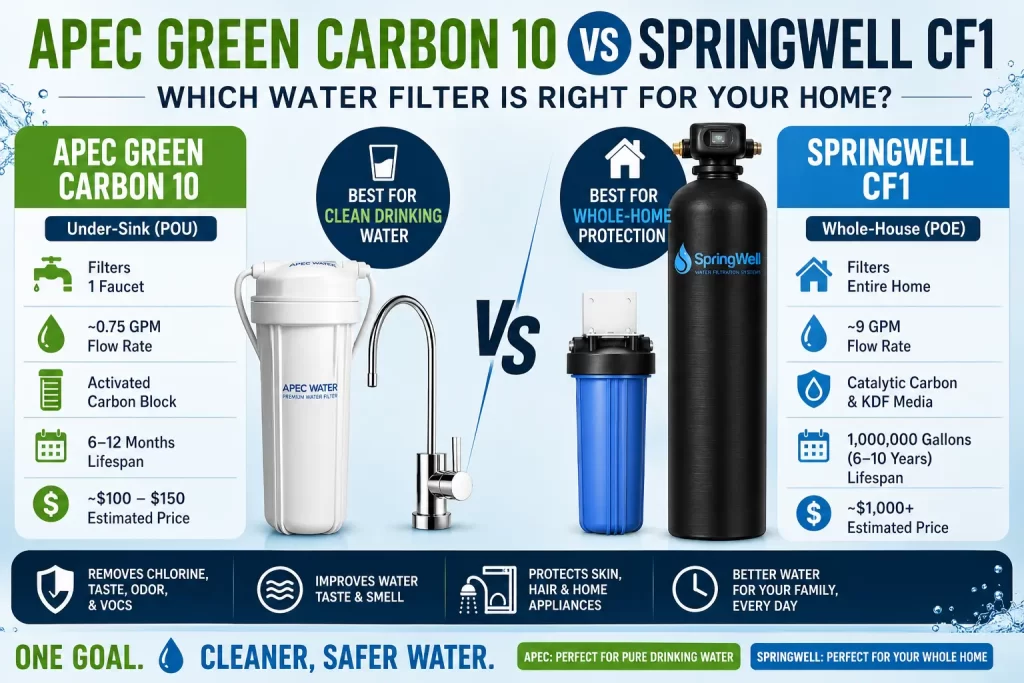
APEC Green Carbon 10 is best for single-point drinking water filtration, while the SpringWell CF1 is designed to filter water for the entire home with higher flow and a longer lifespan. These systems represent two very different approaches to water treatment: the APEC is under a single sink, and the SpringWell is at a point-of-entry (POE) with access to your main water line. But if you want to rid your shower of chlorine smells, APEC won’t help; alternatively, the SpringWell might be too much if all you need is crisp drinking water in your kitchen
| Feature | APEC Green Carbon 10 | SpringWell CF1 |
|---|---|---|
| System Type | Under-Sink (POU) | Whole-House (POE) |
| Flow Rate | ~0.75 GPM | ~9 GPM |
| Media Type | Activated Carbon Block | Catalytic Carbon & KDF |
| Lifespan | 6–12 Months | 1,000,000 Gallons (6–10 Years) |
| Coverage | Single Faucet | Full Home (Showers, Appliances) |
| Current Price | Check Price | Check Price |
What is the real difference between APEC Green Carbon 10 and SpringWell CF1?
The main difference is the filtration scope. The APEC filters one faucet, and the SpringWell CF1 filters the entire home water supply. Knowing this difference helps you decide where you will drink the purified water.
APEC Green Carbon 10
It is a point-of-use filter, the APEC Green Carbon 10. It is a small, under-sink unit that treats water at one location, your kitchen faucet. At about 0.75 GPM, it gives you a steady stream for drinking or cooking, but cannot handle multiple outlets. Installing this in the kitchen means your bathroom sinks & showers still get untreated municipal water if you install this there.
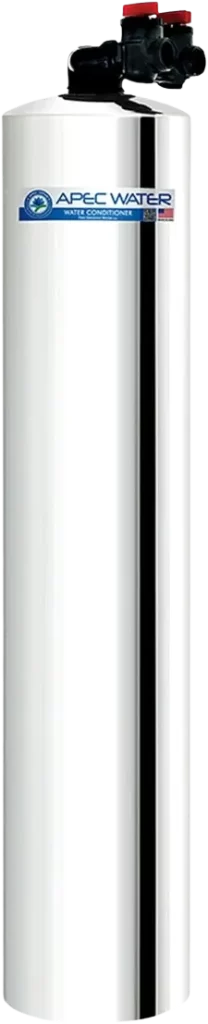
SpringWell CF1
In the SpringWell CF1, the POE is a point-of-entry system. This heavy-duty whole-house filtration solution connects to your main water line as it enters your home. It has a much larger 9 GPM water system capacity to supply filtered water to many showers, toilets, and appliances concurrently. You need this filtration scale in case your goal is to get rid of chlorine smells in laundry or protect your skin from chemicals in the shower. The APEC is about as big as a cereal box, but the SpringWell is an enormous standing tank designed for high-volume water use.
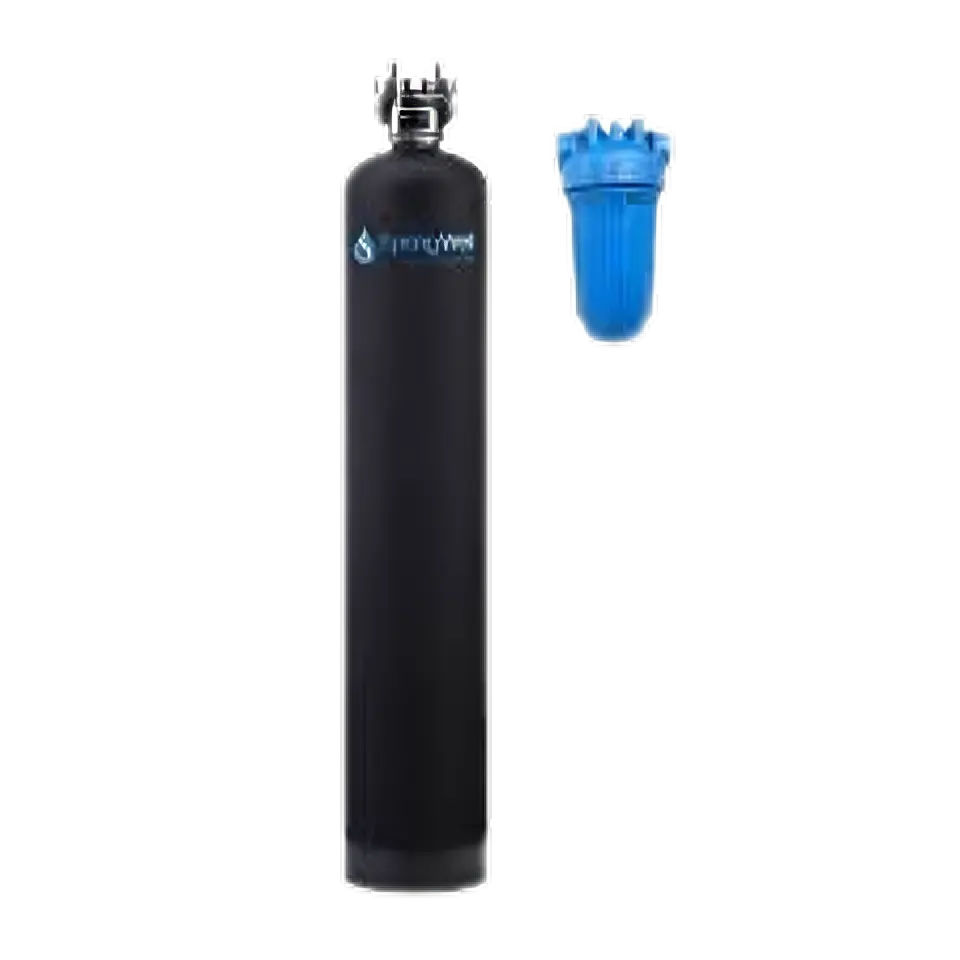
How does filtration performance and contaminant removal compare?
While both systems remove chlorine well, the SpringWell CF1 is better suited for large-scale and chloramine-heavy water because it uses high-grade catalytic carbon. Although both systems use carbon filtration, the filtration media type and volume determine the contaminant removal capabilities.
The APEC Green Carbon 10 uses a high-density activated carbon block. This is good for chlorine removal and lowering VOC reduction targets in one stream of water. Because the water flows through the block slowly, it has a long contact time, just right for purifying your drinking water. But standard activated carbon has trouble handling chloramines, a stable disinfectant employed in many modern city water plants.
SpringWell CF1 uses catalytic carbon coupled with KDF media. More advanced filtration media, such as catalytic carbon, break down both chloramines and chlorine. It is a high filtration efficiency system suited for high speeds. It strips chemicals from thousands of gallons of water without having the “breakthrough” problems that smaller blocks might have. If your local water report recommends chloramines as a disinfectant, the SpringWell water treatment approach protects the entire home.
How does flow rate impact daily usage between these systems?
SpringWell CF1 allows full home water flow without pressure drop, while APEC Green Carbon10 is restricted to a single faucet. It is this difference in GPM rating (gallons per minute) that most clearly shows how these systems affect your daily routine and home plumbing performance.
APEC Green Carbon 10 delivers about 0.75 GPM of water flow. This is a deliberately designed speed for a faucet meant to fill a glass or coffee pot. It is a “point of use” system; it affects nothing else in your house. But you cannot feed multiple fixtures off of this line. Doing so would produce a frustratingly slow trickle that would not supply enough water for a small appliance.
The SpringWell CF1 is a high-flow 9 GPM system. This helps keep your shower pressure strong while the dishwasher and washing machine run simultaneously. Although smaller filters can “bottleneck” your pipes, the CF1’s system capacity is designed to match the peak output of a standard 1-3 bathroom home. The wrong system can cause unexpected plumbing performance issues like low pressure in your morning shower.
Which system is more cost-effective over time?
The APEC Green Carbon 10 is cheaper upfront, but the SpringWell CF1 is a better long-term deal for whole-home filtration. To choose between them, you need a budget versus premium analysis comparing immediate savings versus recurring yearly maintenance costs.
For initial water system pricing, the APEC system is the clear winner at $100-$150. But it has a strict replacement schedule, a new filter every 6 to 12 months. Individual filter costs and upkeep can add up over a decade. If you only need purified water at one sink, it is a very cost-efficient solution, but many units around the house would soon get pricey.
The SpringWell CF1 requires a larger initial RO investment of about $1,000 but has a much longer system lifespan. It is rated for 1,000,000 gallons, which for the average family lasts about 6 to 10 years without maintenance. When calculating the long-term value, the SpringWell is often cheaper per gallon. Those wanting an “easy-to-use filtration budget” will appreciate the high price point of the SpringWell.
How do installation and maintenance differ between both systems?
The APEC Green Carbon 10 is a DIY-friendly under-sink installation, while the SpringWell CF1 typically requires a more complex whole-house plumbing setup. These two systems demand very different levels of technical skill and ongoing maintenance effort.
Installation Process
With the APEC Green Carbon 10, this under-sink install takes most homeowners less than 30 minutes. This system uses simple, quick-connect fittings and does not require cutting into your main water lines.
Meanwhile, the SpringWell CF1 needs more intensive installation. Since this has to be spliced into the main water line where it enters the home, it often requires cutting copper or PEX piping. SpringWell provides a detailed kit, but many homeowners hire a plumber to make sure the water system install is leak-proof and compliant with local codes.
Ongoing Maintenance and Upkeep
Upkeep of the system for APEC is simple: Once or twice a year, you just twist off the old filter housing and drop in the replacement. It is an easy DIY install that fits in a regular kitchen cabinet.
After installation, the CF1 is virtually maintenance-free for up to ten years. But unlike the APEC, which requires regular maintenance, the SpringWell is a “set it and forget it” home plumbing solution that treats millions of gallons with just one filter change.
Does a whole-house filter perform better than an under-sink filter?
No, whole-house filters are no substitute for good drinking water quality under sink systems. It’s a common buyer misconception that filtration scope is confused with filtration intensity. A whole-house system like SpringWell CF1 can service the entire home, but its main function is high-flow “point-of-entry” treatment of chlorine and appliances.
Scope vs. Quality Distinction
The performance of a filter depends on its specific purpose rather than the size of the unit:
- Whole-House Filtration
These are high-volume systems that must allow water flow at around 9 GPM to avoid a shower pressure drop. As the water flows through the media so quickly, it usually removes fine contaminants less well, such as heavy metals or dissolved solids.
- Under-Sink Filtration
Systems with 0.75 GPM of water flow rate allow much greater “contact time” with filtration media than the APEC Green Carbon 10 or RO units. This slower process allows precise contaminant removal, often leading to better water purity for drinking.
The “better” system ultimately depends on your endpoint. A whole-house system is better for shower protection. But for the best quality drinking water, a dedicated under-sink system will typically provide more stringent system performance.
Which water filter should you choose based on your home setup and water needs?
Choose APEC for single-faucet drinking water and SpringWell CF1 if you want chlorine-free water throughout your entire home. This home filtration decision depends on your household’s specific water needs and the level of coverage you require.
Buyer Recommendations
- The Apartment Resident or Renter: APEC Green Carbon 10
This is the ideal filtration choice for those who cannot modify main plumbing lines. It is a non-permanent water solution that provides premium drinking water with a simple under-sink installation.
- The Small Family on a Budget: APEC Green Carbon 10
If your primary goal is to stop buying bottled water, this system offers the best purchase decision for immediate ROI. However, it won’t address chlorine smells in the laundry or bathrooms.
- The Large Homeowner (2+ Bathrooms): SpringWell CF1
To avoid a water pressure drop while multiple fixtures are running, you need a high-flow system. This is the recommended system to ensure every tap in the house is treated.
- The High Chlorine/Chloramine Area: SpringWell CF1
If your local water report shows high levels of disinfectants affecting your skin and hair, a whole-house filtration system is necessary.
For a deeper look at different technologies, see our carbon vs. RO guide or explore our whole house filter guide to see how the CF1 stacks up against competitors.
Does the APEC Green Carbon 10 remove chloramine?
No, it targets chloramine but not primarily chloramine. Standard activated carbon blocks like those in the APEC Green Carbon 10 lack the long contact time and specialized media required to break down the more stable chloramine bond. You may still taste or smell a chemical if your municipality uses chloramine for disinfection.
How long does the SpringWell CF1 media last?
The CF1 tank media typically lasts up to 10 years. This system is engineered for exceptional durability, with a capacity to treat approximately 1,000,000 gallons of water before the media requires replacement. This long-term lifespan makes it a “set it and forget it” solution for most households.
Can you use both systems together in one home?
Yes, combining whole-house and under-sink filtration improves overall water quality by creating a layered defense. In this setup, your SpringWell CF1 filters out chlorine from showers and appliances while your APEC system polishes out particles for cleaner drinking water. This integration provides high flow through the home and specialized purification at the kitchen tap.
Is SpringWell CF1 suitable for well water?
Yes, but only with proper pre-filtration. Although catalytic carbon in the CF1 is effective, well water contains heavy sediment, iron, or sulfur that may clog the media or reduce its effectiveness. You must install a sediment or iron pre-filter over the main tank.
Does carbon filtration improve water taste and odor?
Yes, a carbon filter removes chlorine and volatile organic compounds (VOCs) for better taste. These contaminants are the main causes of chemical or earthy smells in municipal water. The carbon media absorbs these impurities and leaves the water tasting clean and crisp.

