
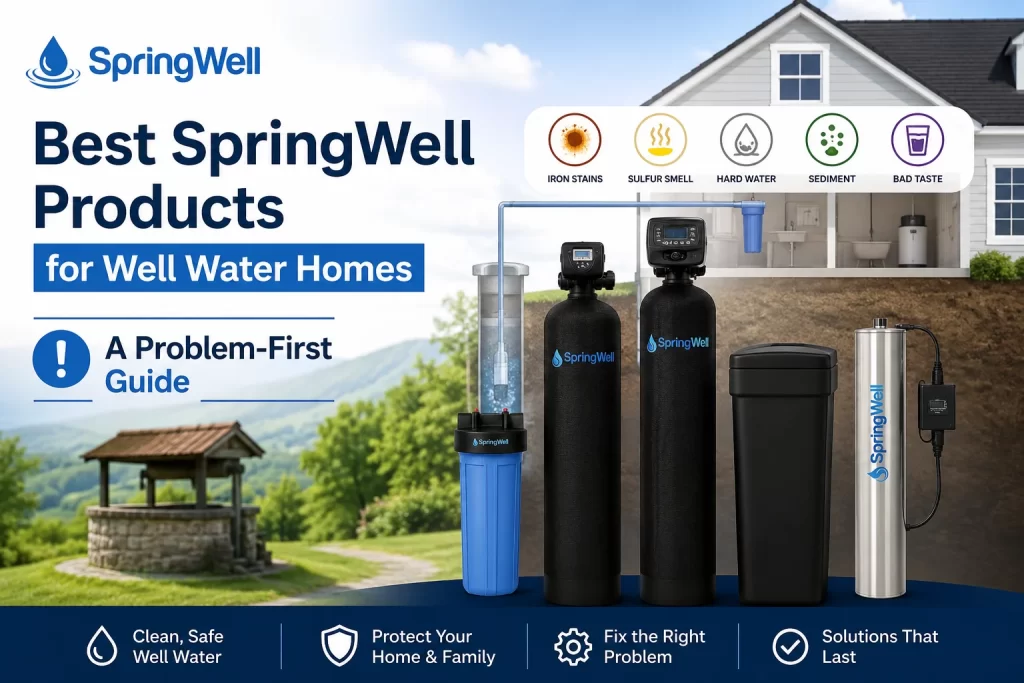
SpringWell well-water systems solve specific water problems like iron, sulfur, hard water, bacteria, and sediment when the correct system is matched to the right issue. A proper well water setup is built from multiple treatment stages, not one single filter. Iron and sulfur are removed using WS Series oxidation and filtration. Hard water is treated with a salt-based water softener that removes calcium and magnesium through ion exchange. Bacteria, including E. coli and coliform bacteria, are removed using UV disinfection as the final step. Sediment filters remove sand, dirt, and rust before water enters the main systems to protect equipment and improve performance. Combination systems are required when multiple problems exist in the same well water. Each stage works in order to prevent system damage and improve water quality. Water testing is needed first because it finds the exact contaminants before choosing a random SpringWell system for that containment. Maintenance, backwashing, and filter replacement keep the system working for 10 to 15 years. Water pressure and correct system sizing also affect long-term performance. Choosing the right SpringWell system depends on matching each well water problem with the correct treatment method.
The following table shows the matching system and its function for a specific problem.
| Problem | Recommended System | Key Function | When Required |
| Iron & Sulfur | WS Series Filter | Air injection oxidation & media filtration | Red/orange staining, rotten egg odour |
| Hard Water | Salt-Based Softener | Ion exchange calcium/magnesium removal | Scale buildup, soap scum, plumbing wear |
| Bacteria & Viruses | UV Purification System | Microbial DNA disruption via ultraviolet light | Positive coliform tests, surface water intrusion |
| Multi-Contaminant | Combination Setup | Sequential treatment across multiple stages | High iron, hardness, and microbial risks are present |
What Problems in Well Water Do SpringWell Systems Actually Solve?
SpringWell systems solve 5 common well water problems like iron, sulfur, hard water, bacteria, and sediment. Each problem needs a different type of water treatment because well water often contains more than one contaminant. Iron causes red or brown stains on sinks, toilets, and laundry. Sulfur makes a rotten egg smell from hydrogen sulfide gas. Hard water contains high levels of calcium and magnesium that leave scale buildup inside pipes and appliances. Bacteria, including E. coli and coliform bacteria, can create water safety risks. Sediment, such as sand, silt, and clay, makes water cloudy and can clog plumbing fixtures. A single filtration system does not solve every well water problem. For example, a sulfur filter removes sulfur odour, but it does not stop hard water scale. The correct SpringWell system depends on the specific contaminants found in the well water. Each problem needs a different type of water treatment because well water often contains more than one contaminant.
How Do SpringWell WS Series Systems Remove Iron and Sulfur?
SpringWell WS Series systems remove iron and sulfur by using air and filtration media. The system changes dissolved iron and hydrogen sulfide gas into solid particles that are easier to filter out of the water. Well water first passes through an air pocket inside the tank. The air reacts with ferrous iron and hydrogen sulfide. This reaction turns the contaminants into solid iron and sulfur particles. The filtration media then traps these particles before the water flows into the home. The WS Series also uses automatic backwashing to keep the system clean. During backwashing, water flows in the opposite direction and washes the trapped iron and sulfur out of the media. This cleaning process restores filtration performance and prepares the system for the next filtration cycle. Air oxidation and backwashing work together. A standard sediment filter can capture solid particles, but it cannot remove dissolved iron or sulfur gas before oxidation occurs.
Which SpringWell System Handles Hard Water in Well Applications?
SpringWell water softeners handle hard water in well water applications by removing calcium and magnesium. These two minerals cause hard water scale buildup inside pipes, water heaters, faucets, and appliances. The system uses a process called ion exchange. Water passes through resin beads that capture calcium and magnesium minerals and replace them with sodium ions. This process prevents scale buildup and helps protect plumbing systems and household appliances. The resin beads clean themselves through a regeneration cycle. During regeneration, a salt brine solution washes the trapped hardness minerals out of the system and recharges the resin beads for continued water softening. Water softening and water filtration perform different jobs. Filtration removes contaminants such as iron, sulfur, and sediment. Water softening removes hardness minerals. An iron filter can reduce iron staining, but only a water softener can stop hard water scale.
Why Are Combination Systems Required for Multi-Contaminant Well Water?
Combination systems are required for well water with multiple contaminants because each contaminant needs a different treatment method. One system cannot remove iron, soften hard water, and disinfect bacteria at the same time. A combination system treats water in steps. The iron filter removes iron and sulfur first. The water softener removes calcium and magnesium next. The UV system disinfects bacteria, including E. coli and coliform bacteria, last. This treatment order improves system performance. Removing iron first protects the softener from buildup. Removing hardness minerals before UV treatment helps keep the water clear, allowing UV light to reach and deactivate microbes more effectively. Each system performs a specific job. Using the correct treatment sequence helps solve multiple well water problems and protects all equipment in the filtration system.
How Does UV Filtration Fit Into a SpringWell Well Water Setup?
UV filtration fits into a SpringWell well water setup as the final stage that disinfects bacteria and viruses. The UV system uses ultraviolet light to kill microbes after other filtration systems have cleaned the water. The UV filter is installed after sediment filters, iron filters, and water softeners. These systems remove sand, iron, sulfur, calcium, and other particles before the water reaches the UV chamber. Clear water allows UV light to reach bacteria, including E. coli and coliform bacteria, more effectively. UV filtration only disinfects microorganisms. UV light does not remove iron, sulfur, sediment, calcium, or magnesium. For this reason, UV treatment works best as the last step in a complete well water filtration system. A properly designed filtration setup combines physical filtration, water softening, and UV disinfection to improve overall well water quality and safety.
What Does It Cost to Maintain SpringWell Well Water Systems Long-Term?
SpringWell well water system maintenance costs come from replacing filters, adding salt, and changing UV parts over time. These costs depend on how much water is used and what contaminants exist in the well water. Sediment filters are replaced every 6 to 9 months and cost about $40 to $80 per year. Water softeners use salt for regeneration, usually about one 40-pound bag per month, which costs around $70 to $120 per year. UV systems need a bulb replacement and quartz cleaning once a year, costing about $100 to $130 annually. Iron filter media in WS Series systems lasts about 10 to 15 years before replacement is needed. This is a long-term cost because media replacement happens rarely but is more expensive. Maintenance is required because filters and media lose performance over time with regular replacement; the system works properly and protects water quality in the home.
Do SpringWell Systems Replace the Need for Water Testing? (Myth)
SpringWell systems do not replace water testing because testing is needed to know what is in the well water. Water testing shows the exact contaminants and their levels before choosing any filtration system. A water test measures substances like iron, hardness minerals, bacteria, and heavy metals in parts per million (ppm). Without this data, we cannot select a matching system. For example, an iron filter cannot fix tannins or low pH, so wrong selection leads to poor water quality results. Water testing is also used in private well safety checks. It detects invisible contaminants such as E. coli bacteria and heavy metals that cannot be seen or smelled in water. Accurate water treatment depends on lab tests. Testing first ensures the correct SpringWell system is selected for the specific well water problems.
When Should You Upgrade or Add Additional Systems to Your Setup?
You should upgrade or add more water treatment systems when your well water changes, water use increases, or water pressure drops. These changes show that the current system is no longer enough for your home. A new water test can show new contaminants in the well water. For example, if bacteria are found, a UV system is added for disinfection. If more bathrooms are added in a home, water demand increases, and the house needs a larger system to handle a higher flow rate. Low water pressure is another sign of system overload. This happens when the filter cannot handle the required flow of water. Upgrading based on water test results and performance makes the system work properly and maintains clean water in the home.
Which SpringWell System Should You Choose Based on Your Well Water Problem?
You should choose a SpringWell system based on the exact problem in your well water. Each water problem needs a different type of treatment system. Iron in water causes red or brown stains and needs an iron filter system like the WS Series. Sulfur causes a rotten egg smell and also needs the WS Series for odour removal. Hard water causes scale buildup on pipes and appliances, and requires a water softener to remove calcium and magnesium. Bacteria, including coliform bacteria, require a UV system for disinfection. Each system solves a single main problem in well water. Matching the system to the problem gives better water quality results.
Can SpringWell Systems Handle Extremely High Iron Levels?
SpringWell WS Series systems can remove high iron levels in well water up to a certain limit, usually around 7 ppm. If iron levels go above this limit, the system cannot work properly and may clog or lose performance. Very high iron water needs extra treatment before the main filter, such as a pre-treatment system that prepares the water for filtration. Testing iron levels first is important because it shows whether the WS Series system is enough or if additional treatment is needed.
Do You Need Sediment Pre-Filtration With SpringWell Systems?
You need a sediment pre-filter with SpringWell systems to remove dirt, sand, and rust before water enters the main system. This protects the main filter tanks and keeps them working longer. Sediment filters reduce cloudy water by trapping physical particles. This stops clogging inside iron filters, softeners, and UV systems. Without sediment pre-filtration, the main system gets dirty faster and stops working efficiently.
How Does Backwashing Work in SpringWell Systems?
Backwashing in SpringWell systems cleans the filter by reversing the water flow. Water flows backwards through the tank to remove trapped dirt, iron, and sulfur. This process lifts particles from the filter media and flushes them out through the drain. It helps keep the system clean and working properly.
Can One System Treat Both Iron and Hard Water?
One system cannot treat both iron and hard water at the same time. Iron and hard water need different treatment methods in well water systems. Iron is removed by oxidation and filtration. Hard water is treated by ion exchange in a water softener that removes calcium and magnesium. If you use one system for both problems, it can stop working properly and get damaged. Separate systems are needed for correct water treatment.
How Long Do SpringWell Systems Last With Well Water?
SpringWell systems last about 10 to 15 years in normal well water conditions. The exact system lifespan depends on water quality and how much water is used every day. High levels of iron, hardness, or sediment can make filters wear out faster. Heavy water use also reduces filter durability over time. Regular maintenance helps the system last longer and keeps the water clean. Changing filters on time protects the system and improves performance.
Does Water Pressure Affect SpringWell System Performance?
Water pressure affects how well a SpringWell system works. The system needs enough pressure to move water through filters and clean itself. Low water pressure means the system cannot clean the filter properly during backwashing. This leads to dirt buildup inside the media and reduces water flow. Proper pressure keeps the system working correctly and maintains clean water output.
FAQ’s:
1. What is the best SpringWell system for well water homes?
The best SpringWell system depends on your water issues. WS Series handles iron and sulfur, water softeners treat hard water, UV systems remove bacteria, and combination setups are used when multiple contaminants are present.
2. Can SpringWell systems remove all well water problems with one unit?
No. One system cannot solve all well water issues. Iron, sulfur, hardness, sediment, and bacteria each require different treatment methods, so multiple systems are often combined for full protection.
3. How does the SpringWell WS Series treat iron and sulfur?
The WS Series uses air injection oxidation to convert dissolved iron and hydrogen sulfide into solid particles, which are then filtered out. The system also backwashes automatically to clean the media and maintain performance.
4. Why is water testing important before choosing a SpringWell system?
Water testing identifies exact contaminants like iron, hardness, bacteria, and sediment. Without testing, you may choose the wrong system, which reduces effectiveness and can leave water problems untreated.
5. How long do SpringWell well water systems last?
SpringWell systems typically last 10 to 15 years depending on water quality, usage, and maintenance. Regular filter changes, salt refills, and proper system sizing help extend lifespan and maintain performance.

