
Best portable water filters are not a single category of gear, since a squeeze filter, a straw, a gravity bag, and a pump purifier all solve the same basic problem in very different ways. This guide compares ten of the most trusted portable water filters and purifiers on the market today, judged side by side on filtration capability, portability, speed, capacity, maintenance, price, star ratings, and real review volume from thousands of outdoor users. A filter and a purifier are not interchangeable terms, and that distinction matters more than almost any other spec on this list. Before naming a single winner, this guide walks through what each product actually does well, where it falls short, and which trip it is truly built for. By the end, the right pick will feel obvious based on your own water source, your group size, and how you like to travel.
Best Portable Water Filters
Share
Our Top Picks
In-Depth Reviews
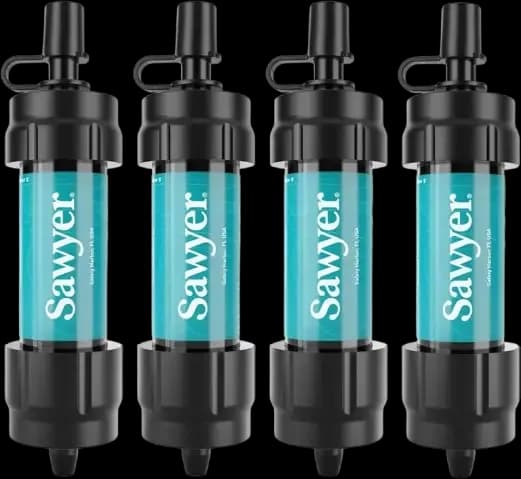
Sawyer Squeeze
$45.95
Key Features
The most trusted all-around squeeze filter on this list, the Sawyer Squeeze balances reliability, versatility, and a massive real-world track record. It works as a squeeze, gravity, or inline filter, making it the easiest single filter to build a personalized system around.
Reasons to Buy
- Removes 99.999999% of bacteria, 99.9999% of protozoa, and 100% of microplastics
- Massive 100,000-gallon rated lifespan most users never replace the filter element
- Versatile: squeeze, gravity, or inline hydration hose setup
- Backflushable and reusable with no expensive replacement cartridges
- Compatible with standard 28mm threaded bottles
Reasons Not to Buy
- Does not remove viruses
- Included pouches reported to tear or split before the filter itself wears out
- No activated carbon doesn't improve taste or reduce chlorine
- Heavier and bulkier than the smallest ultralight straw options
- No built-in flow-rate speed advantage compared to QuickDraw
Specs at a Glance
| Type | Weight | Flow rate | Filter rating | Capacity | Dimensions | Included components | Purification method |
|---|---|---|---|---|---|---|---|
| Squeeze | 3 oz | 1.7 L/min | 0.1 micron | 100,000 gallons | 4"L x 2.5"W x 7.5"H | Filter, 32-oz pouch, drinking spout | Hollow fiber membrane |
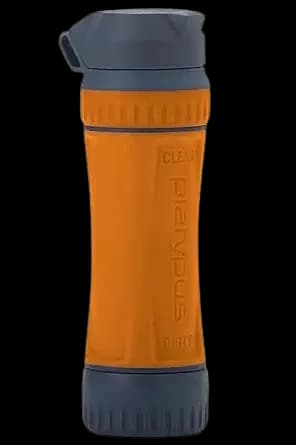
Platypus QuickDraw
$40.89
Key Features
Built for speed, the QuickDraw filters nearly twice as fast as most squeeze competitors while staying ultralight. Its screw-top cap design makes field cleaning and integrity testing simple without extra tools.
Reasons to Buy
- Fast 3 L/min flow rate nearly double many competing squeeze filters
- Ultralight at 3.3 oz
- No-tools shake-to-clean or backflush maintenance
- ConnectCap threads onto common 28mm bottles (smartwater, Cnoc, soda bottles)
- Meets NSF & EPA P231 protocol for bacteria/protozoa removal
Reasons Not to Buy
- Much smaller review base than Sawyer Squeeze
- Slightly larger 0.2 micron pore size vs. Sawyer's 0.1 micron
- Does not remove viruses
- No activated carbon stage for taste/chlorine
- Reservoir capacity limited to 1L per fill
Specs at a Glance
| Type | Weight | Flow rate | Filter rating | Capacity | Dimensions | Included components | Purification method |
|---|---|---|---|---|---|---|---|
| Squeeze | 3.3 oz | 3 L/min (squeeze); 1.75 L/min (gravity) | 0.2 micron | 1 liter reservoir | 5"L x 3"W x 3"H | 1L reservoir, dirty side caps, DrinkCap, ConnectCap, backflush gasket | Hollow fiber membrane |
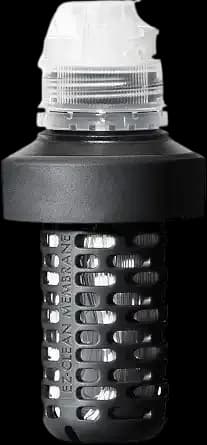
Katadyn BeFree AC 1.0L
$42.95
Key Features
A fast, ultralight bottle filter that needs almost no squeeze effort. Its wide mouth makes filling from shallow sources easy, and its no-backflush cleaning keeps maintenance simple in the field.
Reasons to Buy
- Fast 2 L/min flow rate with minimal squeeze effort
- Ultralight and packable collapses flat for pockets, vests, packs
- No backflushing needed shake-or-swish cleaning restores flow
- BPA-free, trusted brand since 1928
- No pump, no setup fill and drink immediately
Reasons Not to Buy
- This is the standard BeFree, not the AC (activated carbon) version no chlorine/taste improvement
- Soft flask design less rugged than a hard-sided bottle
- Does not remove viruses
- No field-testable filter integrity feature like QuickDraw's screw-top
- Newer colorway variants cost notably more than the base Clear option
Specs at a Glance
| Type | Weight | Flow rate | Filter rating | Capacity | Dimensions | Included components | Purification method |
|---|---|---|---|---|---|---|---|
| Bottle | Not specified in listing (content lists 3 oz for AC version) | 2 L/min | 0.1 micron | 1,000 liters | 4.25"L x 10"W x 3"H | BeFree Filter Membrane | Hollow fiber membrane |
Grayl GeoPress
Key Features
The only true purifier in this lineup among the first three, the GeoPress physically blocks viruses in addition to bacteria and protozoa, making it the go-to choice for international travel and higher-risk water sources.
Reasons to Buy
- Removes viruses, bacteria, and protozoa via electroadsorption + activated carbon
- Extremely fast purifies 24 oz (710ml) in 8 seconds (5 L/min)
- No squeezing, pumping, or sucking required press-and-drink design
- SoftPress ergonomic pads reduce pressing fatigue
- NSF certified
Reasons Not to Buy
- Heaviest and bulkiest option among the squeeze/bottle filters on this list
- Higher price point than standard microfilters
- Requires a flat surface to press against, less convenient than simple squeeze filters
- Replacement cartridges needed periodically (rated for a limited number of presses/gallons)
Specs at a Glance
| Type | Weight | Flow rate | Capacity | Purification method | Power source | Installation type | Certification |
|---|---|---|---|---|---|---|---|
| Purifier | 15.9 oz | 5 L/min | 24 fl oz (710ml) per press | Activated carbon, ion exchange (electroadsorption) | Non-electric | Countertop/portable | NSF certified |
LifeStraw Peak Squeeze 33.8 oz
Key Features
A versatile, multi-mode squeeze bottle that can be used as a squeeze, straw, or gravity-compatible filter.
Reasons to Buy
- Removes 99.999999% of bacteria and 99.999% of protozoa/microplastics
- Multi-use design: squeeze, straw, or attach to LifeStraw gravity system
- Rated 2,000 liter filter lifespan
- Field cleaning via included backwash syringe
- Durable, thicker reservoir material than some competitors
Reasons Not to Buy
- Does not remove viruses
- Cannot draw the very last bit of water from the bottom of the bottle
- Multiple size variants (650ml vs 1L/33.8oz) can cause confusion when purchasing
Specs at a Glance
| Type | Weight | Flow rate | Filter rating | Capacity | Purification method | Power source | Included components |
|---|---|---|---|---|---|---|---|
| Squeeze | 3.9 oz | Approximately 3 L/min | 0.2 micron | 2,000 liters (filter lifespan) | Activated carbon (per this listing; hollow fiber per broader spec) | Manual operation | Filter, water bottle |
Platypus GravityWorks 4L
$175.44
Key Features
The go-to choice when multiple people need water at camp. No pumping or squeezing required just hang the dirty reservoir and let gravity do the work while you handle other camp tasks.
Reasons to Buy
- No manual effort gravity-fed filtration for hands-free operation
- Processes large 4-liter volumes automatically
- Meets EPA/NSF guidelines, removing 99.9999% of bacteria and 99.9% of protozoa
- Includes full kit: dirty/clean reservoirs, filter, hoses, shutoff clamp, storage sack
- Very strong review base
Reasons Not to Buy
- Higher price point than personal squeeze filters
- Bulkier and heavier than solo filters not ideal for fast solo hiking
- Requires elevation/hanging setup to work efficiently
- Does not remove viruses
- Two large reservoirs add packing complexity vs. single-unit filters
Specs at a Glance
| Type | Weight | Flow rate | Filter rating | Capacity | Dimensions | Included components | Purification method |
|---|---|---|---|---|---|---|---|
| Gravity | 11.5 oz (kit) | 1.75 L/min | 0.2 micron | Up to 1,500 gallons (replaceable cartridge) | 13.2"L x 2.8"W x 5.8"H | Clean & dirty reservoirs, microfilter, hoses, storage sack | Hollow fiber membrane |
Katadyn Hiker Pro Clear
Key Features
Unlike bottle or squeeze systems, the Hiker Pro's intake hose can reach shallow puddles and hard-to-access water sources. Its transparent housing lets you visually monitor cartridge condition, and the activated carbon core improves taste.
Reasons to Buy
- Intake hose reaches shallow, silty, or hard-to-access water sources
- Transparent body shows cartridge condition at a glance no guesswork
- Activated carbon core improves taste and reduces chemicals
- Field-maintainable filter protector extends cartridge life
- Comes with full kit: intake hose, output hose, hydration connector, carry bag
Reasons Not to Buy
- Slower flow rate (1 L/min) than most squeeze filters
- Heavier than squeeze/straw options at 11.2 oz
- Manual pumping requires more effort than gravity or squeeze systems
- Does not remove viruses
Specs at a Glance
| Type | Weight | Flow rate | Filter rating | Capacity | Dimensions | Included components | Purification method |
|---|---|---|---|---|---|---|---|
| Pump | 11.2 oz | 1 L/min | 0.2 micron (glass fiber) | 1,150 liters | 3"L x 3"W x 6"H | Filter unit, intake/output hoses, hydration connector, carry bag | Pleated glass fiber + activated carbon |
HydraPak Flux 1.5L + Filter Cap
$60.00
Key Features
Functions as a genuine 1.5L storage bottle first, with a screw-on filter cap that converts it into a filtration system whenever needed ideal for backpackers who want one item to double as both container and filter.
Reasons to Buy
- Dual-purpose: full storage bottle and filter in one
- Collapses to a fraction of its size when empty
- High-flow nozzle with protective dust cover, one-hand operation
- 50% lighter than a hard bottle, fits easily in pack pockets
Reasons Not to Buy
- Higher price relative to similar-capacity filters
- Removes only 99.99% of E. coli and parasitic cysts slightly lower stated efficacy than some competitors' 99.9999%+ claims
- Does not remove viruses
- Flow rate (>1 L/min) is on the slower end compared to squeeze filters like QuickDraw or Sawyer
Specs at a Glance
| Type | Weight | Flow rate | Filter capacity | Capacity | Dimensions | Purification method | Power source |
|---|---|---|---|---|---|---|---|
| Bottle | 5 oz | Over 1 L/min | ~1,500 liters | 1.5 liters | 4.5"L x 3"W x 9.8"H | Hollow fiber membrane | Hand powered |
Which portable water filters are we comparing and how do their key specifications differ?
The portable water filters compared here span five distinct formats: squeeze, straw, bottle, gravity, and pump or purifier systems. Each format changes how water moves from a dirty source into your mouth or bottle, and that single design choice affects weight, speed, and ease of use more than almost any other factor. The table below lays out the core specifications for all ten products using current pricing and review data pulled directly from REI listings, which serve as a reliable and consistent benchmark across the outdoor retail market.
This table shows the key specifications of the ten portable water filters compared in this guide.
Rank | Product | Type | Weight | Flow Rate |
1 | Sawyer Squeeze | Squeeze | 3 oz | 1.7 L/min |
2 | Platypus QuickDraw | Squeeze | 2.9 to 3.3 oz | 3 L/min |
3 | Katadyn BeFree AC 1.0L | Bottle | 3 oz | Up to 2 L/min |
4 | Grayl GeoPress | Purifier | 15.9 oz | 5 L/min |
5 | LifeStraw Peak Squeeze 33.8 oz | Squeeze | 3.9 oz | Approximately 3 L/min |
6 | Platypus GravityWorks 4L | Gravity | 11.5 oz | 1.75 L/min |
7 | Katadyn Hiker Pro Clear | Pump | 11 oz | 1 L/min |
8 | HydraPak Flux 1.5L + Filter Cap | Bottle | 5 oz | Over 1 L/min |
Which portable water filter provides the best overall balance of price, performance, portability, and versatility?
The best overall balance of price, performance, portability, and versatility belongs to the Sawyer Squeeze. At 3 oz, it uses a hollow fiber membrane rated at 0.1 micron to reduce bacteria and protozoa, and it can be configured as a squeeze filter, a gravity filter, or an inline filter on a hydration hose. Its 1.7 L per minute output keeps pace with most solo hiking needs, and its rated lifespan of 100,000 gallons means most users never need to replace the actual filter element. The design is reusable and backflushable, so a clogged filter can usually be restored in the field with clean water and a syringe. The main limitation is that the Sawyer Squeeze does not remove viruses, so it is not suited for regions where viral contamination is a real concern. Some users also report that the included soft pouches tear or split faster than the filter itself lasts, which is why many long distance hikers pair the filter with a more durable aftermarket bottle. Best for hikers and backpackers who want one dependable filter that works across squeeze, gravity, and inline setups without paying a premium price.
Which portable water filter is fastest and easiest for lightweight backcountry use?
The fastest and easiest portable water filter for lightweight backcountry use is the Platypus QuickDraw. Independent testing in 2026 selected the QuickDraw as a top overall pick largely because of its 3 L per minute flow rate, which is nearly double the speed of many competing squeeze filters when the membrane is new. At just 2.9 to 3.3 oz depending on the bundle, it barely adds weight to a pack. The screw top cap design lets users test filter integrity and backflush the unit using a standard water bottle, without needing a separate syringe tool. Field cleaning is straightforward, and the wide connected cap threads onto common bottle types. The trade off is a slightly larger 0.2 micron pore size compared to the Sawyer Squeeze's 0.1 micron rating, though this difference has little practical effect on bacteria and protozoa removal. Best for hikers who prioritize raw speed and simple field maintenance over squeezing every gram of weight out of their kit.
Which portable water filter offers the best combination of flow speed and simple bottle based use?
The best combination of flow speed and simple bottle based use comes from the Katadyn BeFree AC 1.0L. This system pairs a collapsible one liter bottle with a screw top hollow fiber filter rated at 0.1 micron, delivering up to 2 L per minute with almost no squeeze effort required. The AC version adds an activated carbon layer that reduces chlorine taste and odor, a feature the standard BeFree does not include. Its wide mouth opening makes scooping water from shallow pools or slow streams easier than narrow neck alternatives. REI customer reviews consistently rate the BeFree AC near the top of the category, reflecting how well the design suits users who dislike the repetitive effort of pumping. It is especially suitable for backpacking trips where speed and low effort matter more than long term durability, since the soft flask design is less rugged than a hard sided bottle.
Which portable purifier is better for international travel and higher pathogen risk?
The portable purifier better suited for international travel and higher pathogen risk is the Grayl GeoPress. It belongs in this comparison even though it works differently from the squeeze and straw filters above it, because it is a true purifier rather than a conventional microfilter. The GeoPress uses electroadsorption combined with activated carbon to physically block viruses, bacteria, and protozoa, addressing a category of pathogens that ordinary hollow fiber filters cannot reliably remove. At 15.9 oz, it is heavier than most items on this list, and its press and drink design processes 24 oz of water in about 8 seconds rather than requiring squeezing or pumping. With a $89.95 reference price and nearly 2,300 REI reviews averaging 4.7 out of 5 stars, it has one of the largest bodies of real world user evidence in this comparison. Unlike the Sawyer Squeeze or Katadyn BeFree, the GeoPress is purpose built for travelers heading somewhere the water supply itself may carry viral risk, not just backcountry streams.
Which portable water filter is a practical lightweight squeeze option for hiking?
A practical lightweight squeeze option for hiking is the LifeStraw Peak Squeeze 33.8 oz. At 3.9 oz, it uses a 0.2 micron hollow fiber membrane rated to reduce over 99.999999 percent of bacteria and 99.999 percent of protozoa and microplastics, with an output around 3 liters per minute. The bottle can be used three ways: squeezed directly into the mouth, used as a straw at the water source, or attached to a LifeStraw gravity system for hands free filtering. Field cleaning uses an included backwash syringe, and the rated 2,000 liter lifespan covers most multi week trips without a filter change. One minor drawback noted by users is that the internal straw design cannot draw the last small amount of water from the bottom of the bottle. This makes it a strong fit for hiking, trail running, and general travel where speed and flexible use matter more than maximum group capacity.
Which portable water filter works best when several people need water at camp?
The portable water filter that works best when several people need water at camp is the Platypus GravityWorks 4L. Instead of squeezing or pumping, this system relies entirely on gravity, using two 4 liter reservoirs connected by a hose, with dirty water flowing down through the filter into the clean reservoir without any manual effort. Its 1.75 L per minute flow rate may look modest next to squeeze filters, but the real advantage is that it processes large volumes automatically while a group sets up camp or cooks dinner. This makes it far better suited to base camps and group trips than to a single hiker moving quickly on trail, where the extra bulk of two large reservoirs is unnecessary weight to carry.
Which portable pump filter is suitable for shallow or silty backcountry water?
The portable pump filter suitable for shallow or silty backcountry water is the Katadyn Hiker Pro Clear. Unlike squeeze or bottle systems that need the source container submerged, the Hiker Pro's intake hose can draw water from puddles, trickles, and other shallow or hard to reach sources that direct bottle filling cannot handle. Its field maintainable filter protector can be rinsed and reused to extend the working life of the main cartridge even in muddy or silty conditions, and the activated carbon core also improves taste by adsorbing some chemicals and pesticides. At about 1 liter per minute and 11 oz, it filters slower than most squeeze systems, but it makes up for that with an advantage direct bottle or squeeze systems simply cannot match: the ability to reach and filter water that a bottle cannot physically access.
Which portable filter bottle is useful when water storage and filtration need to work together?
A portable filter bottle useful when water storage and filtration need to work together is the HydraPak Flux 1.5L with Filter Cap. This system functions as a genuine 1.5 liter storage bottle first, with a screw on filter cap that converts it into a filtration system whenever needed. At 5 oz, it collapses down to a fraction of its full size when empty, making it easy to pack away on the return trip once a water source is no longer needed. Output exceeds 1 liter per minute, and the filter can be field cleaned in the same way as most hollow fiber systems. This design suits backpackers who want one item to serve as both their primary water storage vessel and their filtration method, rather than carrying a separate bottle and a separate filter.
Which portable straw filter is best for simplicity, low cost, and emergency carry?
The portable straw filter best for simplicity, low cost, and emergency carry is the LifeStraw Peak Series Water Filter Straw. At a $24.95 reference price and just 2.3 oz, it is both the lightest and one of the least expensive products in this comparison, with a 4.6 out of 5 rating from 269 REI reviews. There is no pump, no squeeze pouch, and no setup beyond dipping the straw directly into a water source and drinking through it. It removes bacteria, protozoa, and microplastics down to 0.2 microns, and it can also thread onto standard water bottles for slightly more flexible use. Its main limitation compared to squeeze or gravity systems is versatility, since it works best for drinking directly at the source rather than filling containers to carry water away. This makes it a strong emergency preparedness item and a reliable low cost backup, even for hikers who carry a different primary filter.
Which premium portable purifier offers the broadest microbial protection?
The premium portable purifier offering the broadest microbial protection is the MSR Guardian Purifier. It uses medical grade hollow fiber technology rated at 0.02 microns, small enough to physically block viruses in addition to bacteria and protozoa, a protection level only a small number of portable products on the market currently achieve. At 2.5 liters per minute, it is also one of the fastest pump systems available, and its self cleaning mechanism flushes contaminants out with every stroke, so the flow rate holds steady even after processing heavily silted water. Its 10,000 liter cartridge life is far beyond what most gravity or squeeze filters offer, and its $399.95 price reflects that extended lifespan and specialist capability. At 1 lb 1.3 oz, it is also one of the heavier products in this comparison. This is not a value pick for casual domestic trips. It is a specialist choice for expedition style travel, group use abroad, or any situation where viral contamination is a genuine and specific risk.
How do these portable filters differ in bacteria, protozoa, virus, and chemical protection?
These portable filters differ in bacteria, protozoa, virus, and chemical protection mainly by pore size and underlying technology, not by brand reputation. Ordinary hollow fiber microfilters, including the Sawyer Squeeze, Platypus QuickDraw, Katadyn BeFree, LifeStraw Peak Squeeze, and LifeStraw Peak Series Straw, are built around pore sizes between 0.1 and 0.2 microns. This range reliably blocks bacteria such as E. coli and salmonella, along with protozoa such as giardia and cryptosporidium. It generally does not reliably remove enteric viruses, since viruses are far smaller than bacteria and can pass through these pore sizes. This limitation applies to ordinary portable microfilters as a category, not to any single flawed product, and the CDC and EPA both note that virus removal requires additional treatment in higher risk water sources. The Grayl GeoPress and the MSR Guardian Purifier are built differently. The GeoPress uses electroadsorption paired with activated carbon, and the Guardian uses a tighter 0.02 micron hollow fiber membrane, and both are independently rated to physically block viruses in addition to bacteria and protozoa. Chemical and heavy metal reduction is inconsistent across the category. Only products with an activated carbon stage, such as the Katadyn BeFree AC, Katadyn Hiker Pro, and Grayl GeoPress, offer any meaningful chemical or taste improvement, and even then the reduction is aimed mainly at chlorine, pesticides, and organic compounds rather than heavy metals broadly.
How does portability change across straw, squeeze, bottle, gravity, pump, and purifier designs?
Portability changes across straw, squeeze, bottle, gravity, pump, and purifier designs based on how each format handles weight, packability, and manual effort.
This list shows how portability shifts across each portable filter format.
Straw: Lightest option, extremely packable, but only works while positioned directly at the water source.
Squeeze: Very light and compact, requires manual squeezing effort, and water volume is limited to the size of the attached pouch or bottle.
Bottle: Lightweight and quick to use, but the total water carried is limited by the bottle's own capacity.
Gravity: Bulkier due to two reservoirs, but requires no manual effort once hung and set up, ideal for larger volumes.
Pump: Heavier and less packable than squeeze or straw systems, but can draw water from shallow or hard to reach sources that other formats cannot access.
Purifier: Generally the heaviest and bulkiest category here, trading portability for virus level protection that ordinary filters do not provide.
How do flow rate and water capacity affect real world filtering time?
Flow rate and water capacity affect real world filtering time as two separate variables that work together, not as a single combined number. Flow rate, measured in liters per minute, tells you how fast water moves through the filter membrane itself. Capacity tells you how much water a reservoir or bottle can hold before it needs refilling. A fast personal filter like the Platypus QuickDraw, rated at 3 L per minute, can fill a 1 liter bottle in about 20 seconds under ideal conditions. A gravity system like the Platypus GravityWorks 4L, rated at 1.75 L per minute, filters more slowly per liter, but its 4 liter reservoir processes a much larger total volume without requiring anyone to stand and squeeze the entire time. This is why a fast personal filter suits a single hiker moving quickly, while a slower gravity system suits a group that would rather let the filter work unattended while they set up camp.
How do maintenance, cleaning, backflushing, and freezing affect portable filter reliability?
Maintenance, cleaning, backflushing, and freezing affect portable filter reliability more than almost any single spec on a product page. Hollow fiber filters clog naturally as sediment builds up inside the membrane, and flow rate drops noticeably over repeated use if the filter is not backflushed regularly. Most manufacturers, including Sawyer and Platypus, recommend backflushing with clean water after each significant use to restore flow. Community discussions among long distance hikers commonly report frustration when backflushing is skipped for too long, with flow slowing to a fraction of the original rate after heavy use in silty water. Freezing presents a separate and more serious risk. Water trapped inside a hollow fiber membrane expands when it freezes, which can rupture the microscopic fibers and create channels that let contaminants pass through undetected. This damage is often invisible, so a filter that has frozen should generally be replaced rather than trusted again. These are practical, real world concerns reported by users and manufacturers, not universal guarantees of failure, and following the manufacturer's specific cleaning and storage instructions remains the most reliable way to avoid them.
Which portable water filter fits each common use case?
Which portable water filter fits each common use case depends on matching the trip type to the format built for it.
This list matches each common outdoor use case to the most suitable filter type from this comparison.
Backpacking: Sawyer Squeeze or Platypus QuickDraw for a light, versatile, everyday filter.
Hiking and trail running: LifeStraw Peak Squeeze or Katadyn BeFree AC for fast, low effort bottle based filtering.
Camping at a fixed site: Platypus GravityWorks 4L for hands free filtering while camp tasks continue.
Group camping: Platypus GravityWorks 4L or a larger LifeStraw gravity system for higher volume needs.
International travel: Grayl GeoPress for virus level protection in regions with higher pathogen risk.
Emergency preparedness: LifeStraw Peak Series Straw for its low cost, long shelf life, and simple operation.
Survival or disaster scenarios: MSR Guardian Purifier where broad microbial protection and high volume matter most.
Shallow water collection: Katadyn Hiker Pro Clear for its intake hose and field maintainable design.
What should you check before choosing a portable water filter for your water source?
What you should check before choosing a portable water filter for your water source starts with a clear decision sequence rather than picking a product by price or brand alone.
Steps to follow before choosing a portable water filter:
Identify the water source: Determine whether it is a mountain stream, a shallow puddle, tap water abroad, or an unknown source in an emergency.
Identify the contamination risk: Backcountry water in North America carries different risks than municipal water in a country with weaker treatment infrastructure.
Determine filter or purifier: Decide whether a filter or a purifier is actually required, based on whether viruses are a realistic concern.
Decide the required capacity: A solo hiker and a group at base camp have very different volume requirements.
Check weight and portability: Ultralight thru hiking and car camping tolerate very different amounts of bulk.
Evaluate the flow rate: Confirm the flow rate matches how fast you actually need water in the field.
Check the maintenance effort: Consider how much field cleaning and backflushing you are prepared to perform.
Compare the total cost: Look at the cost across the product's full lifespan, not just its shelf price, since some cheaper filters need replacement far sooner than premium options.
What is the difference between a water filter and a water purifier?
The difference between a water filter and a water purifier comes down to virus protection. A water filter, such as the Sawyer Squeeze or Katadyn BeFree, physically blocks bacteria and protozoa using a membrane with a pore size around 0.1 to 0.2 microns, but it does not reliably block viruses because they are smaller than that pore size. A water purifier, such as the Grayl GeoPress or MSR Guardian, adds additional technology such as electroadsorption or a tighter membrane specifically engineered to also remove viruses. For a full explanation of when each category is appropriate, visit the dedicated Water Filter vs Water Purifier page.
How do portable water filters remove bacteria and protozoa?
Portable water filters remove bacteria and protozoa mainly through membrane filtration, where water is physically forced through a material with extremely small pores. Bacteria and protozoa are both larger than the pore size used in most hollow fiber filters, so they become trapped on the membrane surface while clean water passes through. For a deeper explanation of how this filtration process works at a technical level, visit the dedicated How Water Filtration Works page.
Can portable water filters remove viruses from drinking water?
Portable water filters generally cannot reliably remove viruses from drinking water if they rely on standard hollow fiber membrane technology. Viruses are significantly smaller than the pore sizes used in typical squeeze, straw, and gravity filters, so they can pass through undetected. Higher risk situations, such as international travel to areas with weaker water treatment, call for a dedicated purifier or an additional treatment step. For detailed guidance on addressing viral risk specifically, visit the dedicated How to Remove Viruses From Drinking Water page.
Can a portable water filter remove chemicals and heavy metals?
A portable water filter should not automatically be assumed to remove chemicals and heavy metals just because it filters bacteria and protozoa effectively. Ordinary hollow fiber filters are built to block particles by size, not to bind dissolved chemical compounds. Reducing chemicals, taste, and odor generally requires an added activated carbon stage, which some products in this comparison include and others do not. For a closer look at which technologies actually address this concern, visit the dedicated Water Filters for Chemicals and Heavy Metals page.
How should you clean and store a portable water filter?
You should clean and store a portable water filter according to its specific manufacturer instructions, since backflushing frequency and storage conditions vary between hollow fiber, activated carbon, and pump based systems. For complete step by step maintenance instructions covering every filter type in this comparison, visit the dedicated How to Clean and Store a Water Filter page.
Can a portable water filter freeze without being damaged?
A portable water filter generally cannot freeze without being damaged if it uses a hollow fiber membrane, since ice crystals forming inside the fibers can create microscopic cracks that let contaminants pass through unfiltered. This is a critical consideration for anyone using these filters in cold weather or storing them in a car overnight during winter trips. For full guidance on preventing and identifying freeze damage, visit the dedicated How Freezing Damages Water Filters page.
What portable water filter is best for international travel?
The portable water filter best for international travel is one built as a true purifier, since viral contamination is a realistic concern in many international water supplies. The Grayl GeoPress fits this need well due to its virus, bacteria, and protozoa protection in a fast, bottle based format. For a complete breakdown of travel specific water treatment options, visit the dedicated Best Water Filters for International Travel page.
What portable water filter is best for emergency preparedness?
The portable water filter best for emergency preparedness prioritizes long shelf life, reliability, and simple operation over speed or comfort. The LifeStraw Peak Series Straw fits this role well due to its low cost, minimal parts, and ability to sit unused for years without degrading. For a full comparison of emergency specific options, visit the dedicated Best Emergency Water Filters page.
How much water can a portable water filter produce?
How much water a portable water filter can produce depends on its flow rate, reservoir size, water quality, and current filter condition, not on a single fixed number. A clean membrane in clear water performs far better than the same filter working through silty or heavily contaminated water. For a full explanation of how these factors interact and how to estimate real world output, visit the dedicated Portable Water Filter Capacity and Flow Rate page.
Share