
Hard water is a very common problem that affects nearly every part of your home. A water softener is a specialized appliance installed on your main water line to solve this issue. Its main purpose is to eliminate or neutralize the hard-water minerals. By installing a water softening system, you protect your home investment, save money on energy and soap, and enjoy much better quality water.
When you decide to fix your water problems, SpringWell offers some of the most highly rated and innovative solutions available today. SpringWell manufactures durable, high-performance systems designed to meet the specific needs of any home, whether you are dealing with extreme hardness or just minor scale issues.
SpringWell simplifies the choice by focusing on three main categories of water treatment systems:
- Salt-Based Water Softener Systems (SS Series): These physically remove hardness minerals using ion exchange technology.
- Salt-Free Water Softener Systems (FutureSoft® Series): These systems neutralize minerals to prevent scale formation without using salt.
- Combination Whole House Filter and Softener Systems: These provide total home protection by filtering contaminants and treating hardness in a single unit.
Unlike many competitors, SpringWell softeners stand out for their use of superior components and advanced technology. Understanding these differences and your unique home needs is the key to selecting the ideal system. You can choose the best type for your home by first testing your water and then comparing the maintenance effort required for each system to its performance goals.
At Water Filter Way, we take the confusion out of the choice. We have created this comprehensive guide to walk you through the specifics of each SpringWell model, providing the facts, comparisons, and expert analysis you need to confidently choose the system that delivers soft, clean water for your family.
1. SpringWell Salt-Based Water Softener Systems (SS Series)
The SpringWell Salt-Based Water Softener System, known as the SS Series, is a point-of-entry (POE) appliance that uses ion exchange to physically remove hardness minerals from your home’s entire water supply. The system consists of two main parts: the mineral tank (the tall tank containing the treatment media) and the brine tank (the smaller tank holding the salt solution).
System Components and Overview
The SS Series is a true water softener. It works by swapping harmful hardness minerals for harmless sodium ions.
- Mineral tank: The pressure vessel where water is treated. It holds millions of tiny resin beads (treatment media) that perform the ion exchange.
- Brine tank: This tank stores the water and sodium chloride (salt) needed to create the brine solution. The brine is used only when the system cleans itself.
- Control head: This electronic valve sits atop the mineral tank. It controls the flow of water and manages the system’s cleaning cycle, called Regeneration. SpringWell uses an advanced, efficient control head.
How It Works: The Ion Exchange Process
The system operates based on a scientific principle called Ion Exchange. The process is simple and highly effective:
- Treatment Cycle: Hard water containing calcium (Ca²⁺) and magnesium (Mg²⁺) ions — the hardness minerals — flows through the mineral tank.
- The Swap: The calcium and magnesium ions carry a positive charge and are attracted to the negatively charged resin beads. These beads are loaded with sodium ions (Na⁺). Because the hardness ions have a stronger positive charge, they displace the sodium ions on the resin. The resin then holds onto the hardness minerals.
- Soft Water Output: The water exiting the mineral tank is now soft. The hard minerals have been removed and replaced by a very small amount of sodium ions.
The Regeneration Cycle
The cleaning process is called Regeneration. The system is metered, meaning it only regenerates based on the actual amount of water used, saving salt and water.
- The control head automatically starts the cycle (usually overnight).
- It draws a high concentration of salt water (brine) from the brine tank into the mineral tank.
- The high concentration of sodium in the brine solution forces the captured Calcium and Magnesium ions to be released from the resin beads.
- This wastewater, now full of hard minerals, is safely flushed down a floor drain.
- The resin beads are recharged with fresh Sodium Ions and ready to soften water again.
Hardness Removal and Contaminant Range
The primary function of the SS Series is to eliminate water hardness. It reduces total hardness (measured in GPG, or Grains Per Gallon) to near zero.
| Contaminant | Purpose of Removal | Removal Effectiveness |
| Calcium | Prevents limescale buildup in appliances and plumbing. | >99% removal |
| Magnesium | Prevents limescale buildup and soap scum. | >99% removal |
| Ferrous Iron | Prevents reddish-brown staining and protects the resin. | Up to 5–7 ppm |
| Manganese | Prevents black/brown staining. | Up to 5–7 ppm |
PPM stands for Parts Per Million. This is the standard measurement for contaminants in water. A result of 0 GPG means the water is completely soft.
Sub-Types and System Sizing
The SS Series is offered in different sizes, defined by their grain capacity. The capacity determines how much hardness the system can remove before needing regeneration.
| Model Designation | Grain Capacity | Recommended Household Size | Flow Rate (GPM) |
| SS1 | 32,000 Grains | 1–3 Bathrooms | 11 GPM |
| SS4 | 48,000 Grains | 4–6 Bathrooms | 13 GPM |
| SS+ | 80,000 Grains | 7+ Bathrooms | 20 GPM |
Flow Rate (GPM): A high Gallons Per Minute (GPM) rate is essential. It ensures your water pressure stays strong, even when multiple water sources (showers, appliances) are running simultaneously.
Key Takeaway
The SpringWell Salt-Based System is the highest-performing solution for eliminating hard water and its negative effects. The choice of the 10% cross-linked resin and the efficient metered control head provides superior value and longevity compared to many competitors.
2. SpringWell Salt-Free Water Softener Systems (FutureSoft® Series)
The SpringWell Salt-Free Water Softener Alternative, known as the FutureSoft® Series, is a point-of-entry (POE) system. It uses template-assisted crystallization (TAC) technology to condition hard water, preventing mineral scale buildup without requiring salt or electricity. The system consists of a single Mineral Tank filled with the specialized TAC media.
System Components and Overview
The salt-free system is straightforward due to its design, which eliminates the need for a separate brine tank and complex control mechanisms.
- Mineral tank: This single tank houses the TAC treatment media. It is the only component that interacts with the water.
- TAC media: This unique media facilitates the crystallization of hardness minerals.
- No drain line: The system does not regenerate with salty water, so no wastewater discharge line is required.
- No electricity: The system operates purely on water pressure, requiring no connection to a power source.
How It Works: Template Assisted Crystallization (TAC)
The SpringWell salt-free system uses template-assisted crystallization (TAC), an effective anti-scaling technology.
- Water flow: Hard water containing dissolved calcium (Ca2+) and magnesium (Mg2+) flows through the tank and over the TAC media beads.
- Crystallization: The media’s surface acts as a template. As the hardness minerals contact the template, they rapidly bond together to form tiny, inactive micro-crystals.
- Neutralized minerals: These newly formed crystals are neutralized or stabilized. They stay suspended in the water but are chemically unable to attach to plumbing, water heaters, or fixtures. The damage caused by scale is prevented.
- No Sodium added: The process is purely physical, not ionic. It adds no sodium to the water, and the beneficial minerals remain.
Scale Prevention and Contaminant Range
The system’s primary job is to prevent scale. It does not physically remove contaminants like chlorine or sediment.
| Contaminant/Issue | Effect/Effectiveness |
| Limescale Buildup | >99.6% effective prevention |
| Calcium & Magnesium | Minerals are neutralized, not removed. |
| Total Hardness | No GPG reduction. |
Important Health Note: Since the system does not use salt or add sodium, it is ideal for individuals monitoring their sodium intake. The process leaves healthy minerals in the drinking water.
Sub-Types and System Sizing
The FutureSoft® Series is sized based on the necessary flow rate (how many bathrooms or fixtures are used at once).
| Model Designation | TAC Media Volume | Recommended Household Size | Flow Rate (GPM) |
| FS1 | 1.0 Cubic Feet | 1–3 Bathrooms | 12 GPM |
| FS4 | 1.5 Cubic Feet | 4–6 Bathrooms | 15 GPM |
| FS+ | 2.0 Cubic Feet | 7+ Bathrooms | 20 GPM |
Flow Rate (GPM): Gallons Per Minute (GPM) is the measurement of water volume delivered per minute. Higher flow rates ensure no water pressure drop during peak household usage.
Key Takeaway
The SpringWell Salt-Free FutureSoft® Series is the superior choice for consumers who need proven scale prevention and minimal maintenance. It provides an effective solution without the continuous costs and sodium concerns associated with traditional salt-based systems.
To better understand the core differences between softening (salt-based) and conditioning (salt-free), watch this quick video to break down the pros and cons of each technology.
3. SpringWell Combination Whole House Filter and Softener Systems
This combination system is the complete solution for homeowners who need to fix two water issues simultaneously: poor water quality (bad taste/smell, chemicals) and hard water (scale buildup).
The system combines the whole-house water filter and the softener system into a single large unit. The water first passes through the filter to remove chemicals, then through the softener to remove minerals.
System Components and Overview
This system is two high-performance units working together.
- Whole-house filter tank: This is the first stage. It holds filtration media (such as KDF and Catalytic Carbon) that remove contaminants. This tank typically lasts up to 1,000,000 gallons, or about 10 years, which is a major benefit.
- Softener/conditioner tank: This is the second stage. It contains either the Ion Exchange resin (for the salt version) or the TAC media (for the salt-free version) to deal with hardness.
- Sediment pre-filter: A small, replaceable filter is placed at the front to catch dirt, sand, and rust. This protects the main tanks and extends the lifespan of the media.
How It Works: The Two-Step Process
The water treatment happens sequentially in two distinct phases:
Phase 1: Filtration (The Multi-Stage Filter)
The water first flows through a four-stage filtration process that removes common chemical contaminants. This filter uses an advanced method called upflow filtration, in which water enters at the bottom and flows up. This prevents water from carving channels, thereby improving media performance and extending its lifespan.
- Sediment Pre-Filter: It traps large particles like dirt, sand, and rust. This is a critical first step to protect the finer media.
- KDF Media: The KDF (Kinetic Degradation Fluxion) media uses a chemical reaction (Redox) to remove or reduce chlorine and heavy metals like lead and mercury.
- Catalytic Carbon: This high-quality carbon media is specialized to remove chemicals that cause taste and odor issues, such as Chloramine, Chlorine, and organic compounds like Pesticides and Herbicides.
- Final Sediment Filter: A final filter polishes the water, ensuring it is ready for the softening stage.
Phase 2: Softening or Conditioning
After the water is clean, it moves to the second tank to handle hardness.
- Salt-Based Combo: The water enters the softener tank, where ion exchange removes calcium and magnesium and replaces them with a tiny amount of sodium. The water leaves the system totally soft.
- Salt-Free Combo: The water enters the conditioner tank, where the TAC media converts the calcium and magnesium into harmless micro-crystals that cannot stick to surfaces.
Contaminant Removal
This combined system provides the most complete defense for a home’s water supply.
| Contaminant Type | Examples Removed/Treated | Removal Mechanism | Removal Range / Max PPM |
| Chlorine & Chloramine | Disinfectants that cause bad taste and smell. | Catalytic carbon and KDF redox process | Up to 99.6% reduction |
| Heavy Metals | Lead, mercury, copper, and iron (low levels). | KDF redox (chemical change) process | Up to 99.95% reduction (especially for lead/cysts in specialized units) |
| VOCs & Organics | Volatile organic compounds, pesticides, herbicides, THMs. | Catalytic carbon adsorption | High percentage reduction (not expressed as a single number) |
| Hardness Minerals | Calcium, magnesium. | Handled by the second tank (softener or conditioner) | N/A (the filter tank does not remove hardness) |
| Physical Matter | Dirt, sand, rust. | Sediment pre-filter (5 micron) | Removes up to 90% of particles 5 microns and larger |
Unique Point: The whole-house filter media has a massive 1,000,000-gallon capacity. This means the main filter tank typically lasts a full decade before needing replacement, offering long-term savings.
Sub-Types and System Sizing
Both combination types are sized to ensure there is no water pressure drop in your home.
| System Type | Hardness Treatment Method | Best For | Flow Rate (GPM) |
| CSS Series | Salt-Based Softener (Ion Exchange) | Severe hardness and chemical removal. | Up to 20 GPM |
| CSF Series | Salt-Free Conditioner (TAC) | Moderate hardness, chemical removal, and no sodium added. | Up to 20 GPM |
The typical flow rate for 1–3-bathroom homes is around 12 Gallons Per Minute (GPM), with higher flow rates available for larger homes.
Key Takeaway
The SpringWell Combination System is the best choice for any home with multiple water problems, providing both chemical-free, great-tasting water and protection against scale. This “two-in-one” solution offers unmatched convenience and long-term performance.
How the Three SpringWell Water Softener Types Compare
| Feature | 1. Salt-Based Softener (SS Series) | 2. Salt-Free Conditioner (FutureSoft® Series) | 3. Combination Filter + Softener (Combo Systems) |
| How It Works | Mineral removal (Ion Exchange) | Scale prevention (TAC crystallization) | Filter chemicals, then remove/prevent Scale |
| Result on Water | True soft water (0 GPG Hardness) | Conditioned water (Minerals stay but won’t stick) | Clean, great-tasting soft water |
| Primary Goal | Eliminate all hard water problems. | Stop scale buildup without using salt. | Solve all water issues: taste, smell, and hardness. |
| Chemical Removal | Poor (Only minor chlorine reduction) | Poor (Requires a separate pre-filter) | Excellent (Removes Chlorine, Chloramines, VOCs) |
| Requires Electricity | Yes | No | Yes |
| Main Maintenance | Add salt to the brine tank regularly. | Replace the TAC media every 6 years. | Replace the sediment filter every 6–9 months. |
| Filter Media Life | Resin lasts 8–10 years. | TAC media lasts 6 years. | Filter media lasts 10 years. |
| Starting Cost | Around $1,530 and up | Around $1,775 and up | Around $2,100 and up |
Why Is a SpringWell Water Softener Important for Your Home?
A SpringWell water softener is important for your home to eliminate scale buildup, protect your expensive appliances, and finally enjoy cleaner, softer skin and hair.
The key reasons you need to invest in a SpringWell water treatment system today include:
- Protects Your Appliance’s Lifespan
Hard water minerals create limescale, a crusty buildup inside appliances like water heaters, dishwashers, and washing machines. This scale forces appliances to work much harder, significantly increasing the risk of early breakdown. The softener removes or neutralizes the minerals, extending your appliance’s life by years.
- Reduces Energy and Utility Bills
Limescale buildup acts like an insulator on your water heater’s heating elements. Research shows that a thin layer of scale can increase your water-heating energy costs by up to 40%. A SpringWell system prevents this insulating layer, helping your heater run at its original factory efficiency.
- Improves Skin and Hair Health
Hard water prevents soap from rinsing fully, leaving a sticky soap scum residue on your skin. This residue clogs pores and strips away natural oils, often leading to dryness, irritation, and dull hair. Soft water rinses completely, allowing your skin to retain its natural moisture and your hair to look shinier.
- Saves Money on Soaps and Detergents
Hard minerals prevent soaps and laundry detergents from forming a proper lather and from cleaning effectively. You end up wasting money by needing to use up to 50 percent more soap, shampoo, and detergent to get things clean. Soft water allows cleaning products to dissolve and work as intended.
- Eliminates Spots and Stains
Calcium and magnesium minerals in hard water leave cloudy spots on glassware, dishes, and silverware after washing. They also leave chalky white streaks on shower glass and fixtures. A softener system removes these minerals, so your dishes dry spotless and your fixtures stay cleaner.
- Ensures Cleaner Laundry
When hard minerals get stuck in fabric fibers, they make clothes feel stiff and scratchy and cause colors to fade quickly. Soft water keeps the mineral deposits out of your clothes, ensuring fabrics feel soft, colors stay vibrant, and your wardrobe lasts longer.
- Provides Smart, Efficient Operation
SpringWell systems use a specialized metered control head with Bluetooth technology. This smart feature tracks your exact water usage and only cleans itself (regenerates) when necessary, saving you hundreds of gallons of water and pounds of salt every year.
What Makes SpringWell Water Softeners Different from Other Water Softener Brands?
The SpringWell water softener system differs from other water softener brands by using stronger resin for longer life, offering advanced phone controls, and prioritizing high water flow.
The key differences that set a SpringWell water softener system apart from competitor brands include:
- Uses Superior 10% Cross-Linked Resin
Most standard softeners use an 8% cross-linked resin (the small beads that do the work). SpringWell upgrades this to a 10% cross-linked resin. This stronger material makes the beads tougher and denser. It lasts up to 50% longer in city water because it resists chlorine damage much better.
- Features Smart Bluetooth Control Head
You no longer need to push tiny buttons on the unit. SpringWell softeners use a Bluetooth-enabled control head. You can easily check your system status, view your water usage history, and change settings right from an app on your smartphone. This smart control helps you optimize the cleaning cycle (regeneration) to save salt and water.
- Delivers Very High Water Flow Rate
A water softener should never cause your water pressure to drop. SpringWell systems are engineered to provide one of the highest Gallons Per Minute (GPM) flow rates in the industry, up to 20 GPM. This guarantees you maintain strong water pressure, even when the washer, dishwasher, and two showers run simultaneously.
- Offers an Industry-Leading Warranty
SpringWell backs its products with a comprehensive protection plan. They offer a Lifetime Warranty on the tanks and the valve for their softener systems. This strong warranty shows they believe in the quality and durability of their materials. They also give a 6-Month Money-Back Guarantee so you can try the system risk-free.
What are the Top SpringWell Water Softener Systems?
The top SpringWell water softener systems are the SS Series Salt-Based Softener, which uses ion exchange for true water softening, and the FutureSoft (FS) Salt-Free Conditioner, which prevents scale without salt. We are reviewing the top three systems to identify the best options for different homeowner needs.
1. SpringWell SS1 Salt-Based Water Softener System
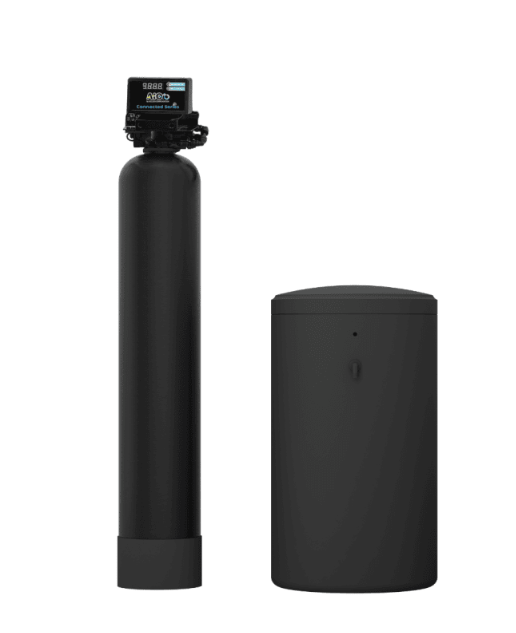
The SpringWell SS1 is a highly reliable, salt-based ion-exchange softener with a 32,000-grain capacity. It is designed for homes with 1 to 3 bathrooms that need full hard water removal.
| Feature | Specification |
| Model | SS1 |
| Grain Capacity | 32,000 grains |
| Recommended Size | 1–3 bathrooms |
| Flow Rate (GPM) | 11 GPM |
| Resin Type | 10% cross-linked resin (chlorine resistant) |
| Operating Pressure | 25–80 PSI |
| System Price (Approx) | $1,530.00 |
| Warranty | Lifetime |
Unique Technology and Efficiency
- 10% Cross-linked Resin: SpringWell uses a 10% cross-linked resin, a clear upgrade over standard 8% resin. This structure offers superior durability and high chlorine resistance, allowing the media to last up to 15 years before replacement.
- Metered Control: The system’s electronic valve measures water usage precisely and regenerates only when the resin is saturated, minimizing water and salt waste compared to older timer-based systems.
- High Flow Rate: The 11 GPM flow rate ensures the system can handle multiple simultaneous uses, such as showering and running the dishwasher, without any drop in water pressure.
- Control Your System with App: The electronic head features Bluetooth connectivity, allowing you to monitor water usage data, change valve settings, and manually initiate a regeneration cycle directly from your smartphone or tablet using the SpringWell Water Smart App.
Installation and Maintenance
The SS1 system is installed at the home’s main water line. It requires a nearby electrical outlet and a drain line for the wastewater purged during regeneration.
The only regular maintenance task is refilling the brine tank with salt (or potassium chloride) when the level runs low. The resin media needs virtually no attention for 10 to 15 years, offering a low-hassle water solution.
Cost of Owning and Maintaining
The SS1 is priced as a premium upfront investment, but its metered efficiency results in very low running costs.
- Initial Investment: The SS1 base unit costs around $1,530. Installation costs (if hiring a plumber) are separate.
- Annual Salt Cost: A typical family of four uses about one 40-pound bag of salt per month for average hardness levels. This comes to roughly 12 bags per year, costing between $80 and $150 annually, depending on salt type and local pricing.
- Media Replacement: The 10% cross-linked resin typically lasts 10 to 15 years, avoiding the frequent, expensive media changes required by lower-quality softeners.
Summary
| What We Like | What We Don’t Like |
| 10% cross-linked resin: Exceptional durability and long life (up to 15 years). | Higher initial cost: More expensive than basic softeners from big-box stores. |
| Salt- and water-efficient: Metered regeneration reduces salt use. | Requires salt: the brine tank must be manually refilled. |
| Lifetime warranty: Covers the tank and valve/control head. | Salt drainage: Needs a suitable floor drain for wastewater during regeneration. |
| Strong flow rate: 11 GPM supports small to medium homes with heavy water use. |
Final Verdict: Who Is This System Best For?
The SpringWell SS1 is the best system for homeowners who require complete, zero-hardness water and prioritize long-term reliability and low maintenance. It is ideal for families dealing with moderate to very hard water who want to fully protect their plumbing and appliances while enjoying softer skin, shinier hair, and cleaner laundry.
2. SpringWell FS1 Salt-Free Water Conditioner (Softener Alternative)
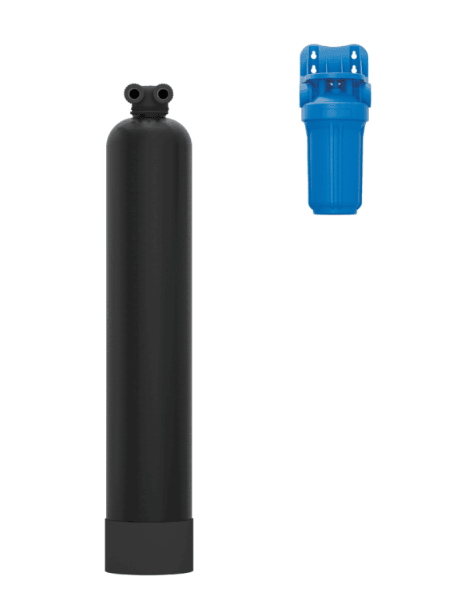
The SpringWell FS1 (FutureSoft) is a highly rated, environmentally conscious salt-free water conditioner designed for homes with 1 to 3 bathrooms. It prevents hard-water scale buildup without using salt, chemicals, or electricity.
Technical Specifications
| Feature | Detail |
| Model | FS1 (FutureSoft) |
| Process | Template Assisted Crystallization (TAC) |
| Function | Scale prevention/water conditioning |
| Scale Prevention Rate | Up to 95% |
| Recommended Size | 1–3 bathrooms |
| Flow Rate (GPM) | 9 GPM (up to 12 GPM reported) |
| Media Lifespan | 6 years or 1,000,000 gallons |
| System Price (Approx) | $1,775.00 |
| Warranty | Lifetime on tanks and valves |
Unique Technology and Efficiency
- ActivFlo™ Technology: SpringWell FS1 is engineered with an interior tank design that optimizes media fluidization for superior water-to-media contact. This ensures high efficiency and consistent performance with zero pressure drop.
- Eco-Friendly Operation: The FS1 requires no salt and no electricity, and because it does not trap minerals, it eliminates the need for backwashing or a cleaning cycle. This results in zero water waste and no salt discharge into the environment.
- Convenience: The system requires minimal setup and is simple to install, making it a hassle-free, set-it-and-forget-it water solution.
Installation and Maintenance
The FS1 system is installed at the main water line (Point-of-Entry). It is marketed as a DIY installation, but it does require basic plumbing knowledge.
The only regular maintenance is replacing the 5-micron sediment pre-filter (in the blue canister) every 6 to 9 months. The TAC media lasts up to 6 years, after which the media in the main tank must be replaced.
Certifications
The components and materials used in SpringWell FS1 tanks and valves are certified by independent industry organizations for safety and compliance. But the systems as a whole do not carry a third-party certification.
Cost of Owning and Maintaining
The FS1 has a higher initial cost than basic softeners, but provides long-term savings by eliminating ongoing consumable costs.
- Initial Investment: The FS1 base unit costs around $1,775.
- Annual Maintenance Cost: The only recurring expense is replacing the 5-micron sediment pre-filter. A 2-pack of replacement filters costs about $40 per year.
- Media Replacement: The TAC conditioning media lasts up to 6 years or 1,000,000 gallons, after which it must be replaced.
Summary
| What We Like | What We Don’t Like |
| No salt, no waste, no electricity: Extremely low maintenance and environmentally friendly. | Does not truly soften: Water retains a hard feel; it does not provide the “slippery” feel of soft water. |
| High scale prevention: Up to 95% scale prevention on pipes and appliances. | Effectiveness limit: Not recommended for extreme water hardness levels (usually above 75–80 GPG). |
| ActivFlo™ Technology: Ensures zero drop in water pressure (high GPM flow rates). | Pre-treatment required: Cannot handle iron, sulfur, or copper, especially with well water. |
| Excellent warranty: Lifetime warranty on the tank and valve. | Pre-filter replacement: Replace the sediment filter every 6 to 9 months. |
Final Verdict: Who Is This System Best For?
The SpringWell FS1 is the ideal choice for environmentally conscious city homeowners with moderate to hard water who want maximum appliance protection without the hassle of salt, water waste, or ongoing maintenance. It is excellent for those who want to prevent scale damage while retaining the beneficial minerals naturally present in their water.
3. SpringWell Whole House Water Filter Cartridge System – Carbon + Sediment Filter + Salt Free Softener (CWH-2)
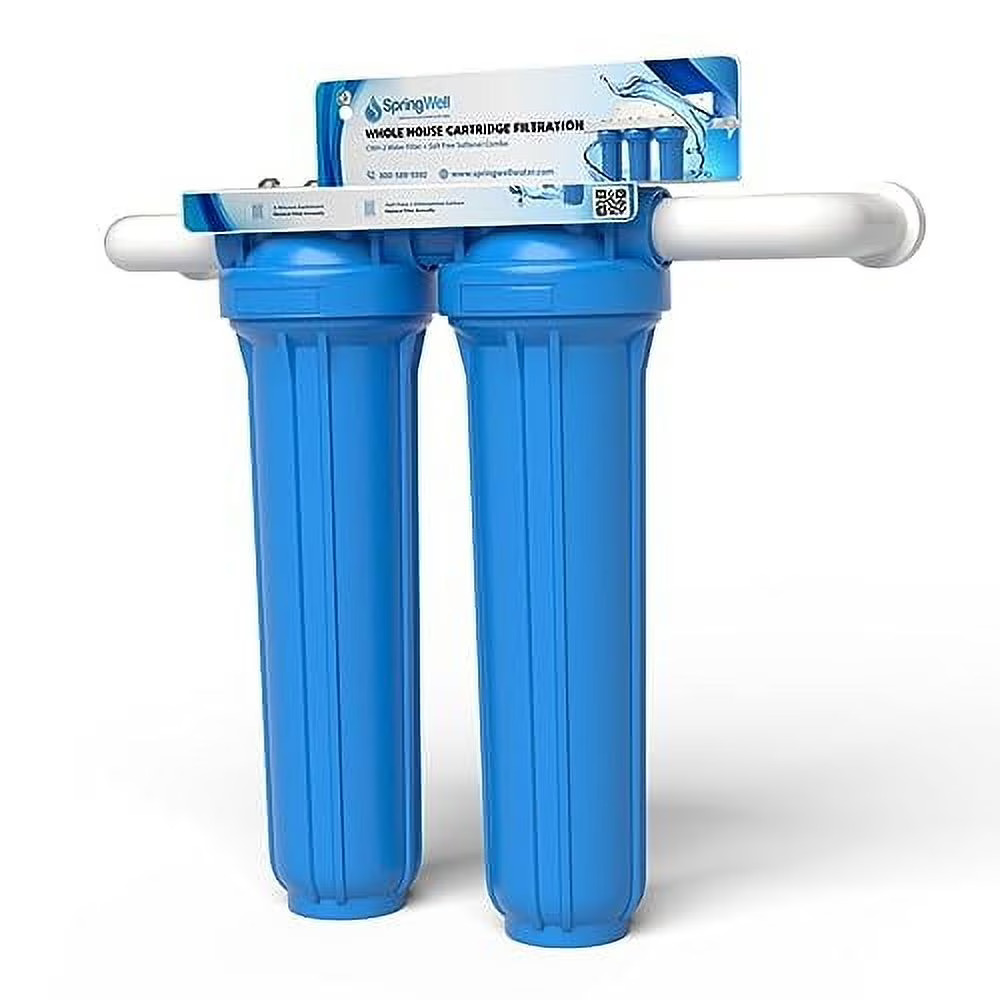
The SpringWell CWH-2 Cartridge System is a space-saving and budget-conscious alternative to the company’s larger tank-based combination units. It integrates a whole-house carbon filter for contaminant removal and a salt-free water conditioner for scale prevention into a compact, wall-mounted housing.
Technical Specifications
| Feature | Detail |
| Model | CWH-2 |
| Components | Sediment Filter + Carbon Cartridge + Salt-Free TAC Conditioner |
| Dimensions | 24″ (H) x 15.5″ (W) x 9″ (D) |
| Flow Rate (GPM) | 20 GPM (Excellent for maintaining pressure) |
| Operating Pressure | 42 to 120 PSI |
| Connection Size | 1″ |
| System Price (Approx) | $935 |
| Warranty | Lifetime on tanks and valve components |
Unique Benefits and Space Efficiency
- High Flow Rate: The system boasts an unmatched flow rate of up to 20 GPM, ensuring no noticeable drop in water pressure throughout the entire home, even when multiple fixtures are running.
- Space-Saving Design: This wall-mounted cartridge system is significantly smaller than the traditional dual-tank combos, making it ideal for garages, closets, or utility rooms with limited space.
- Combined Function: It provides both clean water and scale prevention in one efficient unit, leading to spot-free dishes, softer laundry, and extended appliance life.
Installation and Maintenance
The system is designed to plum directly into the main water line. It is marketed as DIY friendly, with installation videos and instructions provided, but hiring a professional plumber is always an option, depending on the complexity of your home’s piping.
Certifications
All tanks, valves, and filter housings use components certified by organizations. But the systems as a whole do not carry a third-party certification.
Cost of Owning and Maintaining
The CWH-2 offers a very low ongoing cost, making it an economically smart choice.
- Initial Investment: Significantly lower upfront cost than the large tank-based systems.
- Annual Maintenance Cost: The primary maintenance is replacing the entire cartridge set annually. The estimated annual replacement cost is $170.10. This eliminates the need for any backflushing or salt refills, saving water and labor.
Summary
| What We Like | What We Don’t Like |
| Compact Size: Wall-mounted design saves significant floor space. | Filter Replacement Cost: The annual $170 cartridge cost is higher than the salt cost for SS1. |
| High Flow Rate (20 GPM): Excellent water pressure with no loss of GPM. | Conditioning Only: Salt-free TAC media prevents scale but does not remove hardness minerals like a true salt-based softener. |
| Comprehensive Combo: Treats contaminants and prevents scale in one unit. | Annual Cartridge Change: Requires hands-on filter replacement every 12 months. |
| Low Upfront Cost: A budget-friendly way to get a dual-function system. |
Final Verdict: Who Is This System Best For?
The SpringWell CWH-2 is best for city homeowners who need a high-quality filter and scale prevention but are severely space-limited or want a lower initial investment. It is an excellent choice for those who prioritize water pressure, contaminant removal, and appliance protection over the “slippery” feel of traditionally soft water.
How to Choose the Right SpringWell Water Softener System Type for Your Home?
You can choose the right SpringWell water softener system for your home by first testing your water hardness, then considering your family’s health needs and your budget for maintenance.
To select the right SpringWell water softener system, carefully look at these important factors:
- Water Hardness Level
Know exactly how hard your water is. You can find this using a simple test kit or by calling your local water company. Water hardness is measured in Grains Per Gallon (GPG). The salt-based softener is the most effective choice if your water is very hard (over 10 GPG). The salt-free conditioner works great if your water is only moderately hard.
- Desire for Truly Soft Water
Decide if you want true soft water. Only the salt-based softener physically removes minerals, giving you that slick, slippery feel and making soap lather the very best. Choose the salt-free conditioner if you just want to stop scale damage, but still like the way hard water feels and tastes.
- Presence of Chemicals or Bad Taste
Do you have bad-tasting water or a chlorine smell? You need the combination system if you want to fix both hardness and taste/smell. This “two-in-one” unit removes impurities and softens water, delivering the best water quality throughout your whole house.
- Health Concerns (Sodium Intake)
You need to think about the added sodium from the salt-based system if you or someone in your home is on a doctor-ordered, strict low-sodium diet. While the amount is very low for most people, the salt-free conditioner contains no sodium. Alternatively, install a reverse osmosis (RO) system just for your drinking water to remove the added sodium.
- Willingness to Maintain the System
Think about the work you want to do. The salt-free conditioner is the easiest choice, as it requires no salt or electricity. The salt-based softener requires you to lift and add bags of salt every few months. The combination system requires the most care, as you must replace the small sediment filter every 6 to 9 months.
- Available Space and Local Laws
Do you have a small utility closet? The single-tank salt-free conditioner takes up the least space. The salt-based softener requires two tanks and a drain nearby. Also, check your area, as some cities or counties have rules or even bans on salt-based softeners due to the salty wastewater they discharge.
Making the right choice means balancing how effective you need the softening to be against the effort you are willing to put into maintenance. Our mission at Water Filter Way is to make this choice simple for you. We offer detailed guides, honest product reviews, and helpful tips to guide you through every step of choosing and owning your water treatment system. We give you the clear facts you need to feel confident in your decision.
Can softened water feel slimy or slippery?
Yes, softened water feels slimy pr slippery. The slippery or “silky” feeling is not soap residue. This feeling happens because the hard minerals are gone, and the soap rinses completely, allowing your skin’s natural oils to remain.
Can the standard salt-based system handle iron?
Yes, a standard salt-based system can handle iron, but only low levels. The SS Series handles up to 5-7 PPM (parts per million) of clear-water iron. Higher iron levels void the warranty and require the specialized SpringWell WS whole-house well water system for pre-treatment.
Can the combination system deliver truly pure drinking water?
No, the combination system cannot deliver truly pure drinking water on its own. The combination unit provides excellent filtration and softening. However, truly pure water requires a final Reverse Osmosis (RO) system installed under the sink to remove trace sodium and pharmaceuticals.
Does the combo system require an extra unit to kill bacteria and viruses?
Yes, the combo system requires an extra unit to kill bacteria and viruses. Standard softeners and whole-house filters do not kill biological contaminants such as E. coli, bacteria, or viruses. For guaranteed protection against harmful microorganisms, you need to add the SpringWell water purification system upgrade, which uses a powerful UV (Ultraviolet) light filter to deactivate 99.9% of pathogens.
What kind of salt should I put in the brine tank?
You should always use high-purity pellet salt or solar salt. Avoid rock salt, as it can contain dirt and impurities that can clog the system over time. High-purity salt helps the system run efficiently and keeps the brine tank cleaner.
What is the minimum water pressure needed for a SpringWell system?
The minimum water pressure required for a SpringWell system is 20 PSI (pounds per square inch) for it to work correctly. The maximum safe pressure is 80 PSI. You need a booster pump or a pressure regulator if your pressure is too low or too high.
What are the main stages of treatment inside the whole-house combination unit?
The main stages of treatment inside the whole-house combination unit are the four stages of SpringWell’s filtration system. It uses KDF, catalytic carbon, and specialized sediment layers to remove chemicals and sediment before the water moves to the second tank for hardness control.
Do I need a neutralizer if my water pH is low?
Yes, you need a neutralizer if your water pH is low. When pH is below 6.5, acidic water can corrode your plumbing and damage the softener media. The warranty will be void if you operate the system outside the pH range of 6.5 to 10. A neutralizer system is needed before the softener to raise the pH level.
Which SpringWell system is most cost-effective in the long term?
The SpringWell system, which is most cost-effective in the long term, depends on your water source. For city water users, the salt-free unit saves on recurring salt costs. For well water users, the specialized well system saves money by protecting the softener from premature failure caused by iron. The right SpringWell system balances initial cost with maintenance savings.
What maintenance is needed for the filtration part of the combo unit?
The main maintenance is changing the sediment pre-filter every 6 to 9 months. The media in the primary filter tank is designed for 1,000,000 gallons, so it typically lasts 10 years before replacement is needed.
Which SpringWell system is best for fixing severe hard water problems?
The best SpringWell system for fixing severe hard water problems is the salt-based softener (SS Series). It uses the powerful ion-exchange process to physically remove nearly 100% of hardness minerals, making it the best water-softening system when your primary goal is maximum mineral removal.
