
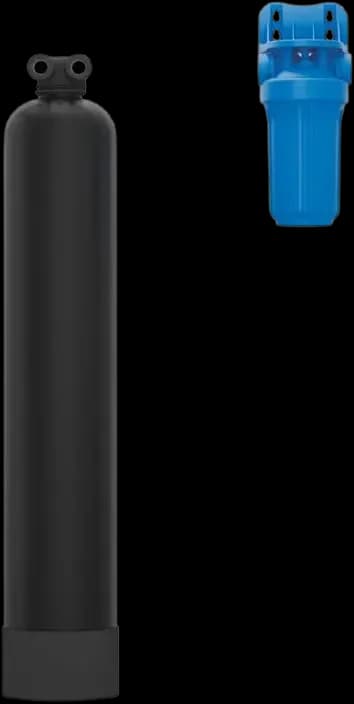
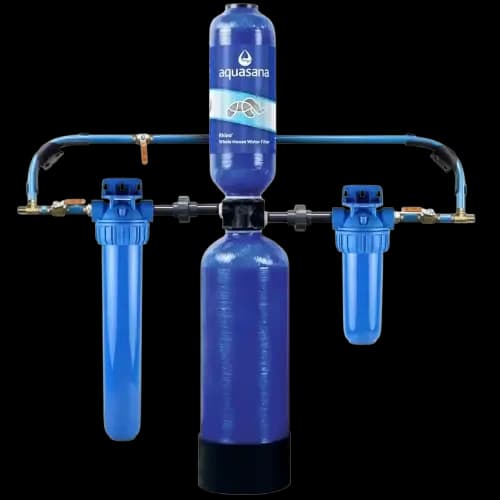
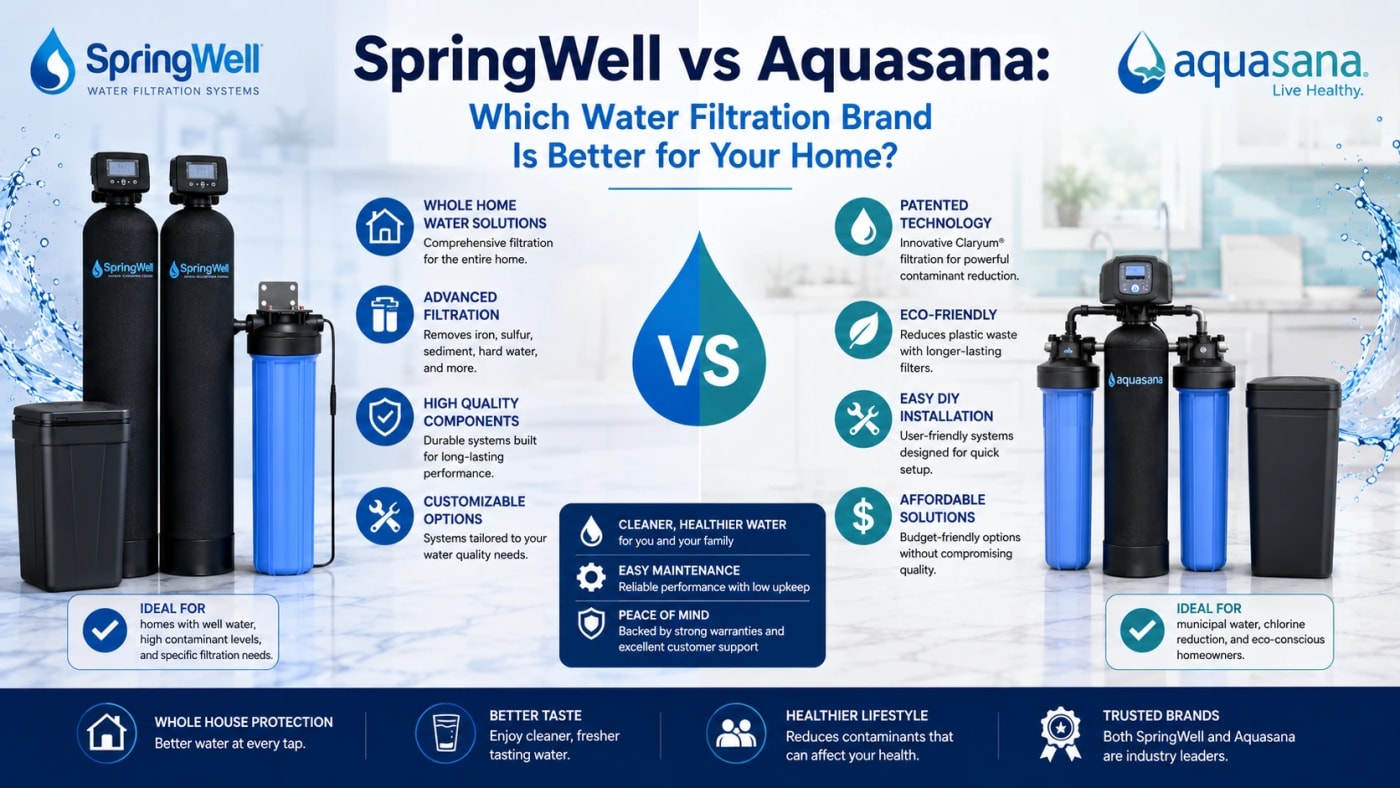
SpringWell and Aquasana both sell whole house filtration systems built for city water and well water homes, and the better brand depends on your household's flow demand, certification priorities, and warranty preference. Neither brand is a universal winner. This guide compares both brands across technology, contaminant claims, certification, flow, cost, maintenance, warranty, and installation, so you can match a brand to your own water situation.
ComparisonBuyer’s Guides
SpringWell vs Aquasana: Which Water Filtration Brand Fits Your Home?
Share
Head to Head
Feature Comparison
| Feature | SpringWell | Aquasana Rhino |
|---|---|---|
| Base flow tier | CF1: 9 GPM (1–3 baths) | Rhino: 7 GPM rated (up to 2.5 baths) |
| High-flow tier | CF4: 12 GPM / CF+: 20 GPM | Rhino Max Flow: 14 GPM rated, 14.5 GPM peak |
| Chlorine reduction | 99%+ (third-party tested) | 97% (NSF/ANSI 42 certified) |
| Chloramine | Marketed reduction, lab-backed | Needs Rhino Chloramines model - 83% |
| PFAS/PFOA/PFOS | Marketed, third-party data | Needs OptimH2O add-on - up to 98% (IAPMO) |
| Media replacement | Serviced inside existing tank, 6–10 yrs | Full sealed tank replaced, ~10 yrs |
| Warranty | Lifetime (tank/valve/fittings) + 6-mo guarantee | 10-year limited + 90-day guarantee |
| Sold on Amazon | No - direct only | Yes |
| Electricity/backwash needed | No | No |
Pros & Cons
SpringWell
- Lifetime warranty on tanks, valves, fittings
- Media serviced inside the same tank - not a full unit replacement
- Marketed PFAS reduction with third-party data backing
- Not sold on Amazon - direct purchase only
- No blanket NSF certification for the complete system (per independent reviews)
- Higher installation complexity for larger tiers (CF+ especially)
Aquasana Rhino
- Purchasable directly on Amazon
- Simple maintenance - pre/post filter cartridges only, no valve/backwash mechanism to worry about
- 90-day satisfaction guarantee (vs. SpringWell's 6-month, but faster resolution if it's not a fit)
- Sealed tank means full unit replacement (not just media) when exhausted - costs $949–$1,898 per independent pricing checks
- Base Rhino only fits up to 2.5 bathrooms/4 people - need Max Flow for anything bigger-
- Shorter warranty (10 years) vs. SpringWell's lifetime
What Treatment Categories Does Each Brand Offer?
Both brands cover the same broad categories. The difference shows up mainly in how each brand structures its whole house product line.
Treatment categories by brand:
Whole house filtration: SpringWell offers this through the CF series, Aquasana through the Rhino series
Water softening or conditioning: SpringWell offers FutureSoft salt free conditioning and traditional softeners, Aquasana offers it as an add on with select Rhino systems
UV treatment: Both brands offer this as an add on, with Aquasana also selling a dedicated well water UV model
Reverse osmosis: Both brands sell this as a separate point of use system, Aquasana under the Claryum and OptimH2O lines
Well water systems: SpringWell offers dedicated filters for iron, manganese, and sulfur, Aquasana offers a Rhino well water configuration with UV included
How Are Whole House Systems Sized for Different Households?
SpringWell uses three tiers, while Aquasana centers its main Rhino line around one primary flow rating with variant configurations.
The table below shows the sizing specifications for each brand's whole house systems.
System | Rated Flow | Household Size |
SpringWell CF1 | 9 GPM | 1 to 3 bathrooms |
SpringWell CF4 | 12 GPM | 4 to 6 bathrooms |
SpringWell CF+ | 20 GPM | 7 or more bathrooms |
Aquasana Rhino Max Flow | 14 GPM rated, 14.5 GPM peak | Larger homes with higher simultaneous demand |
SpringWell separates its system into three distinct tank sizes, so a household picks the tier matching its bathroom count directly. Aquasana centers its Max Flow model around one higher flow rating that serves a wider range of household sizes without switching tank tiers.
How Do the Filtration Technologies Differ?
Both brands rely on carbon based media, but each builds its system around a different proprietary design.
Filtration stages by brand:
SpringWell CF series: A sediment pre filter, then catalytic carbon for chlorine and chloramine, then KDF media that supports contaminant reduction and limits bacterial growth, moved through an upflow design called ActivFlo that increases contact time
Aquasana Rhino series: A pre filter, then a combined carbon and copper zinc KDF stage that targets chlorine and chloramine while limiting bacteria and algae, with a post filter on certain configurations for extra polishing
Both systems place a sediment stage first, followed by carbon based media. SpringWell markets its upflow pattern as a distinct feature, while Aquasana structures its system around modular pre and post filter stages that vary by configuration.
Which Contaminants Can Each Brand's Whole House System Reduce?
Contaminant reduction depends on the exact product line. A brand is never certified as a whole, only a specific product tested against a specific standard for a specific contaminant.
Contaminant claims by brand:
Chlorine: SpringWell states over 99 percent reduction, backed by third party testing. Aquasana is NSF/ANSI 42 certified up to 97 percent reduction
Chloramine: SpringWell's standard CF line carries a marketed reduction claim backed by lab testing. Aquasana needs its dedicated Rhino Chloramines model, tested to reduce up to 83 percent
PFAS, PFOA, PFOS: SpringWell's CF line carries a marketed reduction claim backed by third party data. Aquasana covers this through its separate OptimH2O add on, IAPMO tested to reduce up to 98 percent
VOCs: SpringWell's CF line carries a marketed reduction claim. Aquasana covers this through Claryum technology in its point of use systems, not the base Rhino line
Sediment: Both brands remove sediment through a dedicated pre filter stage
Both brands separate their base whole house system from add on models built for specific contaminants such as chloramine or PFAS. Always check whether the base system or an upgraded configuration covers the contaminant found in your water report.
How Should NSF and WQA Certifications Be Read?
Certification claims apply at the product and standard level, never at the brand level. SpringWell's CF series carries NSF/ANSI 42 and 53 related certification backing for its core claims. Aquasana's Rhino Max Flow is independently tested to NSF/ANSI 42 for chlorine reduction, and its tanks are WQA certified to NSF/ANSI/CAN 61 for material safety.
Material safety certification, such as Standard 61, confirms the tank material is safe to contact water. It does not confirm any contaminant reduction performance. Look for the specific standard tied to the specific contaminant you care about, rather than assuming any certification badge covers every contaminant.
How Do the Brands Compare on Flow and Pressure?
Water flow and pressure depend on rated flow, peak flow, and how many fixtures run at the same time. SpringWell's higher tiers reach 12 GPM on the CF4 and 20 GPM on the CF+. Aquasana's Rhino Max Flow reaches 14 GPM rated and 14.5 GPM at peak. A household that regularly runs two showers along with a washing machine and a kitchen tap can approach or exceed 8 to 9 GPM at peak moments, so sizing to actual daily habits matters more than sizing to bathroom count alone.
How Do Upfront Price and Long Term Cost Compare?
Cost differences come mainly from tank design and how each brand structures its filter tank lifecycle. Figures below reflect third party pricing published in 2026, and prices change over time, so confirm current pricing before purchase.
Cost comparison by brand:
Starting price: SpringWell CF1 runs around 800 to 1,000 dollars. Aquasana Rhino's equivalent million gallon configuration lists higher
Main media replacement: SpringWell media is replaced within the existing tank around every 6 to 10 years. Aquasana's sealed tank is replaced as a full unit around every 10 years
Sediment or pre filter replacement: SpringWell replaces every 6 to 9 months, at roughly 40 dollars per year. Aquasana replaces on a regular schedule that varies by configuration
Aquasana's sealed tank means the household replaces the entire unit when main media reaches the end of its life. SpringWell's tank design allows media servicing within the same housing.
How Do Warranty and Installation Compare?
Aquasana currently states a 10 year limited warranty and a 90 day satisfaction guarantee on its Rhino Max Flow system. SpringWell offers a lifetime warranty on tanks, valves, fittings, and housings, a separate 10 year warranty on larger retention and mineral tanks, a 7 year warranty on solid state electronic heads, and a 6 month money back guarantee. Confirm current warranty terms directly on each brand's official page before purchase.
Aquasana states its Rhino whole house system needs no electricity, no drain line, and no backwashing. Both brands require cutting into the main water line, and both can be installed without professional help by someone comfortable with basic plumbing, though many buyers choose a professional plumber for the main line connection.
Quick Answers to Common SpringWell vs Aquasana Questions
Do SpringWell and Aquasana remove lead from drinking water? Check the specific product for both brands. SpringWell markets lead reduction for its city water systems. Aquasana's OptimH2O line is IAPMO tested to reduce up to 99 percent of lead.
Do SpringWell and Aquasana remove PFAS from water? SpringWell markets PFAS, PFOA, and PFOS reduction for its city water CF line, supported by third party lab data. Aquasana's OptimH2O add on is IAPMO tested to reduce up to 98 percent of PFOA and PFOS, a claim tied to that specific product rather than the base Rhino system.
Are SpringWell and Aquasana suitable for hard water? Both brands filter chlorine, chloramine, and other contaminants, but hardness caused by calcium and magnesium needs a dedicated softening or conditioning system, which both brands sell separately.
Are SpringWell and Aquasana suitable for well water? Standard whole house filters from both brands target municipal water contaminants. Well water often carries iron, manganese, sulfur, or bacteria, which need treatment matched to actual test results. Both brands sell dedicated well water configurations for this.
Do you need reverse osmosis in addition to a whole house system? A whole house filter treats water entering the entire home. A point of use reverse osmosis system treats water at a single tap, typically for drinking and cooking, and reduces a wider range of dissolved contaminants at that point.
Share