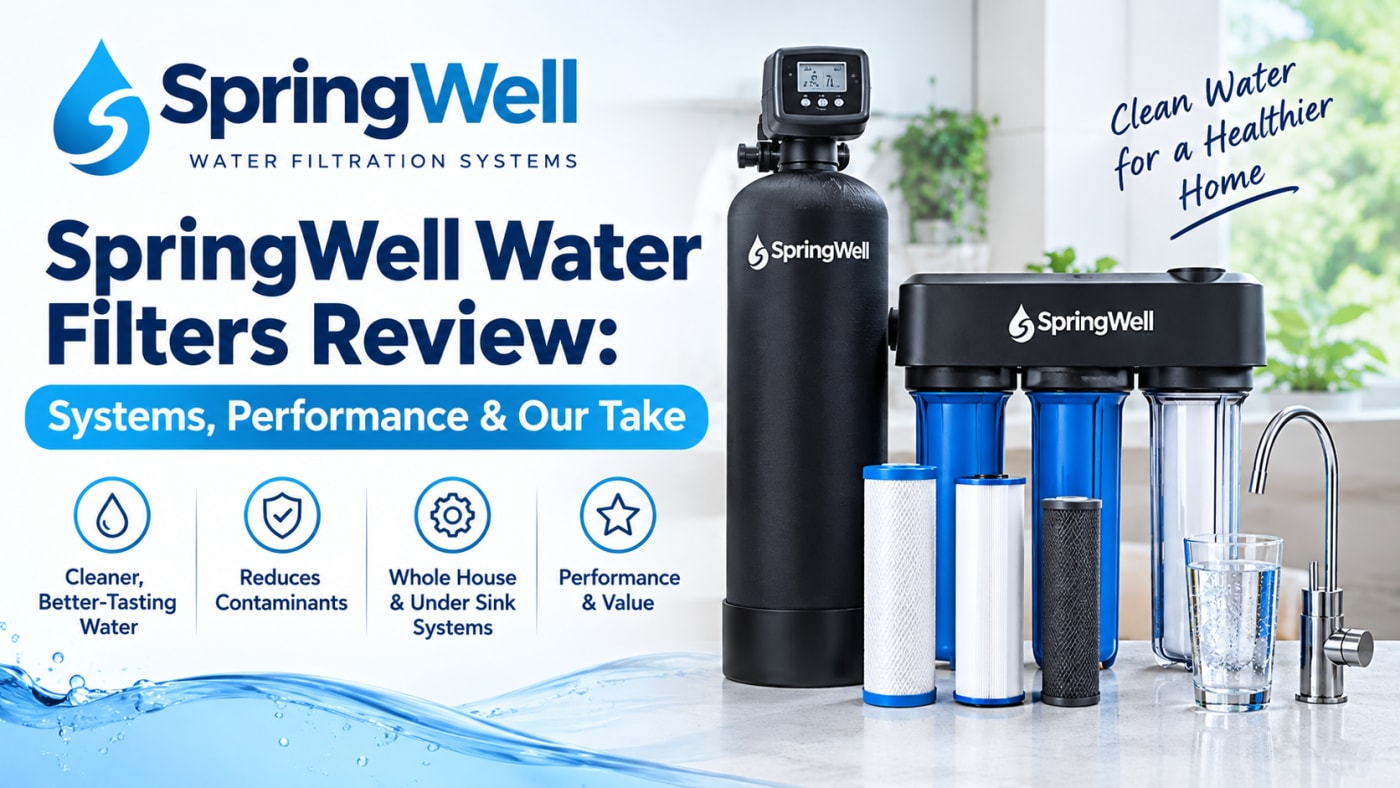
SpringWell is currently one of the highest-performing direct-to-consumer water filter brands in the US, with independent lab results showing their CF1 system eliminates nearly 100% of chlorine and significantly reduces heavy metals like lead. Their systems employ high-quality catalytic carbon and KDF media with a much longer contact time than cartridge filters. It offers these top-tier choices for homeowners who want to improve the taste, smell, and safety of their city water all at once.
The brand stands out because they back their tanks and valves with a lifetime warranty and a 6-month "no-risk" money-back guarantee that is unheard of in the industry. Such protection means they are extremely confident in their hardware's durability and performance. But even their best components are of poor quality, and the CF systems in general often lack full-system NSF/ANSI certifications for contaminants such as chloramine or PFAS.
For your typical American home using municipal water, SpringWell is a premium but justified investment, balancing high flow rates with aggressive filtration. If your goal is to get rid of "pool-like" chlorine smells and protect your family from common pipe-leached metals, these systems are a worthy "buy." See our detailed system guide below to determine which model best fits your household size and water chemistry.
Is SpringWell a Reputable Water Filter Brand?
SpringWell Water Filtration Systems is a legitimate, Florida-based manufacturer headquartered in Daytona Beach. Founded more than 20 years ago, the company offers direct-to-consumer models without dealer markups and at a lower price point for premium hardware. They are open about their production process; all systems are made in the USA using high-quality catalytic carbon and KDF media, which are much better than the standard filters you find in big box stores.
The greatest indicator of Springwell's brand reputation is its warranty depth. While competitors like Aquasana or Pelican offer 5 to 10 years of protection, SpringWell will warranty the mineral tank, control valve, and brine tank for the original owner. This feature is paired with an industry-leading 6-month money-back guarantee so homeowners can try out the performance in their own kitchens before committing.
Tests done by Quality Water Lab and Water Filter Guru using Simple Lab/Tap Score show that the CF1 filters water very effectively. Explicit results show full THM elimination, chlorine reduced to non-detectable levels, and 96% lead reduction. However, there is a significant Springwell NSF certification gap.
While SpringWell is NSF certified for NSF-ANSI 61 (material safety) and 372 (lead-free construction), the CF1 system does not have full-system NSF-ANSI 42 or 53 certifications for contaminant removal. That's different from brands like Aquasana that spend millions on full system certification for hundreds of individual health contaminants.
What Types of Water Systems Does SpringWell Make?
One of the biggest points of confusion for homeowners is the assumption that the popular SpringWell CF series is a reverse osmosis system, which it is not. The CF units are high-flow carbon filters that treat all the water entering your home without wasting a drop. While they are masters at removing chemicals and smells, they do not strip out minerals or fluoride like a true RO membrane does. If you need that "bottled water" level of purity at the kitchen sink, you’re looking for their SpringWell ROTPB-1, which is a separate under-sink reverse osmosis system.
Here is a breakdown of the current SpringWell product lineup:
City Water Whole-House Filters (CF series)
These use a 4-stage ActivFlo process with catalytic carbon to target chlorine and chloramine. They are sized by your bathroom count: the CF1 (1-3 baths), CF4 (4-6 baths), and CF+ (7+ baths).
Well Water Whole-House Filters (WS series)
Designed for private wells, these use Air Injection Oxidation (AIO) and greensand media to blast away iron, manganese, and that "rotten egg" sulfur smell. The SpringWell WS series even includes a Bluetooth-enabled control head for easy monitoring.
Salt-Free Water Conditioner (FutureSoft FS)
This uses Template Assisted Crystallization (TAC) to keep scale from sticking to your pipes. Note that SpringWell FutureSoft doesn't remove minerals or make water feel "slippery"; it just protects your appliances.
Salt-Based Softeners (SS series)
For those who want the traditional "soft water" feel, these use 10% crosslink resin to physically swap out hardness minerals for a tiny amount of sodium.
Combo Systems
SpringWell makes it easy by pairing filters and softeners into one package. Popular ones include the SpringWell CSF1 (Filter + FutureSoft) and the SpringWell MMV-1 (Filter + Salt Softener).
Specialty Add-ons:
You can round out your system with a SpringWell UV system for bacteria protection or their specialized lead and cyst removal filters for older city infrastructures.
What Are the Official Specifications of the SpringWell CF Series?
All three models in the SpringWell CF series use the same 4-stage ActivFlo filtration process, which includes high-quality catalytic carbon, coconut shell, and KDF media, but they mainly differ in tank size and the amount of water they can manage. Choosing the right model is essentially a matter of matching the SpringWell CF flow rate GPM to your home's bathroom count to ensure you never see a drop in shower pressure when the dishwasher is running.Note: Prices are approximate and based on 2026 factory-direct rates. Verify current pricing and active discount codes at SpringWell.com.
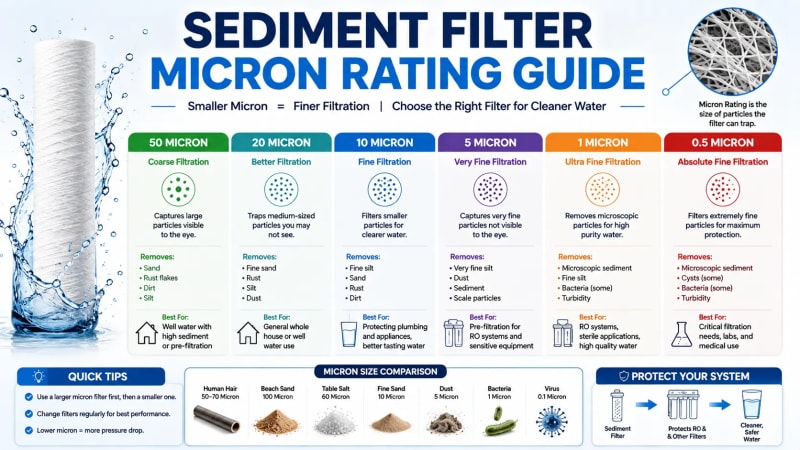
A major highlight of the Springwell CF official specifications is the incredibly low Springwell CF annual maintenance cost. You only need to spend about $40 per year to replace the 5-micron sediment pre-filters, which protect the main tank from dirt and debris. Because the primary catalytic carbon and KDF media bed has a 1,000,000-gallon capacity, the average family won't need a media refill for an entire decade. Every system is designed and assembled in the USA at their Florida facility and is backed by a 6-month money-back guarantee (though return shipping is the buyer's responsibility).
Which SpringWell System Is Right for Your Home?
Choosing the right system depends on two main variables: your water source (city or well) and your primary water problem (smell, staining, or scale). Because SpringWell designs their systems around specific contaminant clusters, you can avoid paying for extra filtration stages you don't actually need.
For City Water: Fighting Chemicals
If you are on municipal water, your biggest enemies are chlorine and disinfection byproducts. The SpringWell CF1 is the standard entry point for most homes, using 4-stage filtration to eliminate that "pool-like" smell and taste. It’s a set-it-and-forget-it system with a tiny $40/year ongoing cost for sediment filters, making it perfect for families who want better drinking and shower water without the hassle of monthly maintenance.
Addressing Hard Water and Scale
If you have white crusty buildup on your faucets, you have two paths. If you just want to protect your appliances and pipes without that "slippery" feel, go with the SpringWell FutureSoft scale prevention-only system. However, if you want the true soft water feel for better skin, hair, and laundry, you need a salt-based softener. Most city dwellers choose the SpringWell CSF1 combo (filter + scale prevention) or the SpringWell MMV-1 (filter + salt softener) to solve both chemical and hardness issues at once.
For Well Water: Stains and Smells
Well water usually has iron in it (orange stain) and sulfur in it (rotten egg smell). Up to 7 PPM of iron and 8 PPM of hydrogen sulfide can be handled by the SpringWell WS1 well water system with no toxic chemicals via Air Injection Oxygenation (AIO). It features a Bluetooth control head that allows you to control your own backwashing cycle. For homes concerned about bacteria or "living" contaminants in their well, add a SpringWell UV system to this setup.
The All-in-One Well Solution
If your well water is both "stinky" from iron and "hard" from calcium minerals, the SpringWell WSSS1 is your single-purchase solution. You get clear, soft water from one installation using the AIO iron filter and a salt-based softener. That means no more buying and plumbing two separate systems, saving you space and installation labor costs.
What Does SpringWell Actually Remove from Your Water?
When evaluating a filter, it’s vital to separate a company's marketing claims from independent, third-party data. While SpringWell’s 4-stage ActivFlo technology is robust, its performance varies significantly depending on the specific contaminant you are trying to target.
Lab-Verified Removal Results
Independent evaluations from QualityWaterLab and WaterFilterGuru (using SimpleLab/Tap Score certified laboratories) provide clear data on the SpringWell CF lead removal percentage and chemical reduction. In these trials, the CF1 reduced chlorine from 1.0 PPM to non-detectable levels. Furthermore, it eliminated all detectable trihalomethanes (THMs), including chloroform and bromodichloromethane. Most impressively, even as a whole-house system, it achieved a 96% lead removal rate, dropping concentrations from above the EPA action level down to nearly non-detectable trace amounts.
Performance Claims vs. Official Certifications
SpringWell claims the CF series removes chloramine, PFAS, PFOA, PFOS, VOCs, and various pesticides. While these claims match what catalytic carbon and KDF media can do, it's important to point out that the Springwell CF doesn't have full NSF certification for those removals. Right now, the CF1 has certifications for material safety and being lead-free, but it doesn't have the full certifications for removing contaminants like chloramine or PFAS. If certified chloramine or PFAS removal is a specific requirement for your home, verify current listings at NSF.org before purchasing.
Evaluating SpringWell on Fluoride
For those specifically asking, does Springwell CF remove fluoride? The honest answer is that it is not designed for this task. In independent testing, the CF1 reduced fluoride by only 17%, which is common for carbon-based systems. For fluoride removal, the SpringWell CF is not an effective choice; the under-sink ROTPB-1 reverse osmosis system is the appropriate SpringWell product for meaningful fluoride reduction.
What Are the Most Common Problems with SpringWell Filters?
While independent reviews of the SpringWell CF series are generally high for city water reliability, a deep dive into 2024–2026 SpringWell BBB complaints and Reddit threads reveals recurring pain points, particularly with their well water and softening systems. Transparency about these issues is vital for setting realistic expectations before you invest.
1. Water Pressure Drop (WS Series)
A significant number of Springwell complaints center on the Springwell WS pressure drop. Users often report that while the system is rated for 10–12 GPM, actual flow can drop to 4–5 GPM during high-demand periods like two simultaneous showers. SpringWell typically attributes these issues to specific water chemistry or inadequate inlet pressure, meaning you should strictly verify your well pump's PSI before choosing the WS series.
2. FutureSoft "Softening" Misunderstandings
The most repeated SpringWell Futursoft complaints on the Better Business Bureau site involve buyers expecting "slippery" water or scale-free shower doors. Because FutureSoft is a salt-free conditioner (not a softener), it leaves calcium and magnesium in the water. Your water will still test "hard" with a standard kit, and mineral spotting will still occur, though it should be easier to wipe away.
3. The 25% Restocking Fee
SpringWell's 6-month money-back guarantee is frequently marketed, but the fine print can lead to sticker shock. Springwell BBB reviews document cases where customers were charged a Springwell 25% restocking fee (up to $575 on a $2,300 order) for refused or uninstalled returns. When combined with the fact that the buyer must pay for return shipping on 50+ lb tanks, "risk-free" can still cost you hundreds of dollars.
4. SS1 Electronic Control Head Failures
There is a documented pattern of failures in the Springwell softener head occurring within the first 12–18 months. While the lifetime warranty covers the part, users often struggle with "Error 103" codes or motor jams. SpringWell is generally excellent about shipping replacement heads, but the downtime can be frustrating.
5. Lack of a Local Service Network
Unlike brands like Culligan, there are no local Springwell technicians. If a part fails, you are the plumber. You must troubleshoot via email or phone, wait for a shipped part, and then perform the repair yourself or hire an independent plumber who may be unfamiliar with SpringWell’s proprietary setup.
6. Aggressive Marketing and Upselling
A minor but common annoyance in reviews of Springwell's customer service involves Springwell's upsell emails. Once you are in their system, expect frequent prompts to buy UV add-ons, test kits, or "necessary" chemical injection upgrades if your initial setup doesn't perfectly solve your water issues.
Is SpringWell reliable? For the standard CF city water filter, the answer is generally yes, with a decade-long track record of performance. However, if you are purchasing a well system or a salt-free conditioner, these documented Springwell problems suggest you should double-check your pressure and water chemistry before clicking "buy."
How Easy Is It to Install and Maintain a SpringWell System?
SpringWell systems were designed for the "handy homeowner," balancing high performance with simplified plumbing. Although professional-grade hardware is included, such as SpringWell Clack fittings and genuine quick-connect bypass valves, there is no longer any need for soldering or other special tools in most homes.
Installation: The DIY Reality
For the SpringWell CF1 installation, most experienced DIYers report a total installation time of 2 to 4 hours. The process is easy: mount your pre-filter bracket, connect your bypass valve to your main tank, and crisscross your main water line with a pipe cutter, adjustable wrench, and Teflon tape.
However, the SpringWell WS1 well system takes longer to complete at 3 to 5 hours because of the additional electrical connection for the air injection head and the dual tank configuration. If you aren't comfortable cutting into your main copper or PEX lines, a professional plumber can usually handle the job for $200 to $400. Multiple Trustpilot and Reddit reviews highlight that SpringWell's customer support teams for installation are US-based and available by phone to walk you through tricky pipe layouts in real time.
Maintenance: $40 and 10 Minutes a Year
The ongoing SpringWell CF series maintenance requirements are among the lowest in the industry.
Sediment Pre-filter
The only routine task is swapping the 5-micron SpringWell CF sediment pre-filter replacement every 6 to 9 months. With a SpringWell CF pre-filter cost of roughly $30 to $40 per unit, your total SpringWell CF annual maintenance cost sits at approximately $40 per year.
Main Media Bed
Unlike cartridge-based systems that require expensive annual replacements, the SpringWell CF media life is a massive 1,000,000 gallons or 10 years. You effectively pay zero for the main filtration media for a decade.
Well Systems (WS1)
The SpringWell WS media life is similarly long-term, and the system manages its own "cleaning" via an automatic backwash cycle controlled by a Bluetooth-connected head, meaning no manual media scrubbing is required.
Is SpringWell Better Than Aquasana or Pelican?
Choosing between the top three direct-to-consumer brands usually comes down to three specific factors: warranty protection, performance certifications, and long-term operating costs. While all three are highly reputable, they serve different priorities.
Warranty Depth
SpringWell provides a lifetime warranty on its tanks, valves, and control heads for the original owner. In comparison, Aquasana typically offers a 10-year warranty, while Pelican (Pentair) systems generally carry a 5-year performance guarantee. For long-term hardware security, SpringWell is the clear leader.
NSF Certification
If you require a system with independent verification for a long list of health-related contaminants, Aquasana wins. Their Rhino EQ-1000 is certified for 77 specific contaminants. The SpringWell CF is certified for material safety and lead-free construction, but it doesn't have independent proof of how well it removes specific contaminants like chloramine or PFAS.
Annual Maintenance Cost
The SpringWell CF1 and Pelican PC600 both hover around an affordable $35–$40/year for sediment pre-filters. Aquasana is notably pricier to operate, with maintenance expenses closer to $120/year due to more frequent filter swaps.
Is the SpringWell CF1 Worth Buying for City Water Homes?
Yes, the Springwell CF1 current price of 2026 USD 1,040 is a steal because it tackles the most common city water issues, chlorine, chloramine, and THM removal, at a high level. Its Springwell CF1 lab test results show it can handle 1,000,000 gallons over 10 years with no media change, unlike budget filters. It is a top investment for the best whole-house water filter in 2026 if you want to stop smelling like a swimming pool after every shower.
What Are the SpringWell CF Series Flow Rates and Capacity by Model?
The Springwell CF series models all have 1,000,000-gallon capacity but are sized by Springwell CF flow rate gpm to prevent pressure drops. The CF1 has 9 GPM 1-3 baths, the CF4 has 12 GPM 4-6 baths, and the CF has 17-20 GPM for 7+ bathrooms. The right size prevents running the dishwasher from ruining someone else's high-pressure shower.
Does SpringWell's Salt-Free FutureSoft System Actually Soften Water?
No, and this is a common point in Springwell Futursoft complaints. The SpringWell FutureSoft scale prevention system uses TAC technology to crystallize minerals so they don't stick to pipes, but it does not soften water in the traditional sense. You won't feel "slippery" on your skin, and minerals are neutralized to protect your appliances.
How Does SpringWell's Lifetime Warranty Actually Work?
The Springwell lifetime warranty is one of the strongest in the industry, covering the tanks and valves against defects for as long as you own the home. However, it requires you to maintain the system properly; neglecting your Springwell CF sediment filter cost or media changes can void your protection. Furthermore, be aware of the Springwell 25% restocking fee if you return a non-defective system after it has been shipped.
What's the Best SpringWell System for Well Water Homes?
The SpringWell WS1 is the gold standard for well owners because it uses Air Injection Oxidation (AIO) to remove up to 7 PPM of iron and 8 PPM of sulfur. The Springwell WS1 price in 2026 is approximately $2,204, which includes a Bluetooth-enabled head that manages its own cleaning cycles. For maximum safety, most well owners pair this product with a SpringWell UV add-on to kill bacteria and viruses.
How Does SpringWell's Annual Maintenance Cost Compare to Other Brands?
The Springwell CF annual maintenance cost is incredibly low at roughly $40 per year, which only covers the sediment pre-filter. Compared to Aquasana, which can cost over $120 per year in filters, SpringWell is much cheaper over time. Over a decade, your Springwell 10-year ownership cost is significantly lower because the main tank media doesn't need to be replaced.