
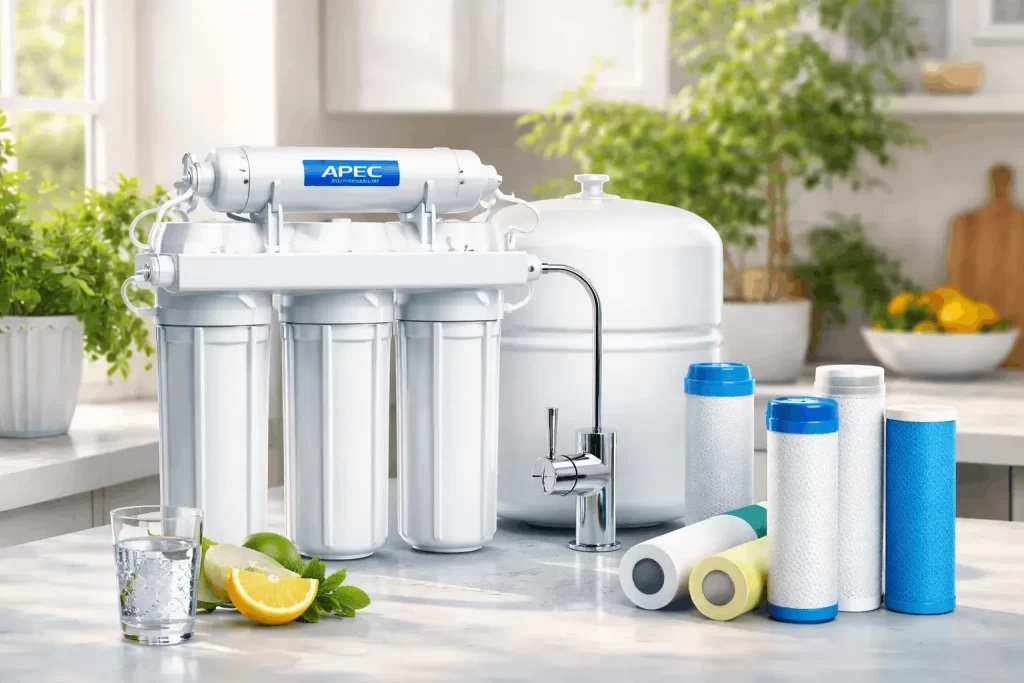
APEC Water Systems is one of the most established RO filter brands in the US market, founded in 1997 with a California assembly facility and over 25 years of proven performance. They have built a reputation for providing “industrial-grade” filtration for residential kitchens, bridging the gap between cheap imports and overpriced boutique systems.
Is APEC worth buying? Most US municipal water households say yes. Their best model, the ROES-50, provides great value for a reverse osmosis system in 2026, with WQA-certified TDS reduction and proven removal of lead and chlorine. Want a system that drops your TDS to nearly zero and has decades of leak-free operation? APEC is your go-to option.
The brand has certain limitations: their standard 3:1 wastewater ratio surpasses that of their modern tankless competitors, andonly certain models offer chloramine filtration. For those looking for long-term performance and easy DIY maintenance, APEC remains a benchmark. Which APEC model is right for your water source and household size? The model guide below describes every current option.
| Images | Model | Capacity | Stages | Best For | Price |
|---|---|---|---|---|---|
 |
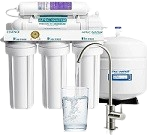
ROES-50 | 50 GPD | 5-stage | Most households, first-time RO buyers | Check Price |
 |
90 GPD | 90 GPD | 5-stage | Large families, high daily usage | Check Price |
 |
RO-PERM | 50 GPD | 5-stage | Low water pressure (30-50 PSI), well water | Check Price |
 |
ROES-PH75 | 75 GPD | 6-stage | Alkaline water, mineral taste preference | Check Price |
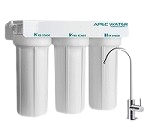 |
WFS-1000 | Flow-through | 3-stage | Most households, first-time RO buyers | Check Price |
| ROTL-AIO | Flow-through | 3-stage | Most households, first-time RO buyers | Check Price | |
| CS-2500 | Flow-through | 3-stage | Most households, first-time RO buyers | Check Price |
Is APEC Water Systems a Reputable Brand?
For homeowners wary of “fly-by-night” online brands, the APEC Water Systems brand offers one of the most stable track records in the industry. Far from being a new entrant, the company has operated for over 25 years, providing several concrete signals that it is a durable and APEC water filter reliability leader.
The characteristics that make APEC Water Systems a reputable brand are
- Established Brand History
Founded in 1997, APEC stands for Advanced Purification Engineering Corp. They are headquartered in the City of Industry, California, and have focused exclusively on high-end reverse osmosis technology for over a quarter-century.
- US Assembly and Sourcing
While many competitors outsource everything to overseas factories, APEC’s primary filters and RO membranes are still US-made, and systems are assembled in California. This APEC California assembly is a major draw for buyers who want domestic quality control.
- Heavyweight Commercial Clients
Large organizations with strict water requirements have trusted APEC’s systems, making it more than just a residential brand. Their client list includes the US government, Dow Chemical, Mayo Clinic, General Electric, and Intel Corporation.
- WQA Gold Seal Certification
The APEC WQA certified status is a vital third-party validation. Specifically, the popular ROES-50 is certified under NSF/ANSI Standard 58. It is important to note that this certification is specifically for TDS (Total Dissolved Solids) reduction and structural integrity, rather than a separate certification for every individual contaminant like PFAS or chloramine.
- Long-Term User Loyalty
Data from APEC TrustPilot reviews and long-term user forums show an unusual level of brand retention. It is common to observe customers who have used APEC systems for 10 to 15 years, simply swapping filters and membranes as needed.
What Types of Water Filters Does APEC Make?
The APEC product lineup is strategically divided into several categories based on installation style and filtration goals. In 2026, they have expanded beyond their traditional roots into space-saving and whole-home solutions.
The APEC filter types are
- Reverse Osmosis (RO) Under-Sink Systems
This is APEC’s core specialty and most popular APEC RO system type. These include 5-stage and 6-stage configurations like the ROES-50 and RO-90, as well as the modern APEC tankless RO model, the ROTL-AIO, which fits in a footprint no larger than a piece of letter paper.
- Under-Sink Non-RO Filters
The APEC WFS-1000 series is designed for those who want simpler filtration without a storage tank or wastewater. These use a 3-filter carbon-based system with a 12-month lifespan, effectively targeting chlorine and lead while keeping natural minerals in the water.
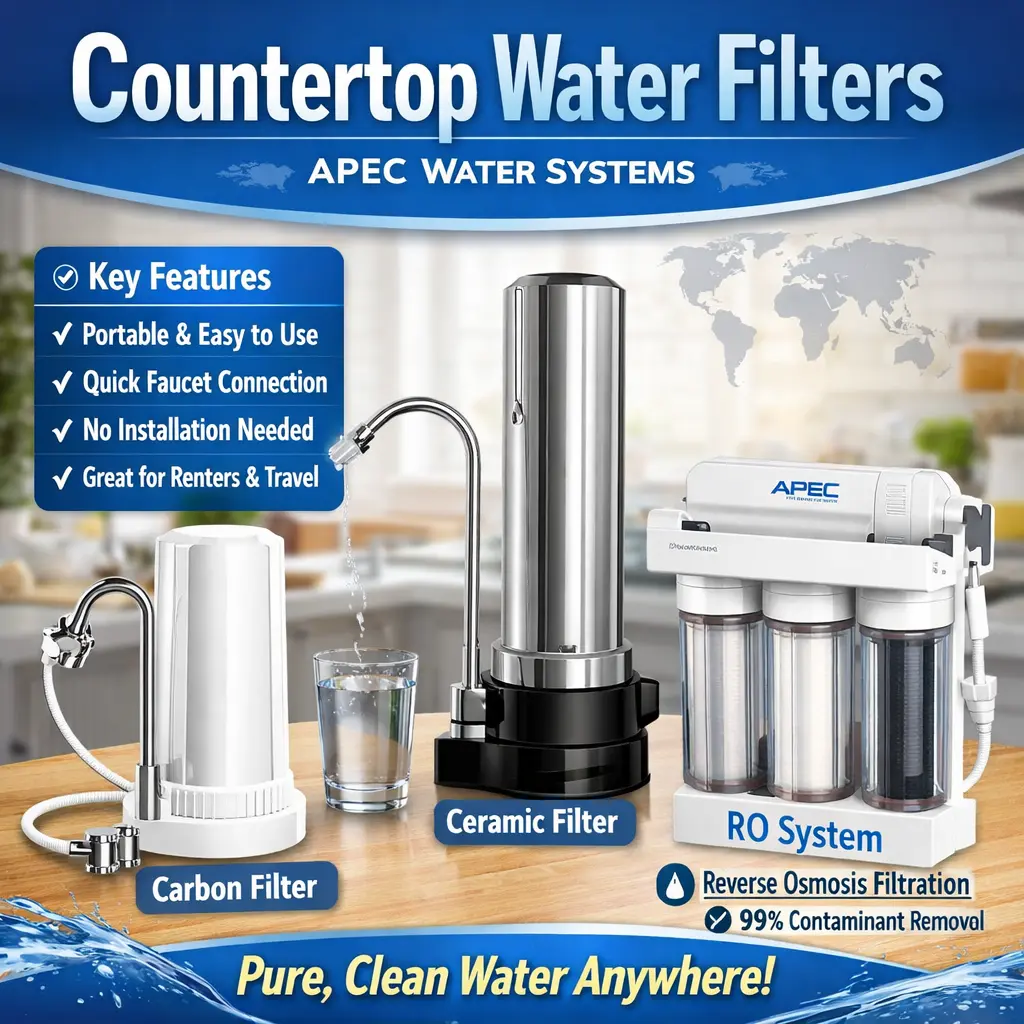
- Countertop Filters
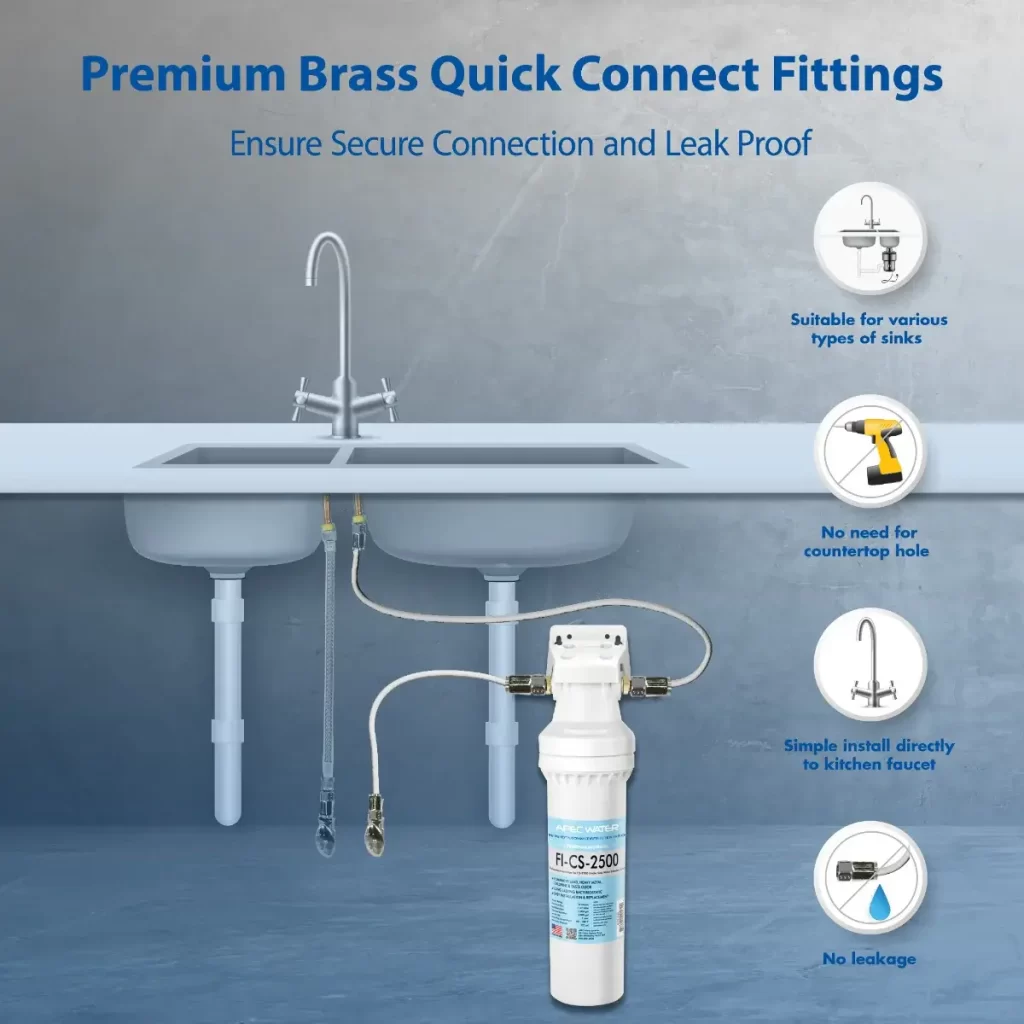
For renters or students, the APEC countertop filter options like the RO-CTOP-C (portable RO) and CS-2500 offer tool-free installation. These systems connect directly to most standard faucets, providing high-purity water without permanent plumbing changes.
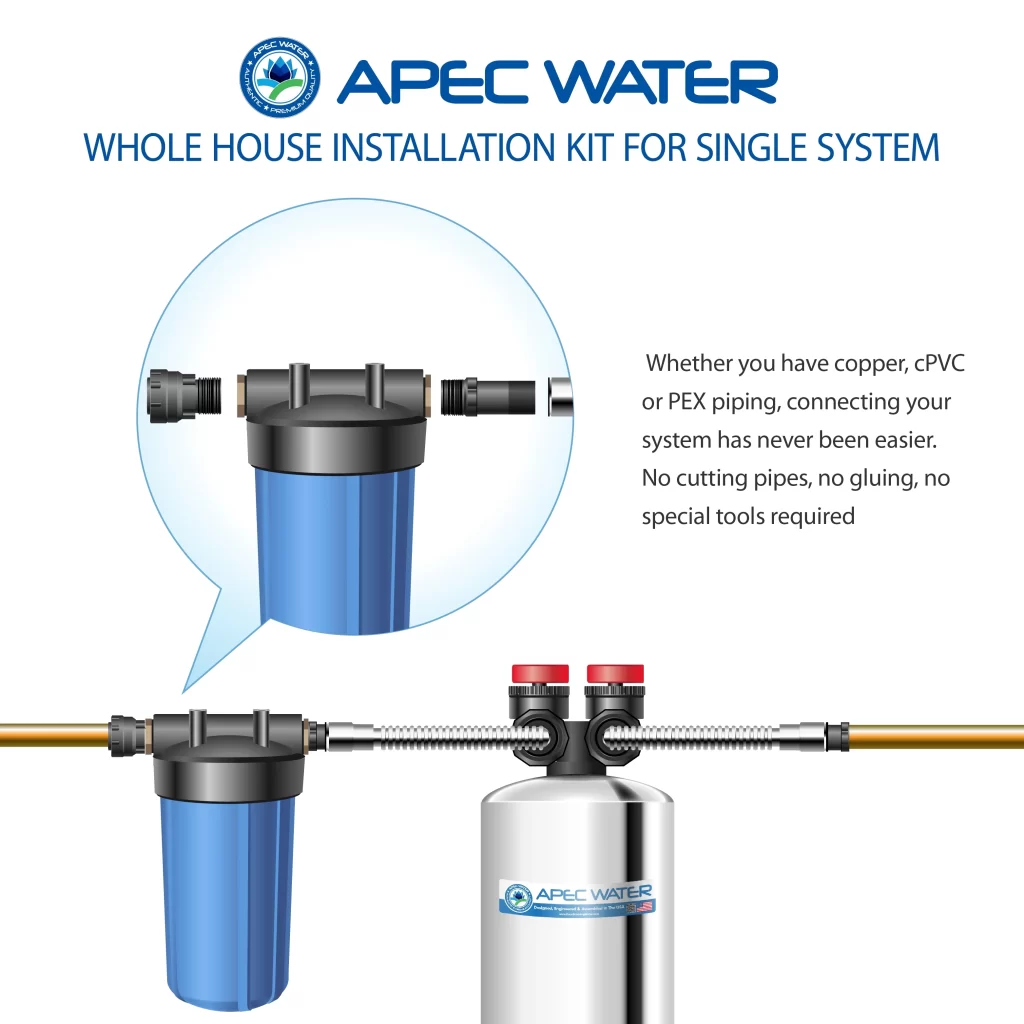
- Whole House Filters
The APEC whole house filter category features the APEC Green Carbon 10, a point-of-entry system that uses catalytic coconut shell carbon. These systems require no electricity or backwashing and provide a 10 GPM flow rate to remove chemicals from every faucet in the home.
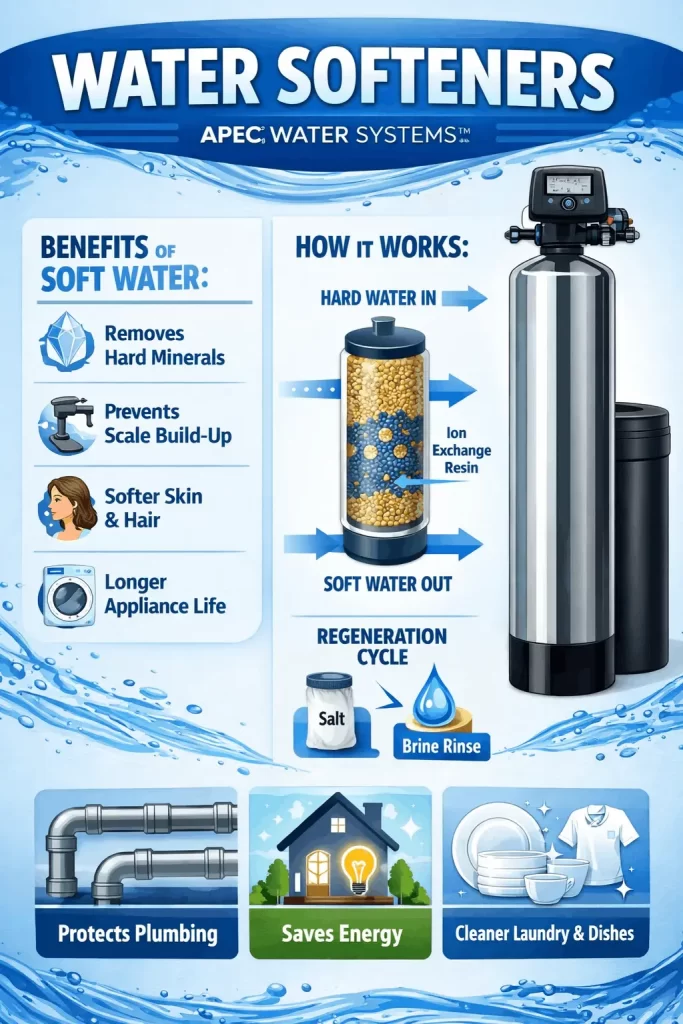
- Water Softeners
For households struggling with scale buildup, the APEC water softener series (including EcoWaters and HomeDuet) utilizes salt-based ion exchange. These are specifically engineered to treat “hard water” by removing calcium and magnesium ions that damage appliances.
Which APEC Filter Model Is Right for Your Home?
Choosing the correct APEC filter model depends on three critical variables: your home’s incoming water pressure, your daily household usage volume, and whether you prefer the “crisp” neutral taste of pure RO water or the “smooth” mineral profile of alkaline water.
The comparison of different models
| Model | Essence ROES-50 | Ultimate RO-90 | Essence ROES-PH75 | Ultimate RO-PERM |
|---|---|---|---|---|
| Best For | Budget / 1–3 People | Families / High Use | Alkaline Taste Lovers | Well Water / Low Pressure |
| Capacity (GPD) | 50 Gallons | 90 Gallons | 75 Gallons | 90 Gallons |
| Stages | 5-Stage | 5-Stage | 6-Stage (Alkaline) | 5-Stage (Permeate Pump) |
| Price | Check Price | Check Price | Check Price | Check Price |
Note: Prices are approximate as of March 2026. Please verify current rates at Amazon or APEC.com.
In many urban homes, the APEC ROES-50 vs. RO-90 debate ends with ROES-50 being the safe default. It is their most affordable, WQA-certified, and lab-proven system, with the lowest annual filter cost of just $75 per year. Its 50 GPD capacity is more than adequate for a 1- to 4-person household.
If you have a bigger family or often empty your water pitcher for cooking and coffee, the Ultimate RO-90 is worth the upgrade. It nearly doubles daily output at 90 GPD for about $35 more than the base model. This higher flow rate means your 4-gallon store tank refills much faster, so you never run dry in peak morning or evening hours.
For those who find standard reverse osmosis water too “flat” or acidic, the APEC alkaline filter ROES-PH75 is the solution. It adds a sixth remineralization step using food-grade calcium to bring the water pH up. This tastes like bottled mineral water and works best for users switching from spring water to RO.
Last but not least, for well water homes and older apartment buildings whose inlet pressure is between 30 and 50 PSI, the only option left is the APEC RO-PERM low-pressure system. It has an energy-saving non-electric permeate pump that pushes more pure water into the tank. A standard RO system would waste much more water and never fill the tank completely without this pump.
What Does an APEC Filter Actually Remove from Water?
When evaluating a filter, it is vital to distinguish between a manufacturer’s marketing claims and independent, third-party data. While APEC’s 5-stage systems are industry workhorses, their performance varies significantly between their Reverse Osmosis (RO) models and their standard carbon-based filters.
Lab-Verified RO Performance
Independent testing from TechGearLab (utilizing Western Environmental Testing Laboratories) on the ROES-50 provides the strongest evidence for APEC’s effectiveness. In these controlled trials, the system achieved a 100% removal rate for chlorine, copper, iron, sulfates, and lead. Furthermore, it reduced fluoride by 94.7% and dropped the Total Dissolved Solids (TDS) from a high-contamination level of 3,000 mg/L down to a mere 0.53 mg/L. These numbers verify that APEC’s RO membrane is exceptionally capable of stripping water down to its purest form.
The NSF Certification Gap
APEC identifies its systems as capable of removing arsenic, chromium-6, and “forever chemicals” like PFAS, PFOS, and PFOA. However, a critical nuance exists regarding APEC filter NSF certification. While the ROES-50 carries the WQA Gold Seal, its certification under NSF/ANSI 58 is specifically for TDS reduction only, not for the individual removal of every chemical listed in its marketing. APEC’s internal testing supports their broader claims, but third-party verification has not been completed for each specific contaminant individually. If PFAS or chloramine removal is a specific priority for your home, verify the current certification scope for your exact model at WQA.org or NSF.org before purchasing.
WFS-1000 Limitations
It is important to note the APEC WFS-1000 contaminants removal limitations. While this non-RO under-sink system successfully removes 100% of chlorine and lead, TechGearLab testing shows it only manages to remove 39% of sulfate and 46% of iron. These levels remain significantly above EPA acceptable standards. If your water source is high in iron or sulfates (common in well water), the WFS-1000 is not an effective choice; you should opt for a full APEC RO system instead.
What Are the Most Common Problems with APEC Water Filters?
While APEC is a market leader, no system is perfect. Identifying the most frequent APEC common complaints found on Reddit, Trustpilot, and Amazon is essential for a realistic ownership outlook.
The verified APEC water filter problems are
- High Wastewater Ratio
The APEC filter wastewater ratio is a primary concern for eco-conscious buyers. Standard models like the ROES-50 produce roughly 3 gallons of wastewater for every 1 gallon of purified water. This is significantly less efficient than modern tankless systems.
Tip: Many users route the waste line to a garden or basement drain to repurpose the water.
- Filter Housing Cracks
A recurring issue mentioned in Home Depot and Amazon reviews is an APEC filter housing crack. Some users report that the plastic canisters develop hairline fractures after 2 to 3 years, specifically at the top junction. While APEC customer service response teams often offer replacements, a sudden crack can lead to significant water damage if a leak alarm isn’t installed.
- Chloramine Limitation
Many US cities are switching from chlorine to chloramines. The standard APEC filter chloramine removal capacity is limited because basic carbon blocks exhaust quickly when facing these tougher chemicals. If your local water report lists chloramine, you may need to replace your pre-filters more frequently than the suggested 6-month schedule.
- Adapter Fitting Issues
A common APEC ROES-50 complaint involves the feed water adapter. Users with non-standard supply lines (common in older apartments) often find the APEC adapter does not fit their specific plumbing. You may need a quick trip to the hardware store for a dedicated 3/8″ or 1/2″ compression adapter.
- Auto Shutoff Valve Failure: Several APEC RO-90 problems center on the APEC auto shutoff valve. If this valve fails to close completely, the system will continue to drain water even when the storage tank is full. This “phantom running” can go unnoticed for weeks, significantly spiking your water bill.
Despite these documented issues, they are not universal. Most APEC Trustpilot reviews remain overwhelmingly positive, with the majority of users reporting 8 to 15 years of reliable service. The key to avoiding these pitfalls is a proper pressure regulator (to prevent housing stress) and a regular filter replacement schedule.
How Easy Is It to Install and Maintain an APEC Filter?
With the homeowner in mind, APEC systems balance a professional-grade build with a layout that most people can handle without calling a plumber.
APEC Filter DIY Installation
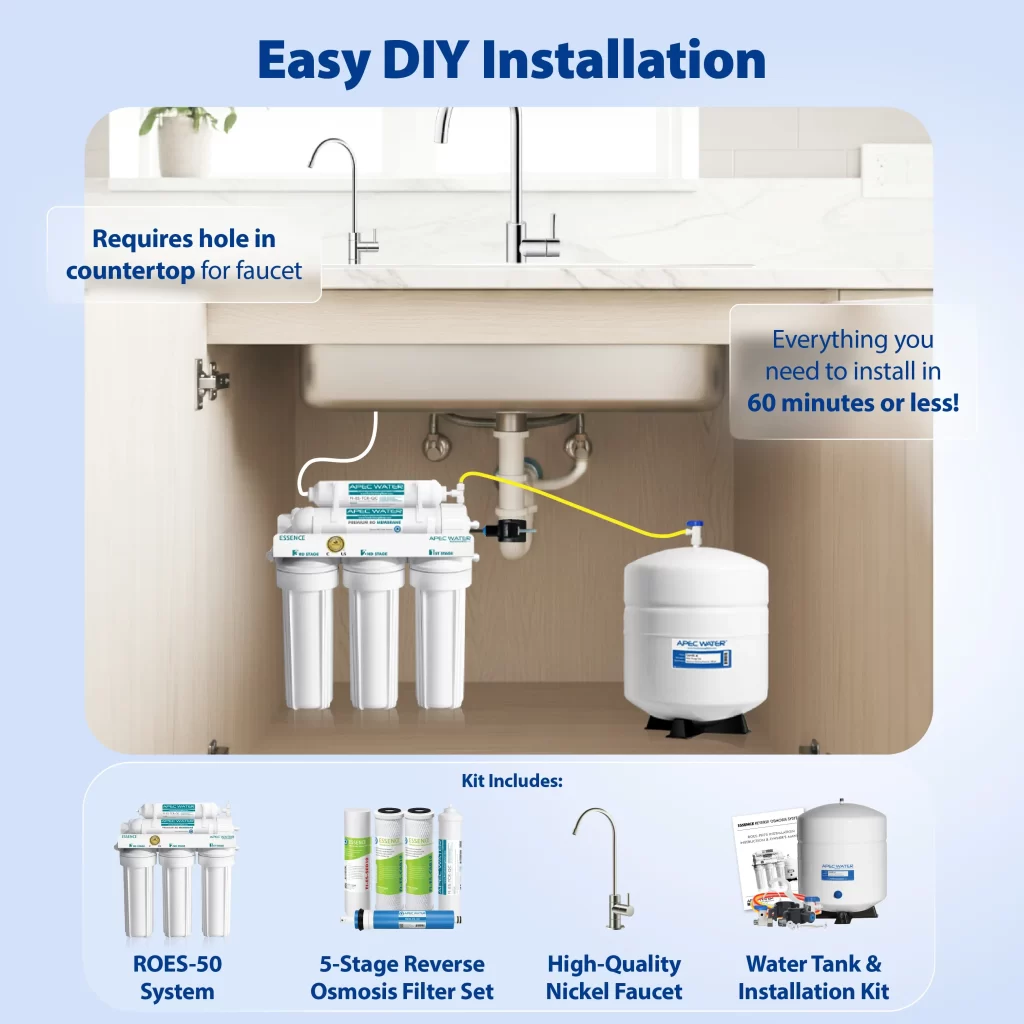
The APEC filter installation process is streamlined by the use of APEC John Guest fittings, which allow for secure, leak-free connections by simply pushing the tubing into the port; no soldering or complex plumbing tools are required. Users report 1 to 2.5 hours for APEC filter installation. All that is technically involved is drilling out a hole in the countertop for the dedicated faucet and then installing the drain saddle with a standard wrench. Most kits include a drill bit, and APEC provides a video guide with the printed manual on its website. You are able to also hire a professional for around $100 to $150.
APEC Filter Maintenance and Annual Costs
The APEC filter maintenance routine is predictable and affordable. To keep the system running efficiently, you must follow a specific APEC filter replacement schedule:
- Pre-filters (Stages 1–3): Replace every 6 to 12 months.
- RO Membrane (Stage 4): Replace every 2 to 3 years.
- Post-carbon (Stage 5): Replace every 2 to 4 years.
- Maintenance Tip: Always perform an APEC filter O-ring replacement annually when swapping pre-filters to prevent leaks.
The APEC annual filter cost for the ROES-50 is approximately $75, which is one of the lowest operating expenses in the industry. Furthermore, APEC provides APEC lifetime technical support via phone and email. Such support is a significant differentiator, as multiple Trustpilot reviewers have noted that having a US-based expert to talk them through a tricky installation or a maintenance question was a deciding factor in their purchase.
Is APEC Better Than iSpring or Other RO Brands?
While APEC and iSpring are the two most dominant names in the under-sink RO market, they cater to slightly different priorities regarding certification and efficiency.
The APEC ROES-50 holds the WQA Gold Seal, a prestigious certification from the Water Quality Association that verifies the system’s structural integrity and TDS reduction. While the iSpring RCC7 is frequently tested to meet NSF/ANSI 58 standards by third-party labs, it does not currently hold the same official WQA Gold Seal credential. For buyers who prioritize verified third-party backing, APEC has the edge.
When it comes to conservation, iSpring generally leads. The iSpring RCC7 operates at a 2:1 wastewater ratio, meaning it wastes two gallons for every gallon of pure water produced. The APEC ROES-50 typically runs at a 3:1 ratio, making it slightly less efficient. If water conservation is your primary concern, iSpring is the more eco-friendly choice.
APEC remains a top choice for buyers who value American sourcing. Their primary filters and RO membranes are US-made and California-assembled. While iSpring systems are assembled in the US, many of their internal components are globally sourced or manufactured in China.
For a full side-by-side comparison including contaminant removal, annual costs, and installation difficulty, see our APEC vs iSpring Comparison Guide. For a tankless- and smart-monitoring focused comparison, see APEC vs Waterdrop.
Is the APEC ROES-50 Worth Buying in 2026?
The APEC ROES-50 flagship RO system remains one of the best-selling under-sink units because it offers WQA-certified TDS reduction and lab-verified 100% lead removal for under $230. With an APEC annual filter cost of approximately $75, it has one of the lowest operating budgets in the category while comfortably providing 50 GPD for a 4-person household. While its 3:1 wastewater ratio is higher than some modern competitors, its decades-long record for reliability makes it a very safe investment.
See our APEC ROES-50 Full Review and Lab Test Results for more data.
Does APEC Make a Good Whole House Water Filter?
Although APEC is most commonly associated with under-sink units, the APEC GREEN Carbon 10 is also a viable point-of-entry solution in municipal water. This system removes chlorine from every tap without electricity, backwashing, or a drain line, using catalytic coconut shell charcoal. It maintains a 10 GPM flow rate, which is consistent enough for a 1 to 3 bathroom home, but you need an APEC salt-based softener with it if you have hard water scale problems too.
Read the APEC Green Carbon 10 Whole House Filter Review for installation tips.
What Is the Best APEC Filter for Well Water Homes?
The APEC RO-PERM is the only model in the lineup specifically designed to handle the low inlet pressure (30–50 PSI) common in well water setups. It features a non-electric permeate pump that maintains a high 90 GPD output where standard RO systems would struggle or fail. If your well water is heavy in iron or sediment, you should plan to replace the Stage 1 sediment pre-filter every 3 to 4 months to protect the main RO membrane.
Compare options in Best Water Filters for Well Water: APEC and Other Options.
Is There a Good APEC Filter for Renters or Apartments?
The APEC RO-CTOP-C is an excellent portable option for renters because it connects directly to your kitchen faucet with no drilling or permanent plumbing required. If you only need basic chlorine and odor removal without the wastewater of an RO system, the 2-stage APEC CS-2500 review highlights it as a space-saving alternative. Both systems are designed to be disconnected in minutes, making them the perfect “no-installation” filters for moving day.
Check out the Best Countertop Water Filters for Renters and Apartments.
How Does APEC’s Alkaline Filter Compare to Standard RO?
Basic RO water can be quite pure but tends to taste “flat” or perhaps somewhat acidic since it’s stripped of all nutrients. The APEC ROES solves this by including a 6th remineralization stage, which uses food-grade calcium to increase the pH and restore an all-natural spring-water taste. Even though the filtration performance is the same as the standard 5-stage models, the PH75 may be a much better option for anybody who likes a softer, alkaline drinking experience.
