
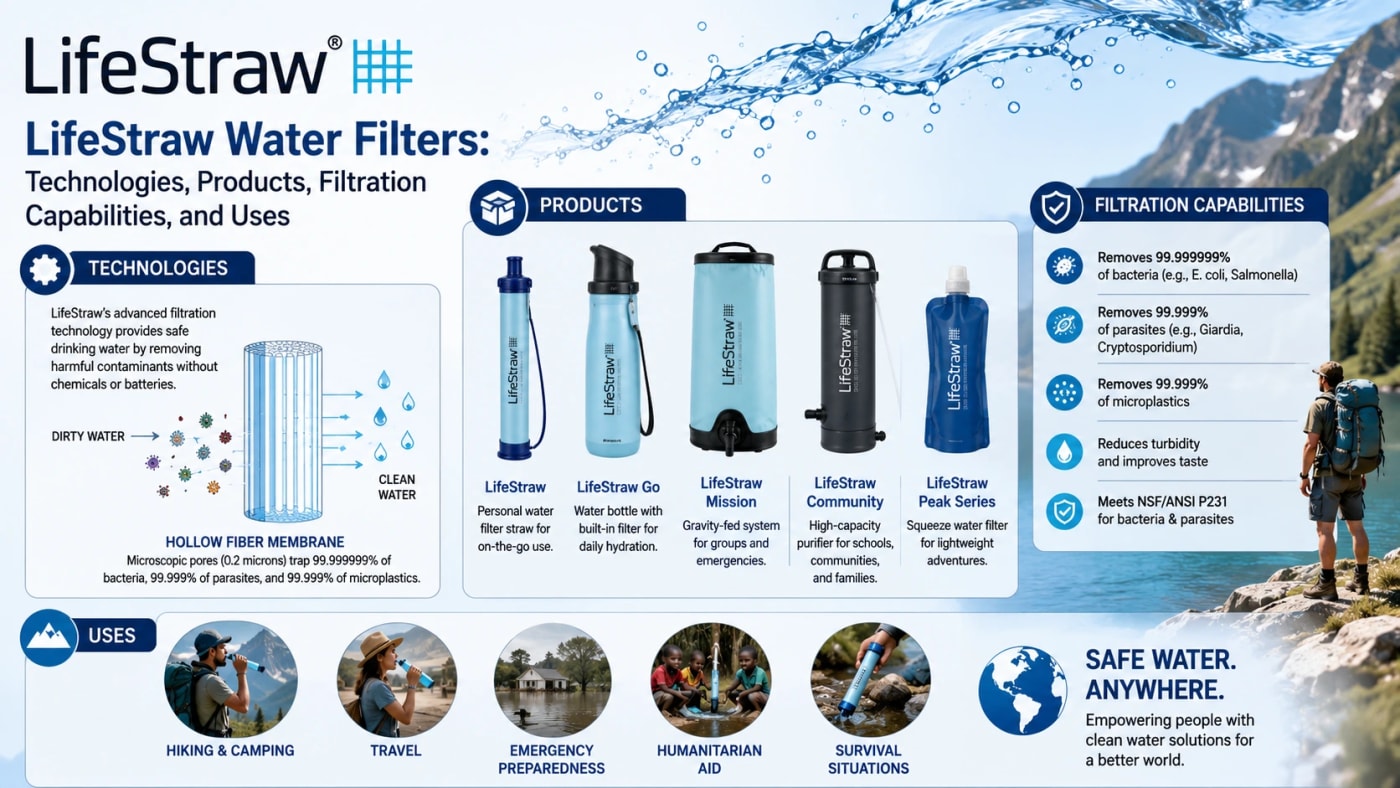
LifeStraw filters remove bacteria, parasites, and microplastics using hollow fiber membrane technology, and some products add activated carbon to also reduce chemicals, chlorine, and heavy metals. LifeStraw is not one single filter. The brand makes filters and purifiers for home, travel, outdoor, and emergency use, and each product uses a different combination of technology. This guide explains how the filtration works, what each technology removes, the product categories, and how to pick the right one for your water source
RoundupBuyer’s Guides
LifeStraw Water Filters: Technologies, Products, and What Each One Actually Removes
Share
Our Top Picks
In-Depth Reviews
#1Best for Home / Tap Water
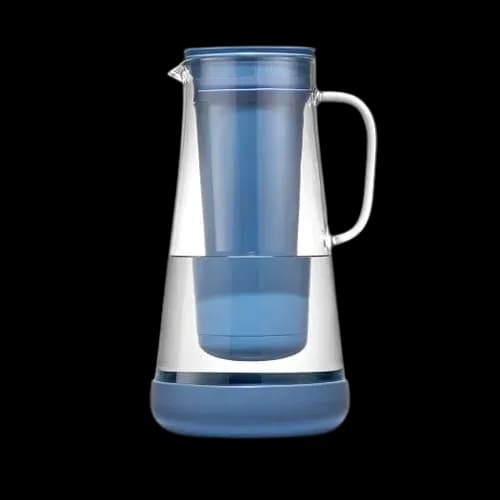
LifeStraw Home – Water Filter Pitcher, 7-Cup, Stormy Blue
$64.95
Key Features
Goes beyond taste and odor removes bacteria, parasites, and microplastics, plus reduces lead, mercury, and PFAS, all in one countertop pitcher.
Reasons to Buy
- Removes bacteria and parasites, not just taste/odor, unlike most pitcher filters
- Reduces PFAS, lead, mercury, and a range of chemicals
- Retains beneficial minerals like magnesium and potassium
- No installation gravity-fed, just fill and pour
- Sleek, sustainable glass-and-silicone design
Reasons Not to Buy
- Carbon/ion exchange filter needs replacing every 2 months (short cycle)
- Small 7-cup capacity for larger households
- Pricier per-unit than basic carbon pitchers
- Glass pitcher is heavier and less travel-friendly
Specs at a Glance
| Brand | Purification Method | Material | Capacity | Product Dimensions | Installation Type | Power Source | Included Components |
|---|---|---|---|---|---|---|---|
| LifeStraw | Activated Carbon, Microfiltration Membrane | Borosilicate Glass | 7 cups | 5.8"L x 5.8"W x 11.25"H | Countertop | Gravity | Glass Pitcher, Silicone Base, Filter Housing, Carbon Filter, Membrane Filter |
For everyday tap water at home, the LifeStraw Home pitcher is the line's flagship product. It combines a membrane microfilter with activated carbon and ion exchange to handle both biological and chemical contaminants, including PFAS. The membrane stage lasts up to 264 gallons, about one year, while the carbon and ion exchange stage lasts 40 gallons, about two months. It is the only LifeStraw line tested to the NSF P473 protocol for PFOA and PFOS reduction.
#2Best for Travel
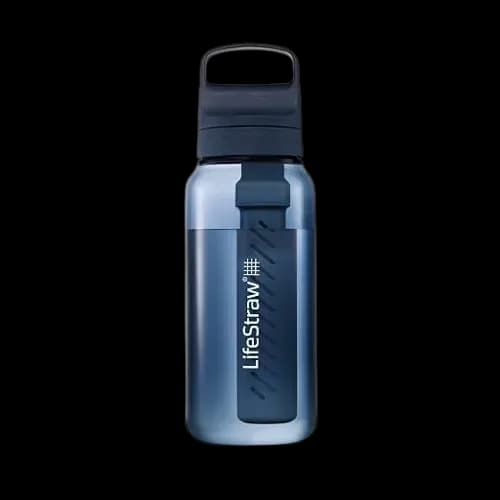
LifeStraw Go Water Filter Bottle, 22 oz, Blue
Key Features
A refillable travel bottle with built-in membrane + carbon filtration drink safely from taps or questionable sources on the go.
Reasons to Buy
- Dual filtration: membrane + activated carbon in one bottle
- Long-lasting membrane up to 1,000 gallons
- Independently lab-tested to EPA/NSF/ANSI protocols
- Dishwasher-safe bottle and cap once filter is removed
Reasons Not to Buy
- Carbon filter stage lasts only 26 gallons frequent replacement
- No virus protection (microfilter only, not an ultrafilter/purifier)
- Smaller 22 oz capacity compared to larger travel bottles
- Plastic build, less premium feel than glass Home line
Specs at a Glance
| Brand | Purification Method | Material | Capacity | Product Dimensions | Installation Type | Power Source | Included Components |
|---|---|---|---|---|---|---|---|
| LifeStraw | Activated Carbon, Hollow Fiber Membrane | Plastic | 1.4 pounds (22 oz) | 2.8"L x 2.8"W x 9.4"H | Personal Container | Manual | Water Bottle and Filter |
For daily travel and portable hydration where treated water is generally available, the Go Series bottle pairs a membrane microfilter with an activated carbon stage. The carbon stage improves taste by reducing chlorine and organic chemical matter, while the membrane handles bacteria, parasites, and microplastics. The membrane lasts up to 1,000 gallons, and the carbon filter lasts up to 26 gallons, about two months.
#3Best for Outdoors & Emergency
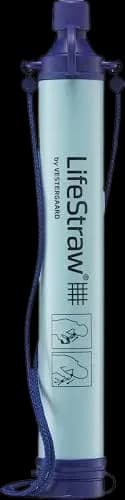
LifeStraw Personal Water Filter, Blue, 1PK
$14.99
Key Features
The original ultralight straw filter no batteries or moving parts, just drink straight from lakes or streams in the field.
Reasons to Buy
- Extremely affordable
- No chemicals, batteries, or moving parts simple and durable
- Long lifespan filters up to 1,000 gallons (4,000 L)
- Rigorously tested to EPA/NSF/ASTM protocols
Reasons Not to Buy
- No virus protection microfilter only, not an ultrafilter
- No chemical/PFAS/heavy metal reduction (no carbon stage)
- Must drink directly through the straw or transfer water manually no bottle/reservoir included
- Not suited for treating chemically contaminated water
Specs at a Glance
| Brand | External Testing Certification | Material | Product Dimensions | Item Weight | Product Benefits | Purification Method | Package Size Options |
|---|---|---|---|---|---|---|---|
| LifeStraw | NSF | Plastic | 3.75"D x 1.39"W x 12"H | 0.04 kg | Removes Bacteria, Reduces Parasites | Hollow Fiber Microfiltration Membrane | 1, 2, 3, 4, or 5 Pack |
For untreated stream or lake water while hiking or in an emergency, the Personal filter uses a membrane microfilter on its own, since the main risk outdoors is biological rather than chemical. The membrane removes bacteria, parasites, microplastics, and turbidity, but without a carbon stage it does not reduce chemicals or heavy metals. The membrane lasts up to 1,000 gallons, or 4,000 liters, with proper use and maintenance.
.
How Does LifeStraw Filtration Technology Work?
LifeStraw filtration is built around hollow fiber membranes. Each membrane holds thousands of tiny tubes with microscopic pores. Water passes through the pores, and particles bigger than the pore size stay outside the membrane. Some products add a further stage using activated carbon and ion exchange. This stage does not work by pore size. It attracts and holds chemicals, chlorine, and heavy metals as water passes through.
The table below shows how the three LifeStraw filtration technologies differ.
Technology | Pore Size | Removes Viruses | Main Role |
Membrane microfilter | 0.2 micron | No | Bacteria, parasites, microplastics, turbidity |
Membrane ultrafilter | 0.02 micron | Yes | Bacteria, parasites, viruses, microplastics |
Activated carbon and ion exchange | Not pore based | No | Chemicals, PFAS, chlorine, lead, other heavy metals |
A microfilter targets bacteria, parasites, microplastics, and turbidity. An ultrafilter does the same job but also blocks viruses, since its pores are ten times smaller. LifeStraw calls any product using ultrafiltration a purifier, since it removes viruses. A product using only a microfilter is called a filter, not a purifier. A smaller pore size also means slower flow, so ultrafilters often need more hand or gravity pressure to push water through compared to microfilters.
What Do Activated Carbon and Ion Exchange Add?
Activated carbon and ion exchange filters add a chemical treatment stage that a membrane alone cannot provide. Not every LifeStraw product has this stage. It appears mainly in Home products and in some travel and emergency products.
What the carbon and ion exchange stage reduces:
Chlorine taste and odor
Organic chemical matter, pesticides, and herbicides
PFAS compounds such as PFOA and PFOS
Heavy metals including lead, mercury, chromium, cadmium, and copper
What Types of LifeStraw Products Are Available?
LifeStraw groups its products into four use case categories. Each category matches a specific water source and daily routine.
LifeStraw product categories:
Home: Pitchers and dispensers built for everyday tap water at home
Travel: Go Series, Sip, and Flex bottles built for portable, daily hydration
Outdoors: Peak Series straw, squeeze, and gravity systems built for hiking and camping
Emergency: Community, Mission, Max, and Escape built for high volume or group use
Home products use a membrane microfilter plus activated carbon and ion exchange, since tap water needs chemical treatment as well as biological safety. Travel products use a membrane microfilter plus activated carbon for daily portable use. Outdoor products use a membrane microfilter, with carbon as an optional add on, since the main risk outdoors is biological. Emergency products use the membrane ultrafilter, since group and disaster situations often carry a higher risk of viruses.
Which Contaminants Do LifeStraw Filters Actually Remove?
Contaminant coverage depends entirely on which technology sits inside a specific product. No single LifeStraw product removes every contaminant on the list.
Contaminants removed by membrane filtration:
Bacteria, including E. coli and Salmonella, reduced by 99.999999 percent, known as log 8
Parasites, including Giardia and Cryptosporidium, reduced by 99.999 percent, known as log 5
Microplastics and turbidity, reduced by 99.999 percent
Viruses, including Rotavirus, only in products using the 0.02 micron ultrafilter
Contaminants reduced by activated carbon and ion exchange:
Chlorine taste and odor
Organic chemicals, pesticides, and herbicides
PFAS compounds such as PFOA and PFOS, mainly in Home products
Lead and other heavy metals
Membrane filtration blocks particles by physical size, so its results are described as removal. Activated carbon and ion exchange work through chemical attraction, so their results are described as reduction. A basic outdoor microfilter without a carbon stage does not touch chemicals or heavy metals at all.
Which LifeStraw Products Give Virus Protection?
Virus protection is not a feature of every LifeStraw product. Ordinary microfilters, including the classic Personal straw and most Go Series bottles, do not remove viruses, since their 0.2 micron pores are too large to reliably trap them. Virus protection only appears in products built around the 0.02 micron ultrafilter, such as Mission, Community, Max, and Escape. These products are classified as purifiers rather than filters. Anyone who needs virus protection in a specific region should check the product page rather than assume the feature applies across the whole brand.
Which LifeStraw Products Reduce PFAS and Chemicals?
Chemical and PFAS reduction depends on activated carbon and ion exchange, a stage found in selected products rather than the full range. LifeStraw Home products are tested to the NSF P473 protocol for reducing PFOA and PFOS. Under that protocol, the required maximum output is 0.07 micrograms per liter, and LifeStraw Home is rated to reach a result below 0.01 micrograms per liter. A Peak Series or Go Series microfilter alone does not reduce PFAS unless it is paired with a carbon accessory.
How Do You Choose a LifeStraw Filter for Your Water Source?
Choosing a LifeStraw product starts with the water source, not the product name. The main factors are the water source, contamination risk, number of users, and required contaminant protection.
Steps to pick the right product:
Identify your water source, since tap water, outdoor water, and emergency storage water each need different technology
Identify the contaminant risk, since biological risk needs a microfilter and virus risk needs an ultrafilter
Confirm whether you need a filter or a purifier, since only ultrafiltration products qualify as purifiers
Match the product to your environment, whether that is home, travel, outdoor, or emergency use
Check the rated capacity against how many people will use it and for how long
Check the maintenance and replacement schedule for each filter stage
Municipal tap water at home needs a Home pitcher or dispenser, since only that line handles chlorine, PFAS, and lead. Daily travel with treated water available fits a Go Series bottle. Untreated stream or lake water while hiking fits a Peak Series straw, squeeze, or gravity system. Any water source with possible virus risk needs a membrane ultrafilter purifier, since only ultrafiltration blocks viruses.
How Long Do LifeStraw Filters Last?
Filter life depends on the product, the filter stage, water quality, and daily use. A membrane filter usually signals the end of its life by slowing or stopping water flow. A carbon or ion exchange stage needs a fixed replacement schedule, since it can keep passing water even after its chemical capacity runs out.
Typical filter capacities:
Personal Straw and Peak Straw: Up to 1,000 gallons, or 4,000 liters
Peak squeeze and gravity: Up to 500 gallons, or 2,000 liters
Go Series membrane: Up to 1,000 gallons, or 4,000 liters
Go Series carbon stage: Up to 26 gallons, about 2 months
Home pitcher membrane: Up to 264 gallons, about 1 year
Home pitcher carbon and ion exchange: Up to 40 gallons, about 2 months
Mission and Escape membrane: Up to 18,000 liters
Escape carbon and ion exchange: About every 600 liters, roughly 2 months
Always check the current user manual for the exact product owned, since LifeStraw updates capacities as it revises filter designs.
How Do You Clean, Maintain, and Store a LifeStraw Filter?
Regular maintenance keeps a LifeStraw filter working at its rated capacity and stops early clogging. Sediment and organic matter can build up inside a membrane over time, which slows flow even before the filter reaches the end of its life.
Maintenance steps:
Backflush the filter regularly using the built in syringe or backwash mechanism, where the product includes one
Rinse the housing and mouthpiece after each outdoor use, especially after filtering silty or muddy water
Dry the filter fully before long term storage to prevent mold growth inside the housing
Never let water freeze inside a membrane filter, since ice can crack the internal fibers without visible damage
Store carbon and ion exchange filters according to the product manual, since their chemical capacity degrades differently from a membrane
What Can LifeStraw Filters Not Do?
LifeStraw limitations differ by technology rather than applying equally across the brand. Standard microfilters do not remove viruses. Membrane only products do not reduce chemicals or heavy metals unless paired with a carbon stage. No LifeStraw product performs desalination, so none of them can treat ocean, seawater, or brackish sources. Dissolved salt molecules are far smaller than the smallest LifeStraw pore, so they pass straight through the membrane along with the water. Desalination needs a different technology, such as reverse osmosis or distillation.
Quick Answers to Common LifeStraw Questions
Is LifeStraw a water filter or a water purifier? LifeStraw sells both. A filter uses a membrane microfilter and handles bacteria, parasites, microplastics, and turbidity. A purifier uses a membrane ultrafilter and adds virus removal on top of that same coverage.
Can LifeStraw remove salt from seawater? No. LifeStraw products do not remove salt and should not be used on ocean water or brackish water. Salt molecules pass straight through the membrane pores along with the water.
Does LifeStraw remove PFAS? Only Home products are tested and rated for PFAS reduction, using the NSF P473 protocol. Outdoor and travel microfilters do not reduce PFAS unless paired with a carbon accessory.
Which LifeStraw product protects against viruses? Only products built around the 0.02 micron membrane ultrafilter protect against viruses. These include Mission, Community, Max, and Escape.
Is LifeStraw suitable for hiking, travel, home use, and emergencies? Yes, but each environment is served by a different product line. Hiking uses the Peak Series. Travel uses the Go Series, Sip, and Flex. Home tap water uses the Home pitcher and dispenser line. Emergencies use Community, Mission, Max, and Escape.
Share