
The difference between hard water and soft water comes down to minerals. Hard water carries high levels of calcium and magnesium, while soft water has very little. That single difference changes how your water lathers with soap, whether it leaves scale on your taps, and how it feels on your skin and hair. This page compares the two side by side, weighs the pros and cons, explains which is better for different uses, and shows how to test and treat your water.
What Is the Difference Between Hard Water and Soft Water?
Water hardness is set by how much dissolved calcium and magnesium the water holds. Hard water is high in these minerals. Soft water is low in them, and when water is softened at home it usually carries a little more sodium in their place.
All water starts soft. Rain and snow contain almost no dissolved minerals. Water becomes hard as it moves through the ground and passes over limestone, chalk, and gypsum, dissolving calcium and magnesium along the way. This is why hardness varies so much from one area to the next. It depends on the local rock and the source of your supply.
| Feature | Hard Water | Soft Water |
| Main minerals | High calcium and magnesium | Low calcium and magnesium |
| Soap and lather | Poor lather, leaves soap scum | Lathers easily with less soap |
| Scale and limescale | Builds up on taps and appliances | Little to no scale |
| Skin and hair | Can feel dry and rough | Tends to feel smoother |
| Taste | Slight mineral taste | Can taste flat or slightly salty |
| Appliances | More wear over time | Longer life, better efficiency |
What Is Hard Water and How Does It Form?
Hard water is water that holds high levels of dissolved calcium and magnesium. It picks these up as it travels through limestone, chalk, and gypsum underground. Other minerals such as iron and manganese can be present too, though calcium and magnesium are what define hardness.
Hardness comes in two forms. Temporary hardness is caused by dissolved bicarbonates and can be reduced by boiling, which makes some of the minerals settle out as scale. Permanent hardness is caused by sulfates and chlorides, and boiling does not remove it. Knowing the difference matters because it affects which treatment will actually work. Hard water itself is not unsafe to drink. Its drawbacks are practical rather than medical.
What Is Soft Water and How Does It Form?
Soft water is water that holds very little calcium and magnesium. It can occur naturally where rain falls on hard, mineral poor rock such as granite, so the water never picks up much mineral content. In most homes, though, soft water comes from a water softener, which swaps the calcium and magnesium for sodium through a process called ion exchange.
Softened water often feels slightly slippery on the skin. This is normal. The minerals that react with soap and leave a film have been removed, so the soap rinses away more completely and the water glides rather than squeaks.
How Do Hard and Soft Water Differ in Everyday Use?
The clearest way to understand the two types is to look at how each one behaves in daily life. The sections below compare them across cleaning, plumbing, skin and hair, and taste.
How Do They Affect Soap, Cleaning, and Laundry?
Hard water reacts with soap to form a sticky scum instead of a rich lather. You end up using more soap, shampoo, or detergent to get the same result, and you may still see spots on glasses and a dull film on dishes. Laundry can come out stiff and look dingy, and fabrics tend to wear faster as mineral deposits work into the fibres.
Soft water does the opposite. It lathers quickly with less product, rinses cleaner, and leaves no mineral spots on dishes or glassware. Clothes come out softer and last longer. One thing to expect is that soft water can make it feel like the soap has not fully rinsed off your hands or body. That slick feeling is simply the soap working as intended without hard minerals to react against.
How Do They Affect Pipes, Appliances, and Limescale?
When hard water sits or is heated, the calcium and magnesium are left behind as limescale, a chalky white deposit. Over time it coats taps, kettles, showerheads, and the inside of pipes, water heaters, and dishwashers. This buildup narrows pipes, reduces water flow, and makes appliances work harder. A water heater running on hard water can lose a noticeable share of its efficiency over its life, and scale shortens the lifespan of most water using appliances.
Soft water prevents this scale from forming, so pipes stay clear and appliances run more efficiently and last longer. There is one honest counterpoint. Very soft water, below roughly 50 parts per million, can be mildly corrosive to older copper or lead pipes, which is why some utilities in soft water areas adjust their water to protect plumbing.
How Do They Affect Skin and Hair?
Hard water minerals can leave a thin film on the skin and hair. Many people find this makes skin feel dry and tight and leaves hair feeling rough or limp. Research has also linked hard water to a higher rate of eczema in children. It is worth being clear about the limits of that link, though. Studies that gave families home water softeners found they did not reduce the severity of eczema once it was already established.
Soft water tends to leave skin and hair feeling smoother and lets you use less soap and shampoo. If you have a skin condition such as eczema or psoriasis, soft water may feel gentler for some people, but it is not a treatment or a cure. For ongoing skin problems, it is best to speak with a dermatologist about the right products and care.
How Do They Affect Taste and Drinking?
Hard water often has a faint mineral or chalky taste. Many people prefer it, and the minerals can even improve drinks like tea and coffee. Softened water can taste flat or slightly salty because of the small amount of sodium added during softening. Taste is personal, and in many cases the difference is small enough that people do not notice it. The safety side of drinking each type is covered further down.
What Are the Pros and Cons of Hard Water and Soft Water?
Each type has clear trade offs. Hard water is good for your mineral intake and often tastes better, but it is hard on your home. Soft water is easy on your home and your cleaning routine, but it adds a little sodium and needs upkeep.
Hard water
Pros: adds calcium and magnesium to your daily intake, often tastes good, and contains no added sodium.
Cons: leaves limescale, lathers poorly, spots dishes, wears down appliances, and can dry out skin and hair.
Soft water
Pros: cleans better with less soap, protects pipes and appliances from scale, and feels softer on skin, hair, and laundry.
Cons: salt based softening adds a little sodium, the water can taste flat or slightly salty, very soft water may be mildly corrosive to old pipes, and a softener needs salt and regular maintenance.
Is Hard Water or Soft Water Better?
There is no single winner. The right choice depends on what you are using the water for.
For drinking and health, hard water is fine. The World Health Organization and the EPA treat the calcium and magnesium in hard water as safe and possibly beneficial, so its problems are practical rather than medical. For cleaning, plumbing, and appliances, soft water is clearly easier and gentler.
Many households take a middle path. They soften the water for the whole house to protect pipes and appliances, but keep one unsoftened tap, often at the kitchen sink, for drinking and cooking. Others use a salt free conditioner that reduces scale without adding sodium. The best fit for you depends on your hardness level, your budget, and whether anyone in the home is on a low sodium diet. Testing your water is the place to start.
How Do You Turn Hard Water Into Soft Water?
If you decide your water is too hard, there are a few ways to treat it. A salt based ion exchange water softener gives full softening for the whole house. A salt free conditioner reduces scale without removing minerals or adding sodium. A reverse osmosis system is a good option for drinking water at a single tap. Boiling only helps with temporary hardness and is not a lasting fix. The sections below explain how to test your water, read the hardness scale, and choose the right treatment.
How Do You Test Whether Your Water Is Hard or Soft?
You have a few quick options. If you are on city water, check your utility’s annual report, the Consumer Confidence Report, which usually lists hardness. You can also use a home test strip or a drop test kit, or try the simple soap shake test for a rough idea. For an exact number, send a sample to a lab. If you have a private well, test the water directly, since well hardness can shift with the seasons.
What Are the Water Hardness Levels and Scale?
Hardness is measured in parts per million (ppm) or grains per gallon (gpg), where 1 gpg equals about 17.1 ppm. The United States Geological Survey uses the scale below.
| Classification | ppm (mg/L) | Grains per gallon |
| Soft | 0 to 60 | 0 to 3.5 |
| Moderately hard | 61 to 120 | 3.6 to 7 |
| Hard | 121 to 180 | 7.1 to 10.5 |
| Very hard | Above 180 | Above 10.5 |
Most people start to notice hard water problems above about 120 ppm, or 7 gpg. For a fuller breakdown and a unit converter, see water hardness levels and scale explained.
How Does a Water Softener Work?
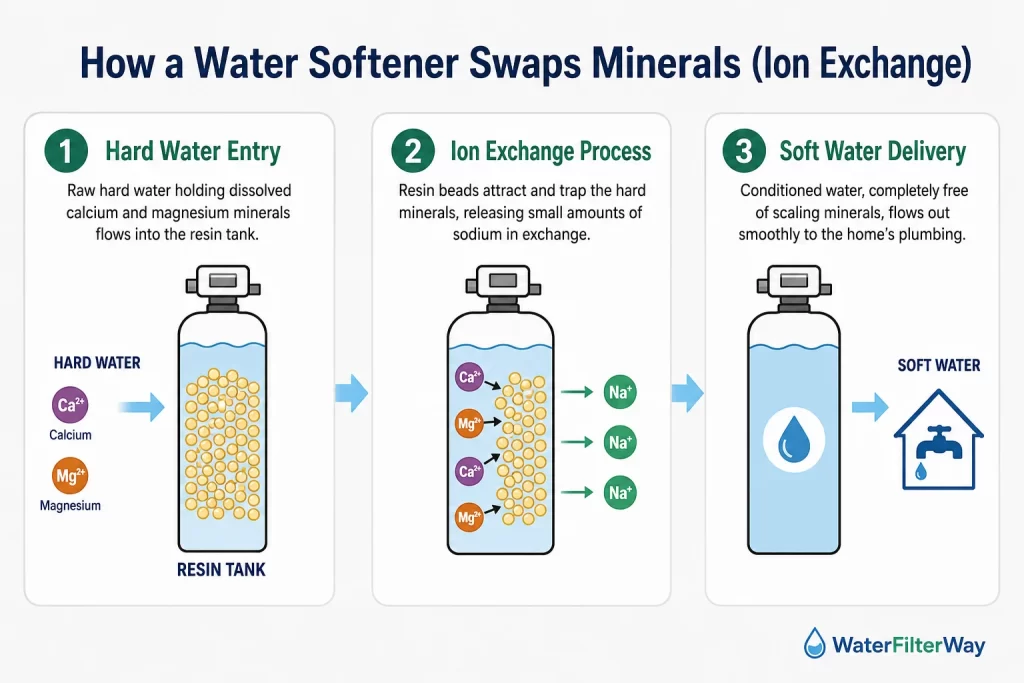
A salt based water softener uses a tank filled with resin beads that hold sodium. As hard water passes through, the beads trap the calcium and magnesium and release sodium in exchange, which is the ion exchange process. When the resin fills up, the softener regenerates by rinsing itself with a salt brine that flushes the minerals away. A whole house unit treats all the water entering your home.
What Is a Salt Free Water Conditioner?
A salt free conditioner does not remove minerals or add sodium. Instead it changes the calcium and magnesium so they are far less likely to stick as scale, often through a process called template assisted crystallisation. It works best for low to moderate hardness and suits people who want to avoid sodium and skip refilling salt. The trade off is that it does not give you the slippery soft water feel of a salt based system.
How Do You Remove Limescale From Hard Water?
Limescale on taps, kettles, and showerheads responds well to a mild acid. White vinegar or citric acid will dissolve it. Apply it, let it sit for a while, then wipe or rinse the surface clean. Descaling appliances such as kettles and coffee makers on a regular schedule keeps buildup from getting worse.
Is Softened Water Safe to Drink?
Softened water is generally safe to drink. Salt based softening does add a small amount of sodium, roughly 30 to 50 milligrams per litre for very hard water. That is minor for most people, but it is worth noting if you are on a strict low sodium diet. In that case, you can use a potassium based softener or install a reverse osmosis tap for your drinking water. This is general information and not medical advice, so check with your doctor if sodium is a concern for you.
FAQ’s:
1. Is hard water safe to drink?
Yes. Hard water is safe to drink, and the calcium and magnesium it contains are considered safe by health authorities. Its main drawbacks are limescale buildup and soap scum, not health risks.
2. What is the easiest way to test if my water is hard or soft?
Use a home test strip, check your local water quality report, or try a soap test for a quick estimate. For the most accurate results, use a certified laboratory test.
3. Does a water softener remove all minerals from water?
No. Salt-based softeners remove calcium and magnesium but leave other minerals behind. Salt-free systems do not remove minerals—they simply help reduce scale buildup.
4. Why does soft water feel slippery on skin?
Soft water feels slippery because it contains less calcium and magnesium, allowing soap to rinse more easily. This is normal and indicates the softening process is working.
5. What is the best way to remove limescale caused by hard water?
White vinegar or citric acid effectively dissolves limescale on taps, showerheads, and appliances. Regular descaling helps prevent heavy mineral buildup.
